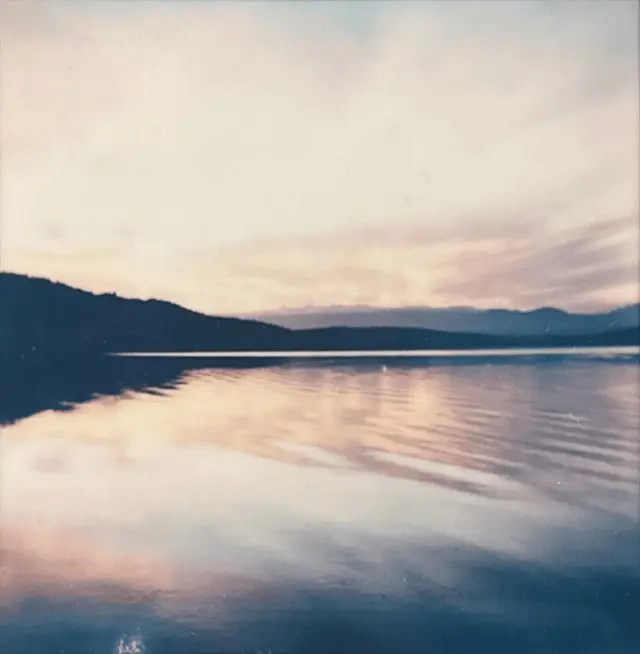
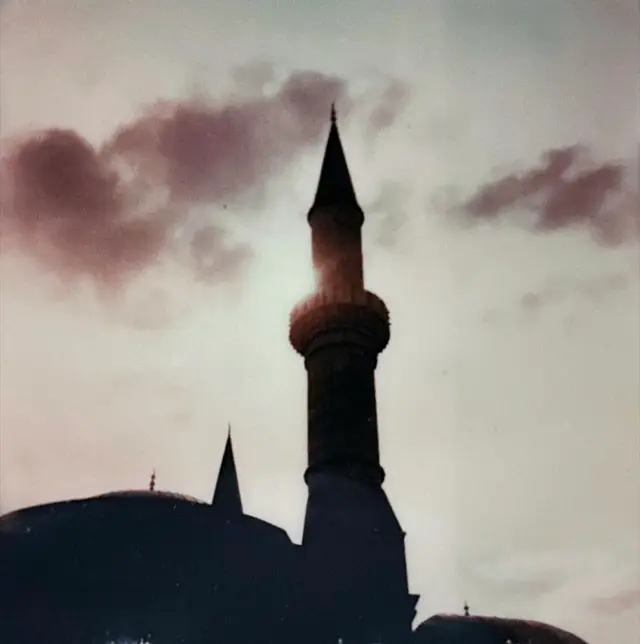
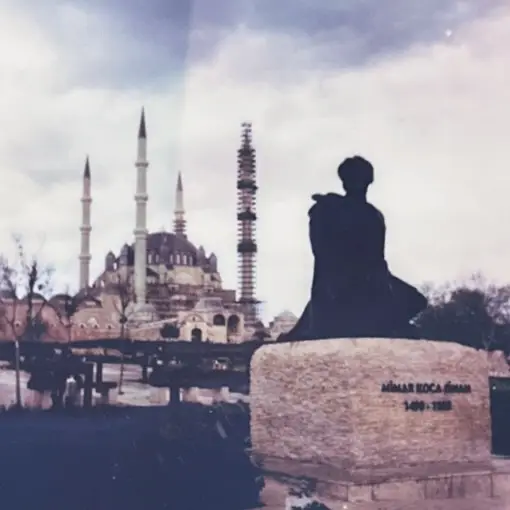
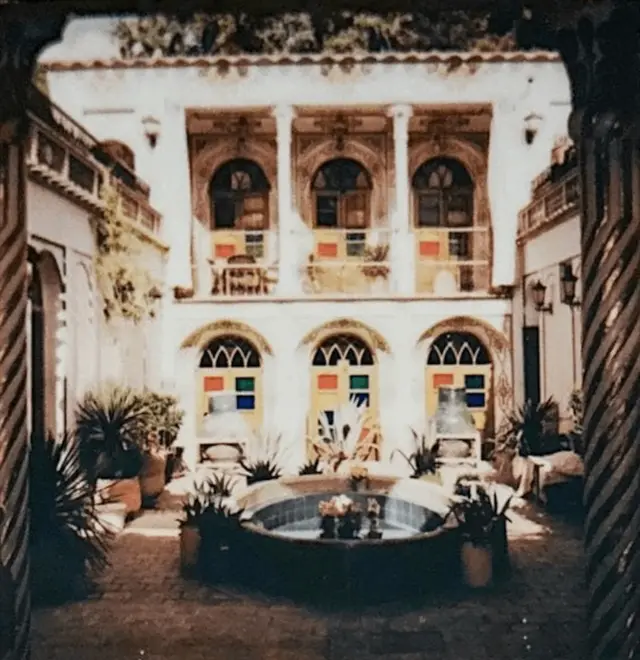
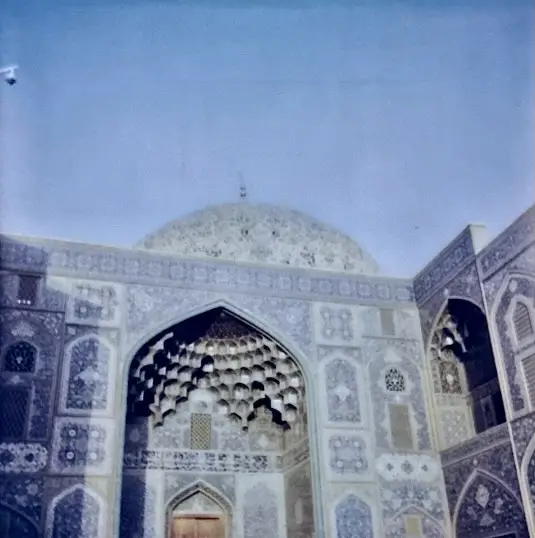
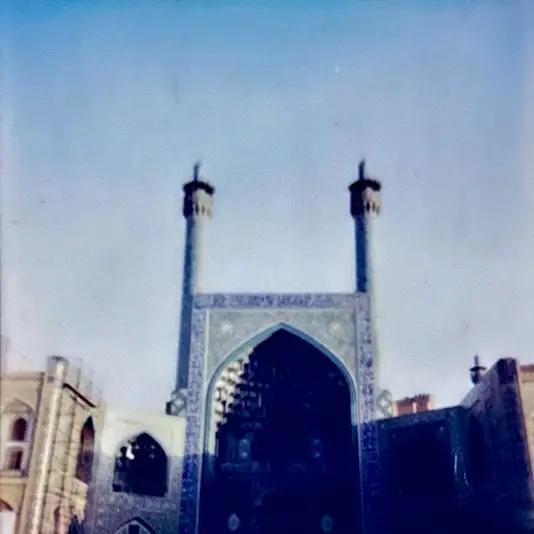
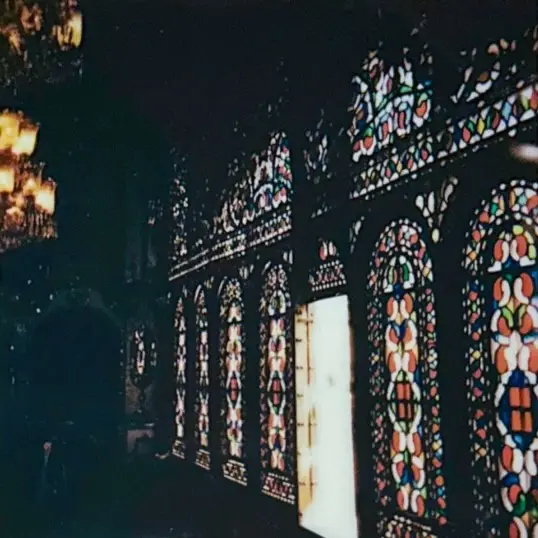
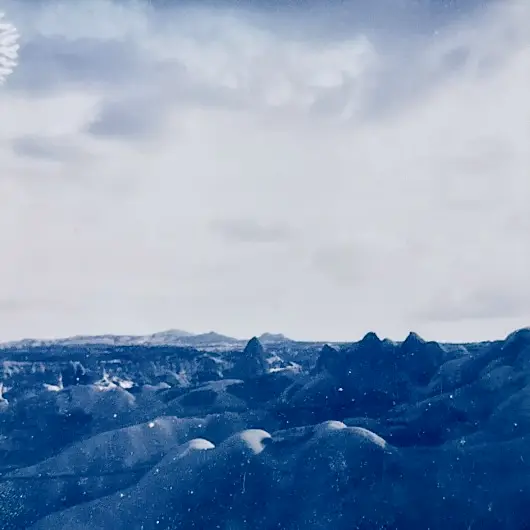
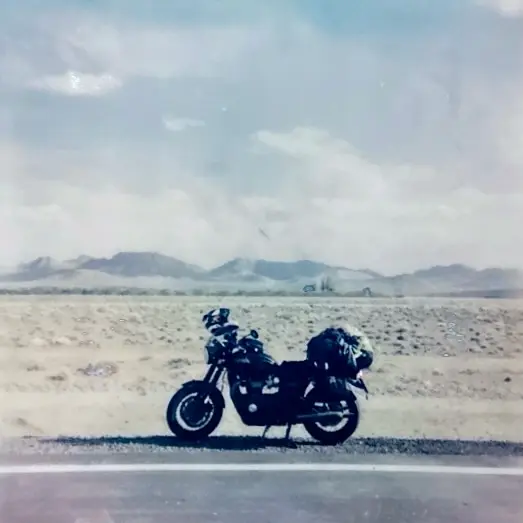
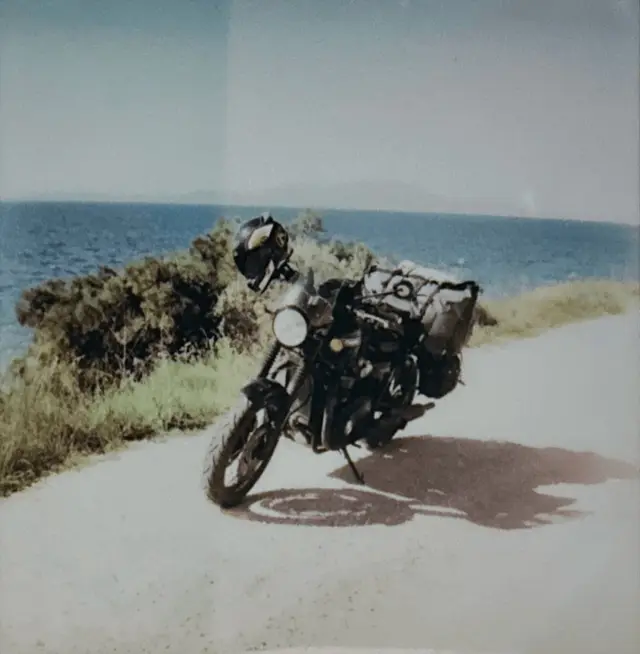
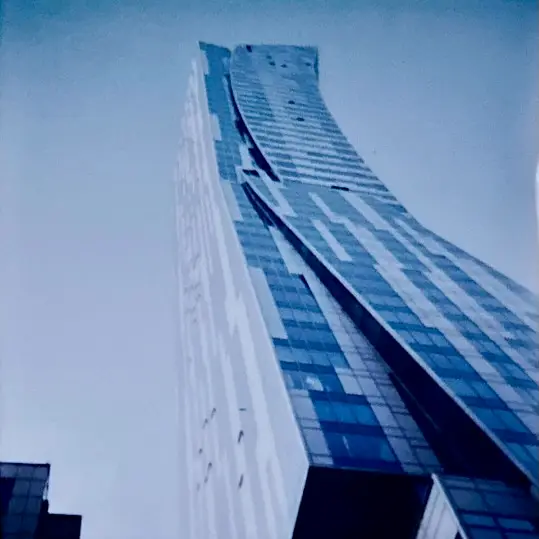
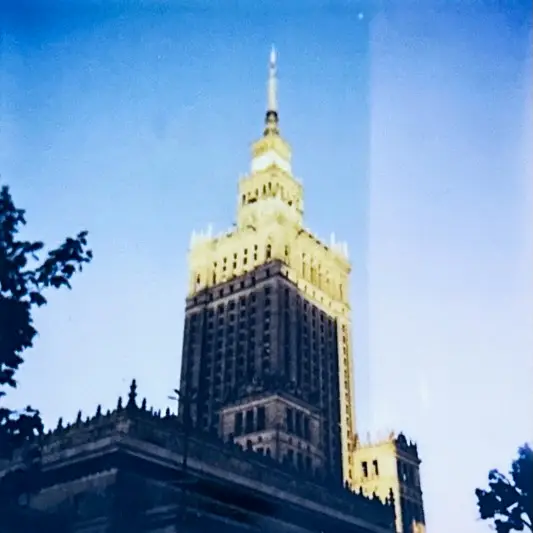
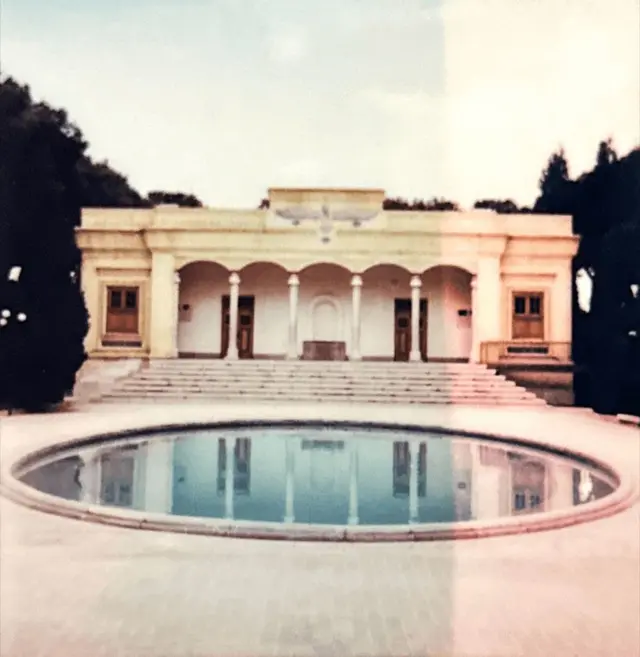
A collection of the Polaroids I took on my road trip with my Bonneville T120 in 2024.
🚩My red flag is that 90% of the time I forget I have my Polaroid with me, and when I do remember it I take three similar photos of the same subject.
📸 Stay for the memories, leave for the bad quality photos - Jelle, 2024
This was my second bigger road trip, which started in Serbia, then went to Asia (Turkiye ,Iran, Iraq), and then back to Eastern Europe.
Flags collected:
🇩🇪* 🇦🇹* 🇸🇰* 🇭🇺* 🇷🇸 🇧🇬 🇹🇷 🇮🇷 🇮🇶 🇷🇴 🇲🇩 🇺🇦 🇵🇱*
\* I already visited these countries on my previous road trip
Intro
One of my favorite movies of all time is “Lawrence of Arabia”. I rewatched the movie somewhere in 2023 and I decided that my next road trip was going to go to Saudi-Arabia.
But getting with a motorcycle from Belgium to Saudi Arabia is not easy and it takes a long time to get there. As I work as a freelancer and have some projects on the side, I just couldn’t take six months off to travel.
On top of that, getting to Saudi Arabia by road is not easy.
Getting from Europe to Turkiye is the easy part. From there it gets difficult:
One option is to take a ferry to Israel, and then from Israel to Jordan, and then to Saudi Arabia. But the events that happened on October 7 and everything after that, made me decide that going to Israel was not a good idea right now.
I then checked if I could take a ferry from somewhere to Egypt, and then drive across the Sinai desert to Saudi Arabia. This is not possible anymore (it used to be). On top of that the Sinai desert is really dangerous and you get a military escort when you drive through it. I decided against that option, even though it would’ve been an epic Biblical themed road trip.
Okay, driving to Turkiye it is. But what then?
The border between Turkiye and Syria is closed, so even if I was crazy enough to go Turkiye > Syria > Jordan > Saudi Arabia, that is not possible.
Then the last option: Turkiye > Iraq > Kuwait > Saudi Arabia.
It turns out Iraq is pretty safe these days. And on top of that there are some amazing historical sites like Ur and Uruk I really wanted to visit in Iraq.
But after researching this a bit more, it turned out it wasn’t possible, because of this reason: It’s possible to cross Iraq from the south to north, but not north to south.
I’m not joking. I thought Belgium was weird, but that didn’t make any sense.
The north of Iraq is Iraqi Kurdistan, a separatist region, that has their own language, culture and… borders and visa system. So when you enter Iraq from the north via Turkiye, you get an Iraqi Kurdistan stamp in your passport. When you then drive south, at one point you get to a border between Iraqi Kurdistan and Federal Iraq. Federal Iraq does not acknowledge this Iraqi Kurdistan stamp, and according to them you’re basically illegally in Iraq. But instead of arresting you for illegally entering the country, they just don’t let you through, so you’re stranded in Iraqi Kurdistan.
There are - again - two options around this: You can enter Iraqi Kurdistan, take a plane from Erbil (IK) to Baghdad (FI), get a stamp from FI, then go back to IK, and you’ll be free to enter Federal Iraq. This doesn’t even work all the time. Don’t ask me about the specifics, because I quickly decided that this was going to be the way I wanted to continue.
Another way is to enter Iraqi Kurdistan, hop the border to Iran, drive south, and then re-enter Iraq in the south, so you’ll get a Federal Iraqi stamp.
This seemed to be the way to go for me. But then, the more I was researching Iran the more I started to like it, and I wanted to visit more and more cities in Iran.
What started as me going to “hop the Iraq-Iran border” for a few days, turned into me going to Iran for a few weeks, and skipping Saudi Arabia all together.
Now, it’s picture time!
Serbia
I drove from Antwerp, Belgium to Belgrade, Serbia in three days. I had the worst side winds on the motorcycle I’ve ever experienced. It took 6 hours to drive 150 kms, because the winds were so bad and it was really dangerous.
I stayed in Belgrade for a week to work remotely and prepare a bit for the trip to Turkiye
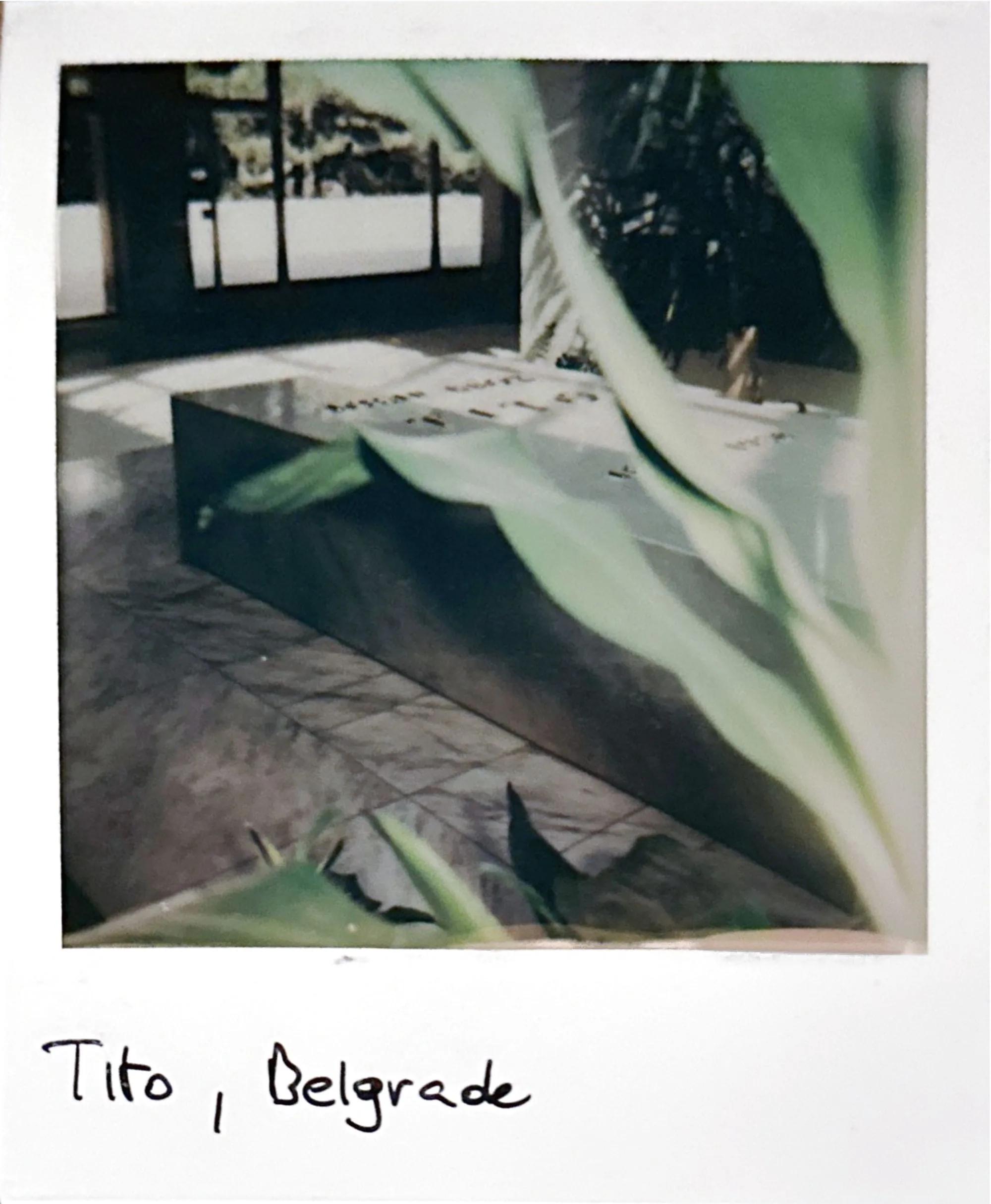
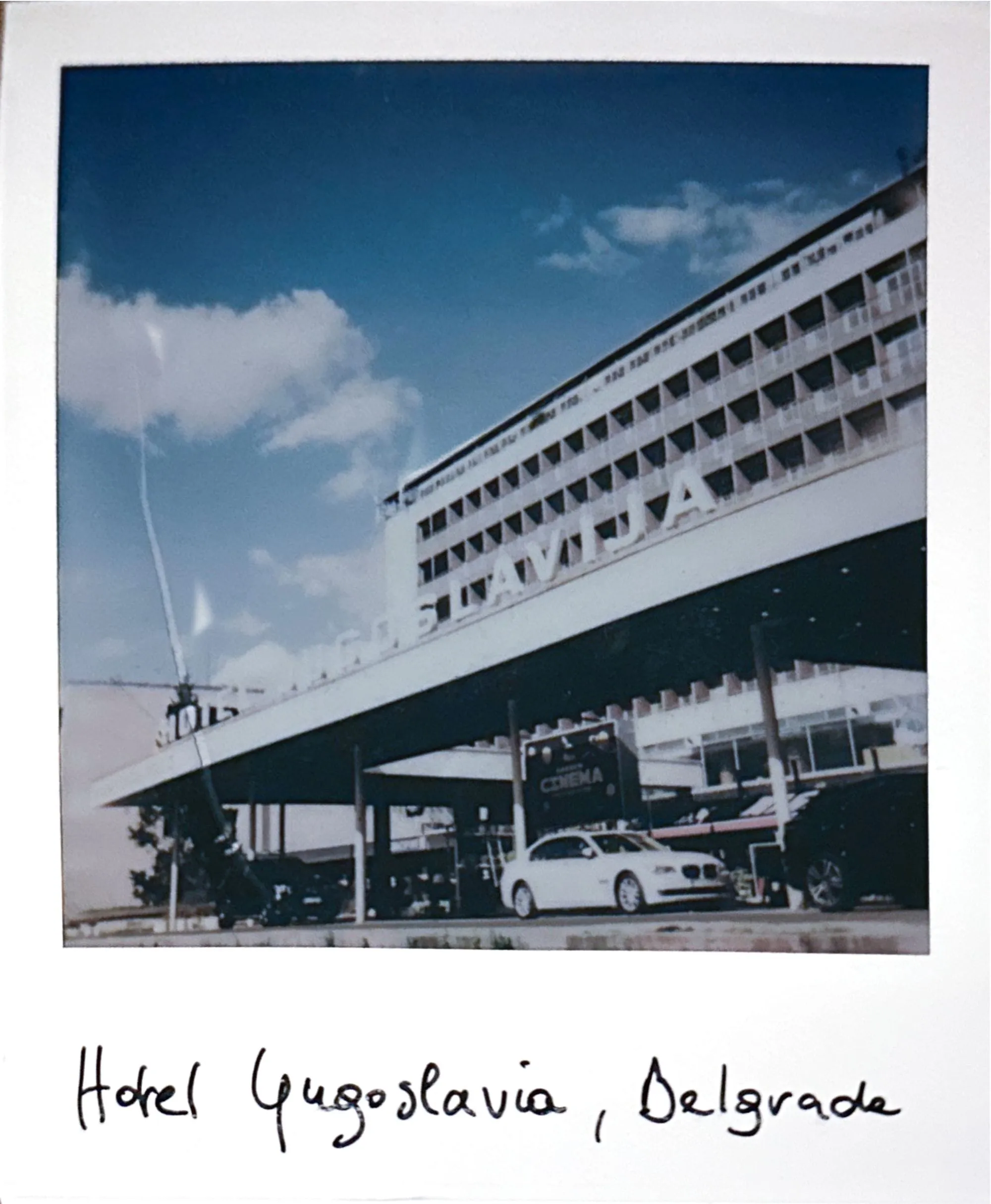
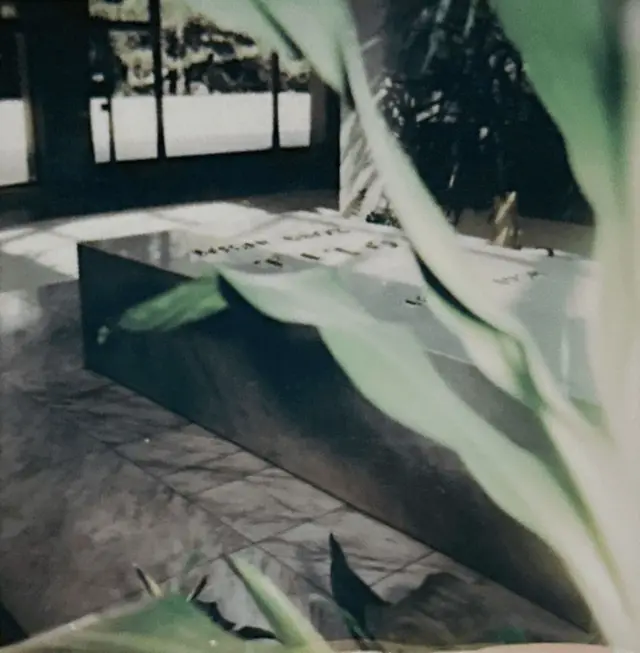
Left: the grave of Josep Tito, famous leader of Yugoslavia, right: Hotel Yugoslavia, a beautiful communist brutalist-style hotel.
Bulgaria
From Serbia I drove through Bulgaria, which was a great experience. I stayed in Sofia one night, and while I really was amazed by the beauty of the city, there’s something I just really love about the very rural provinces of Eastern Europe.
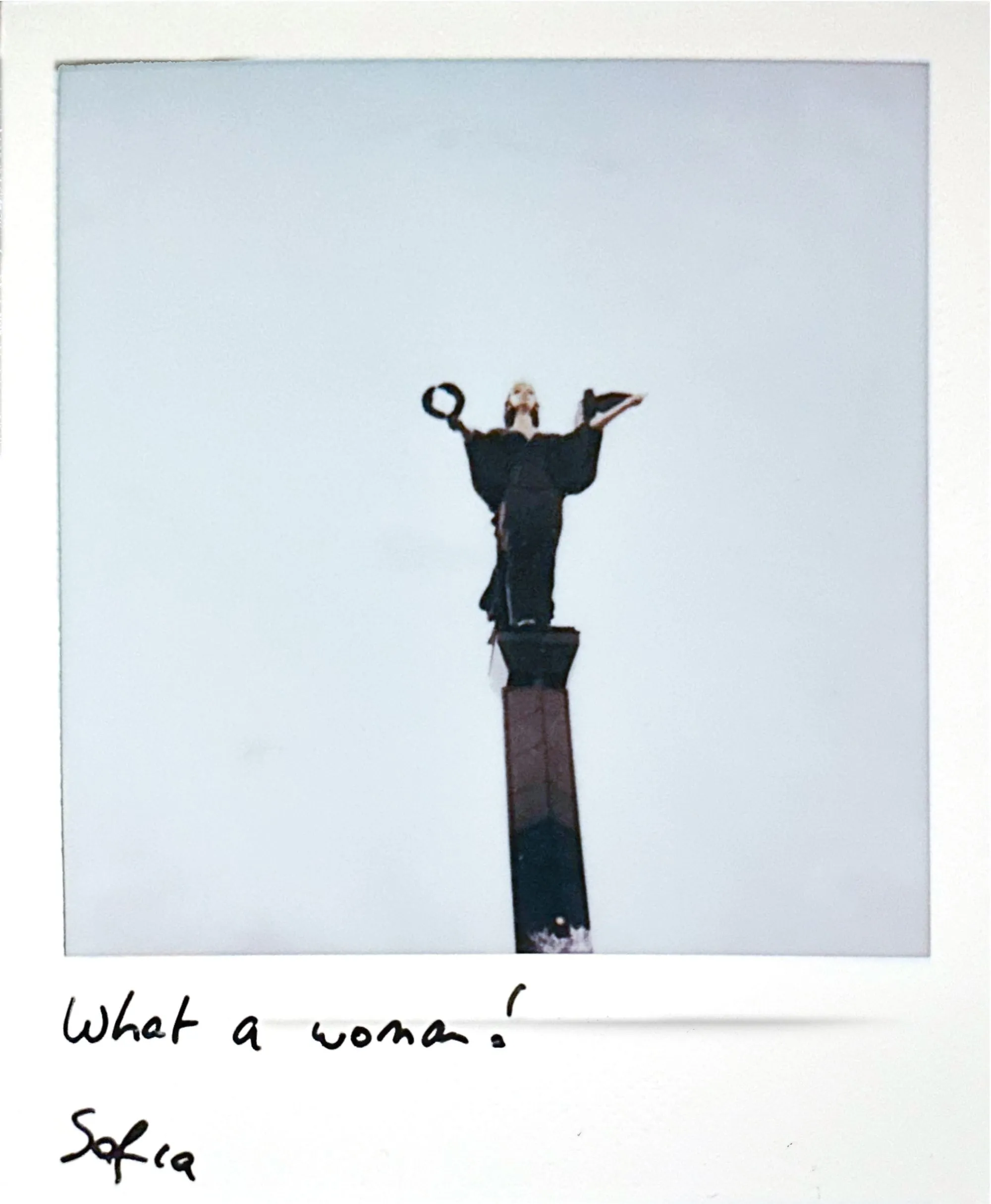
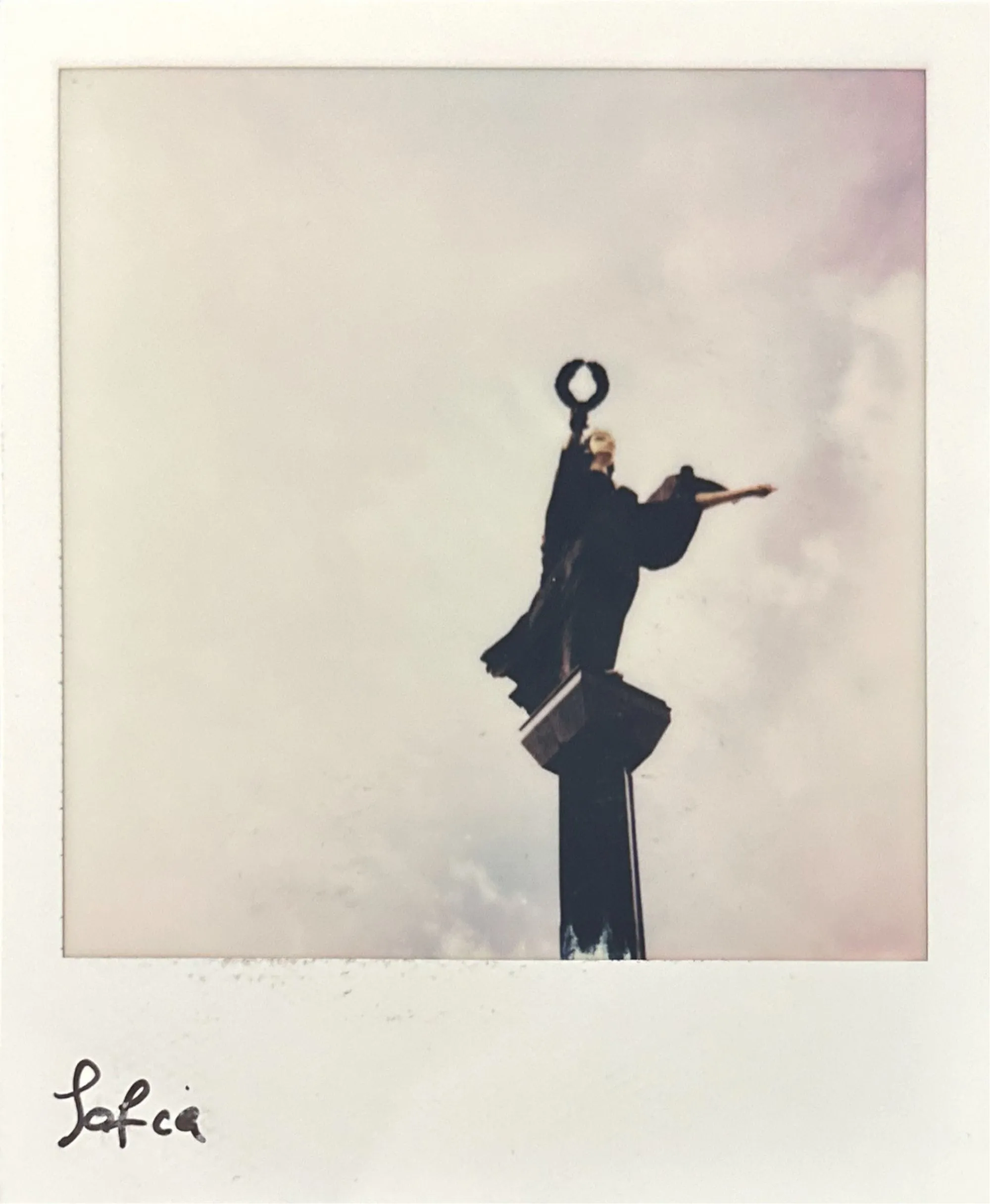
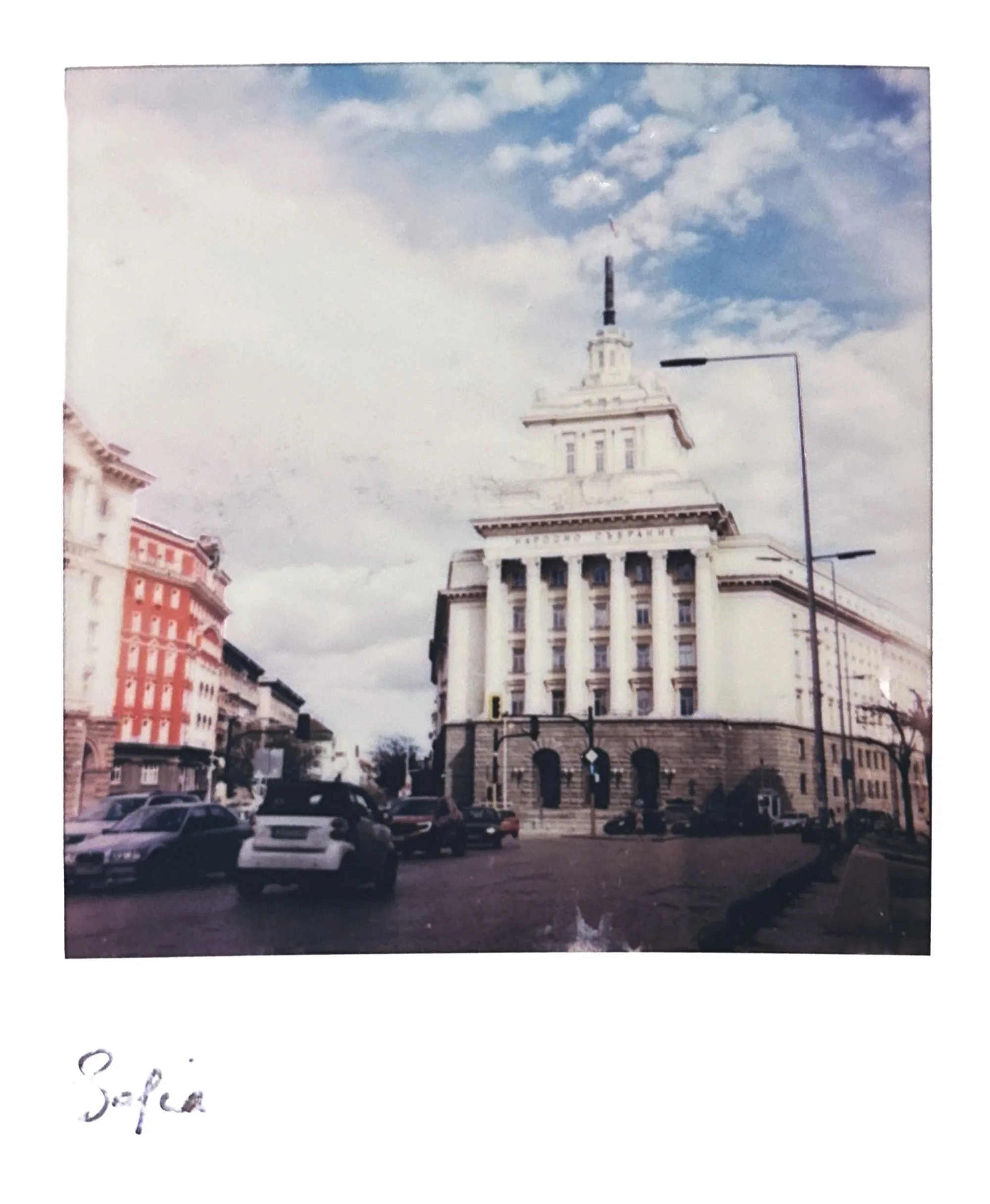
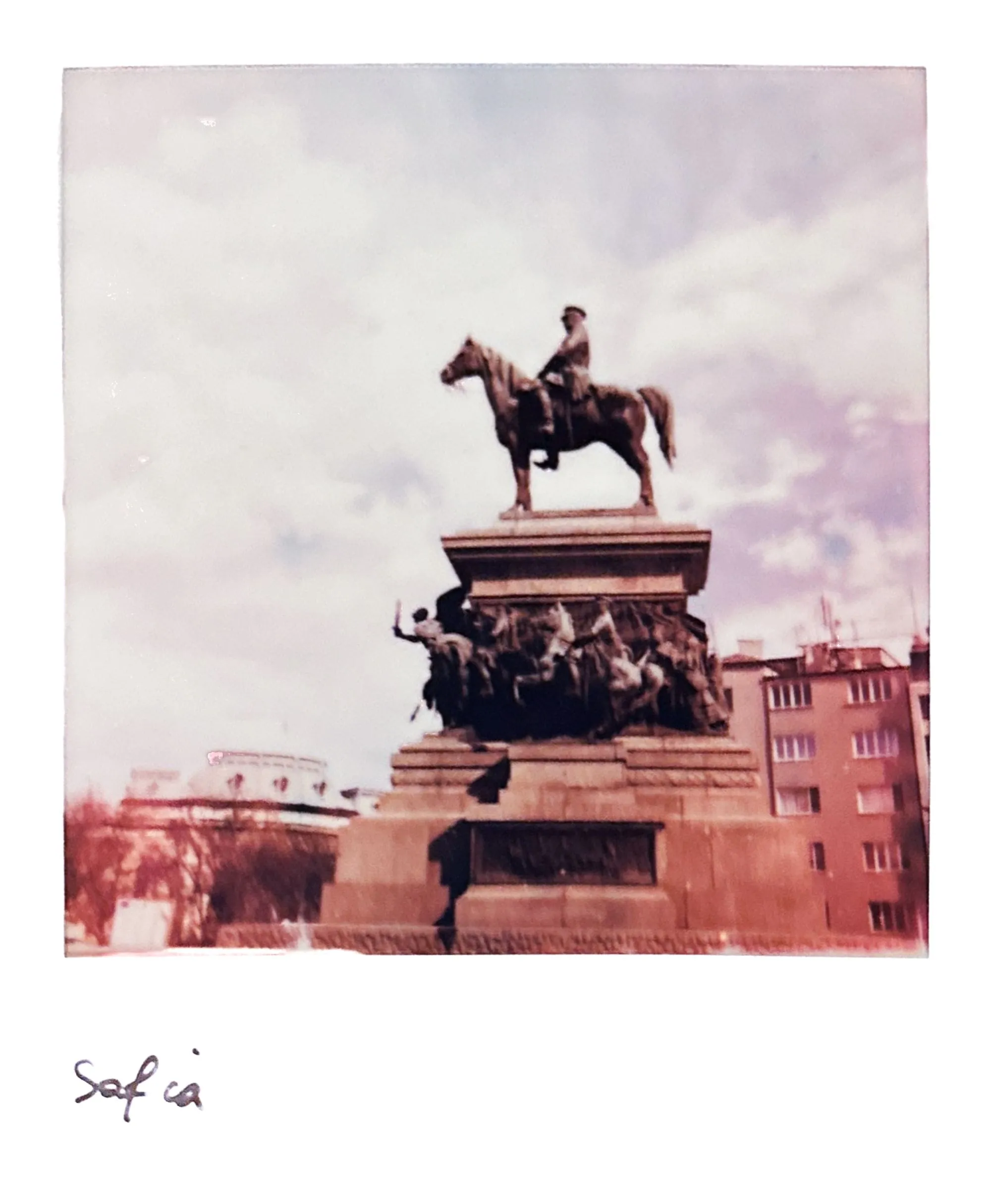
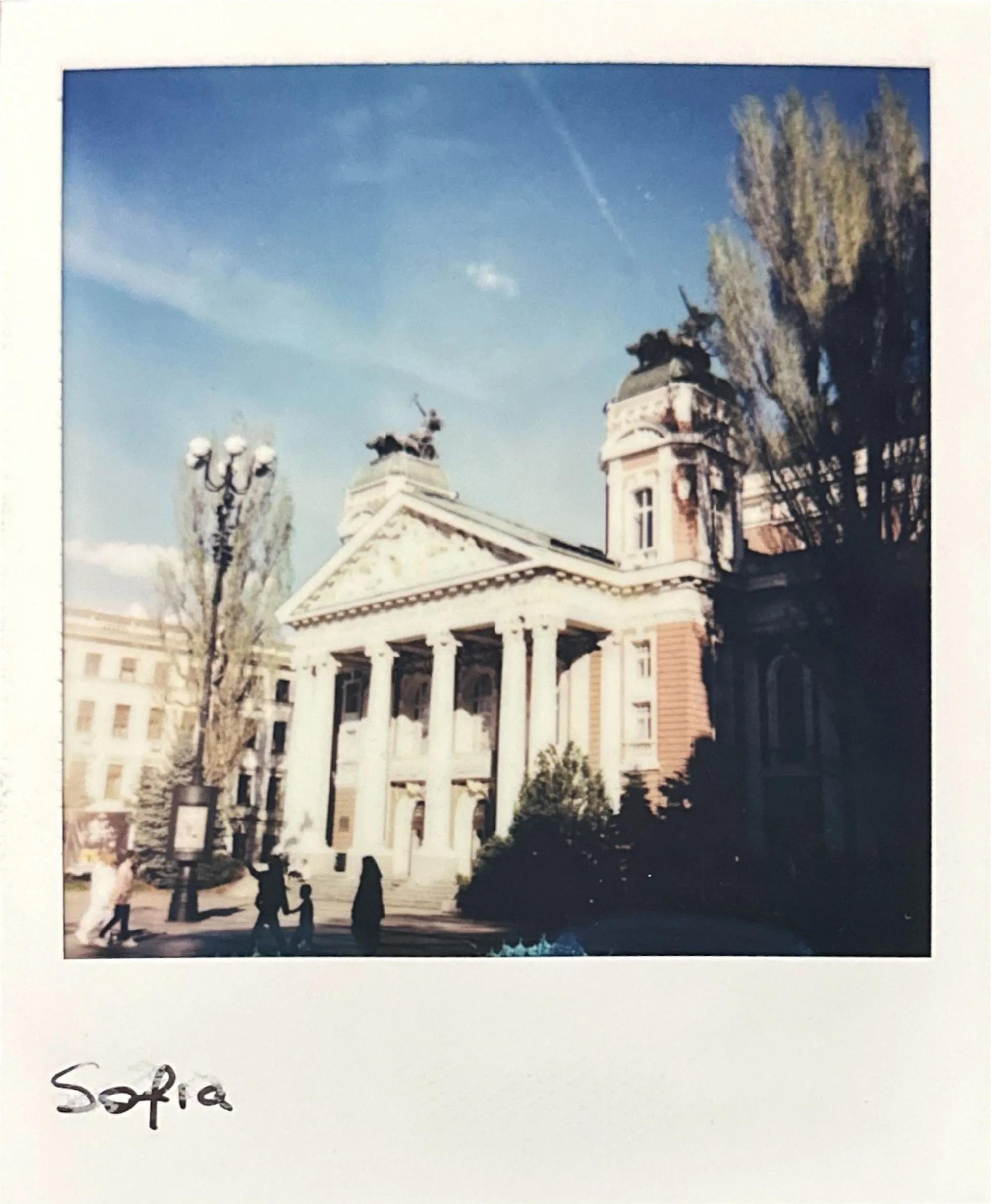
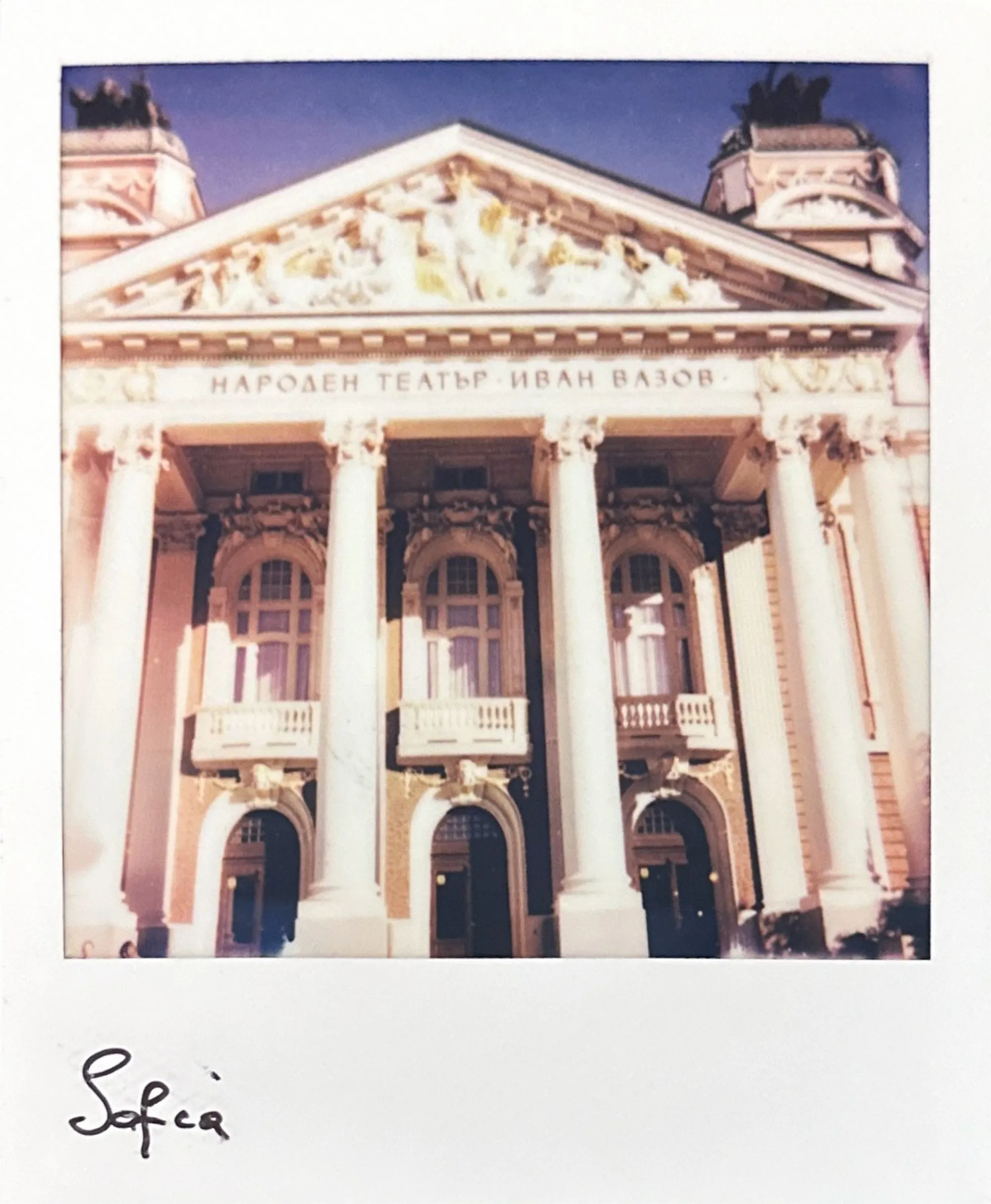
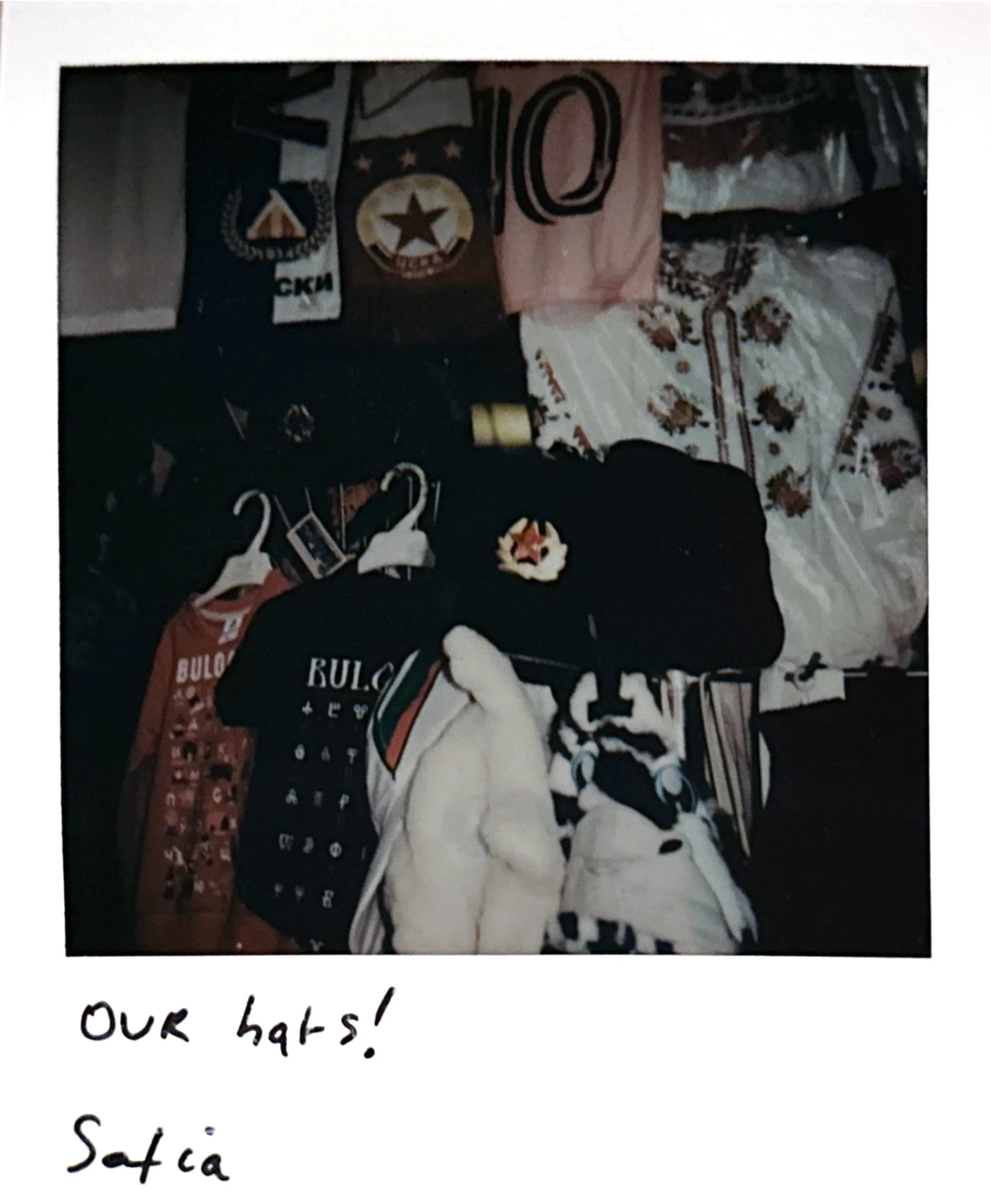
There’s just something really absurd about a shop selling both communist hats and Messi’s jersey
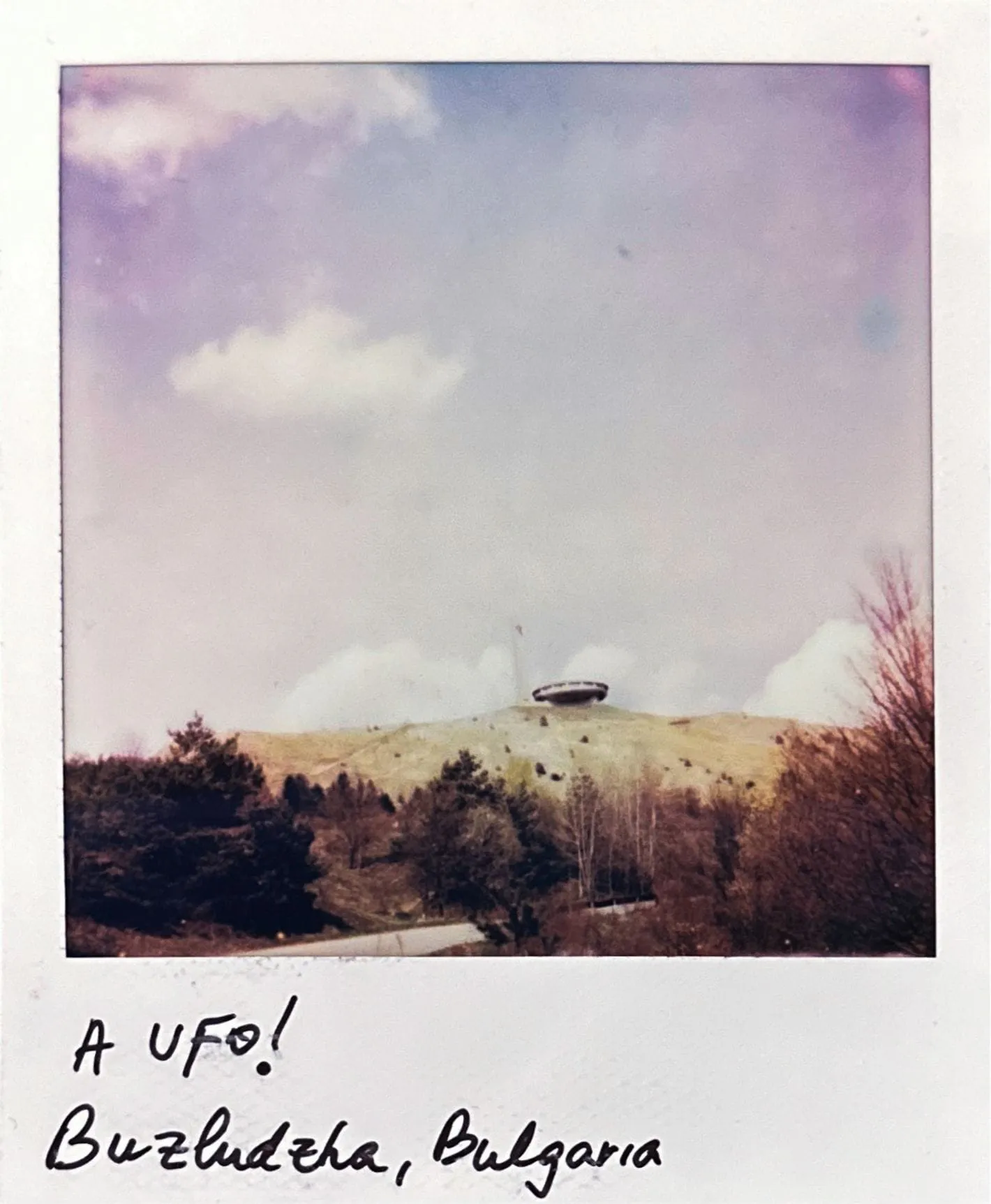
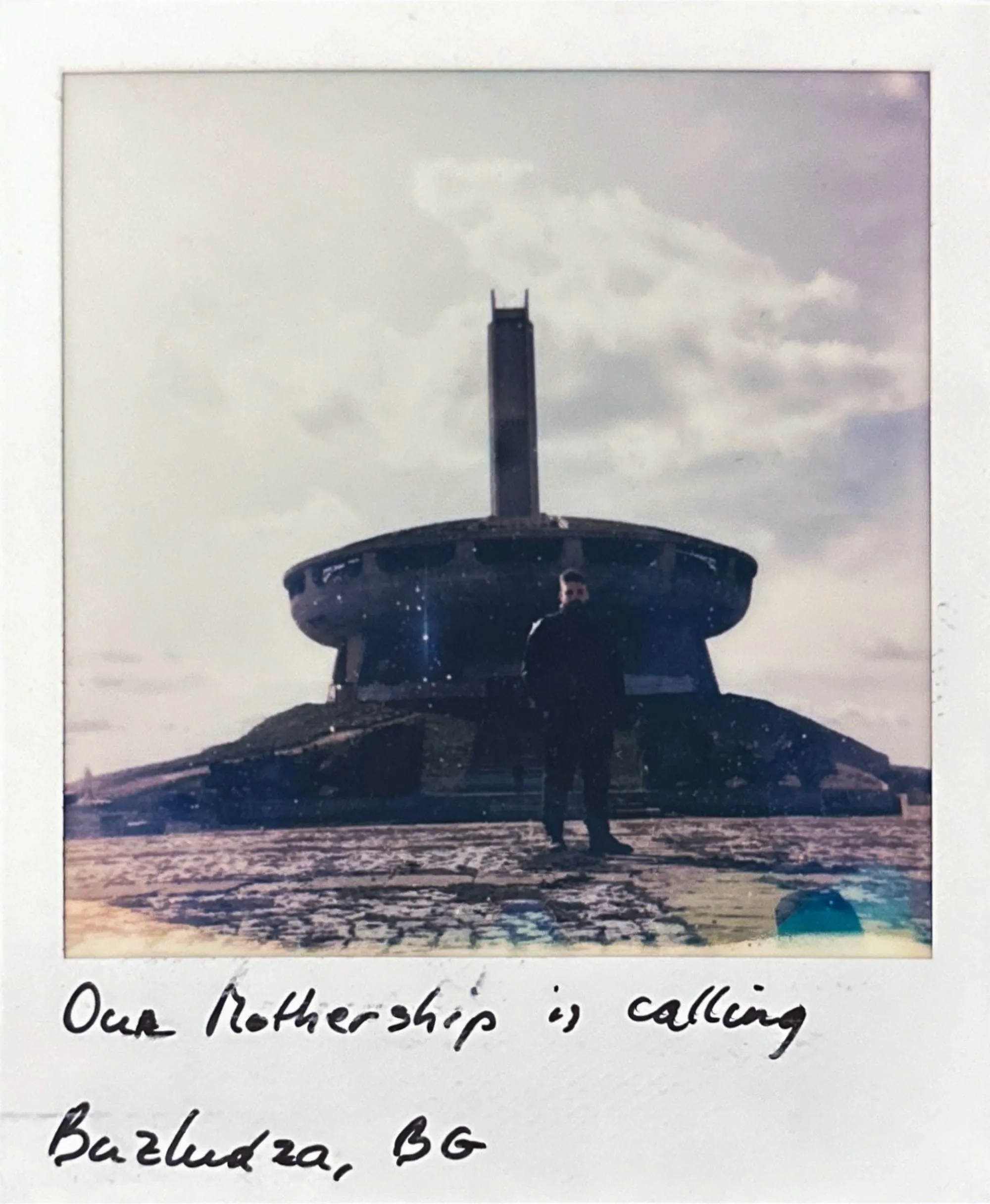
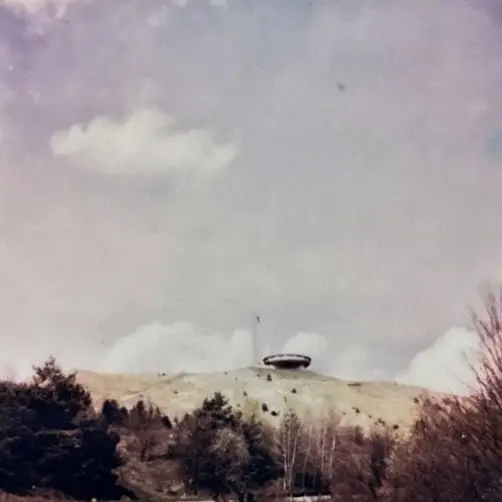
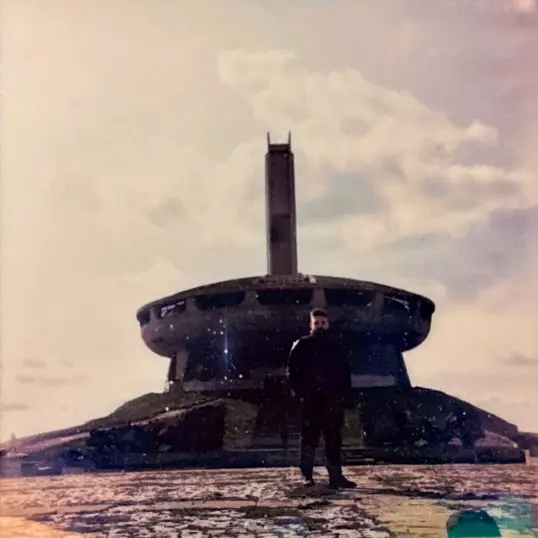
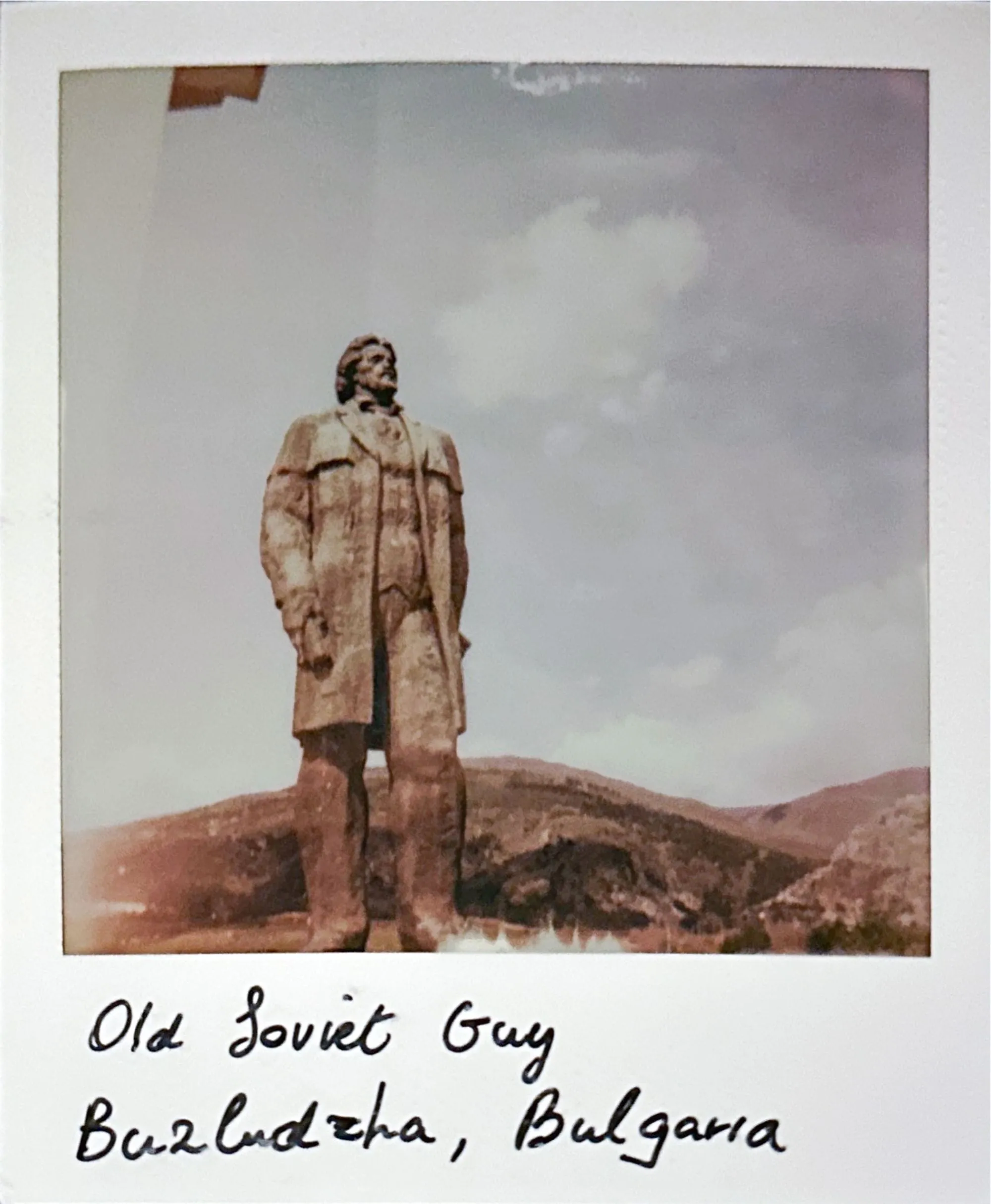
In central Bulgaria there is an enormous communist monument called the Buzludzha monument. It’s closed off for the public unfortunately, as it’s on the verge of collapse. Inside there are the most beautiful Soviet style mosaics
I added the Buzludzha monument to Google Street View, and made a reel about the whole process
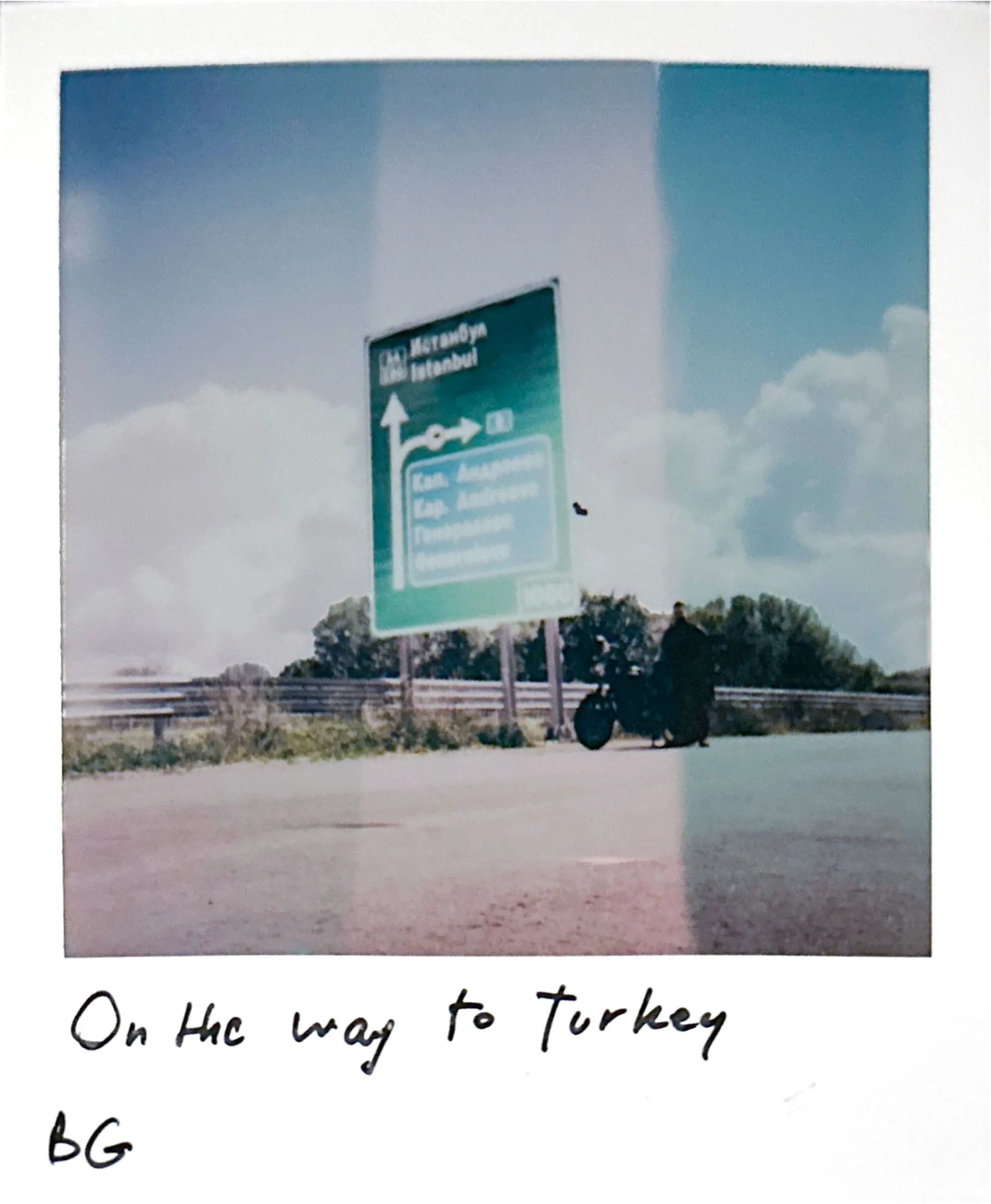
On the way to Turkiye I saw a sign pointing to Istanbul, and then it hit me that this adventure was really happening
Turkiye
Right at the border of Bulgaria and Turkiye, there’s a beautiful city called Edirne where I stayed for a night.
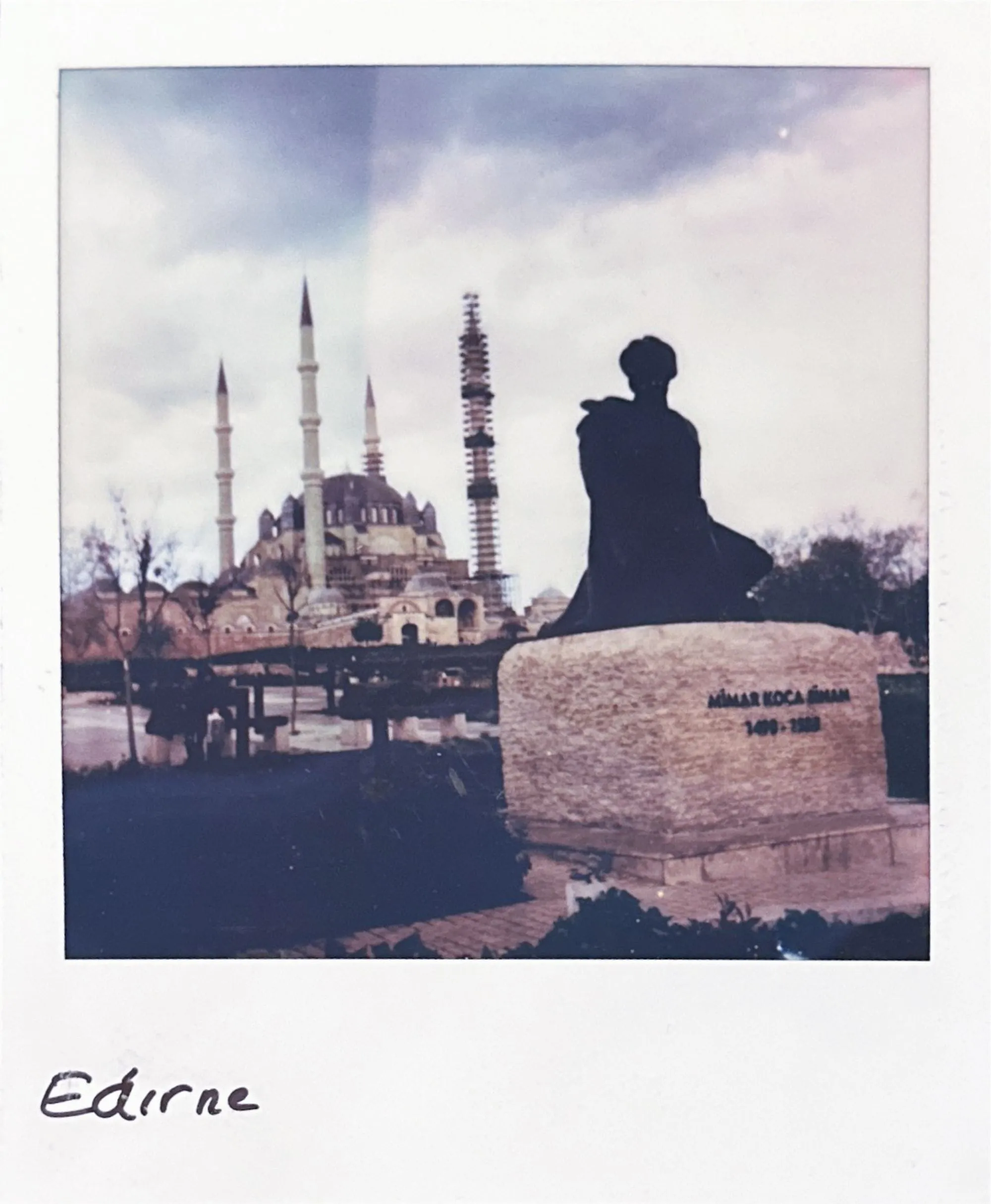
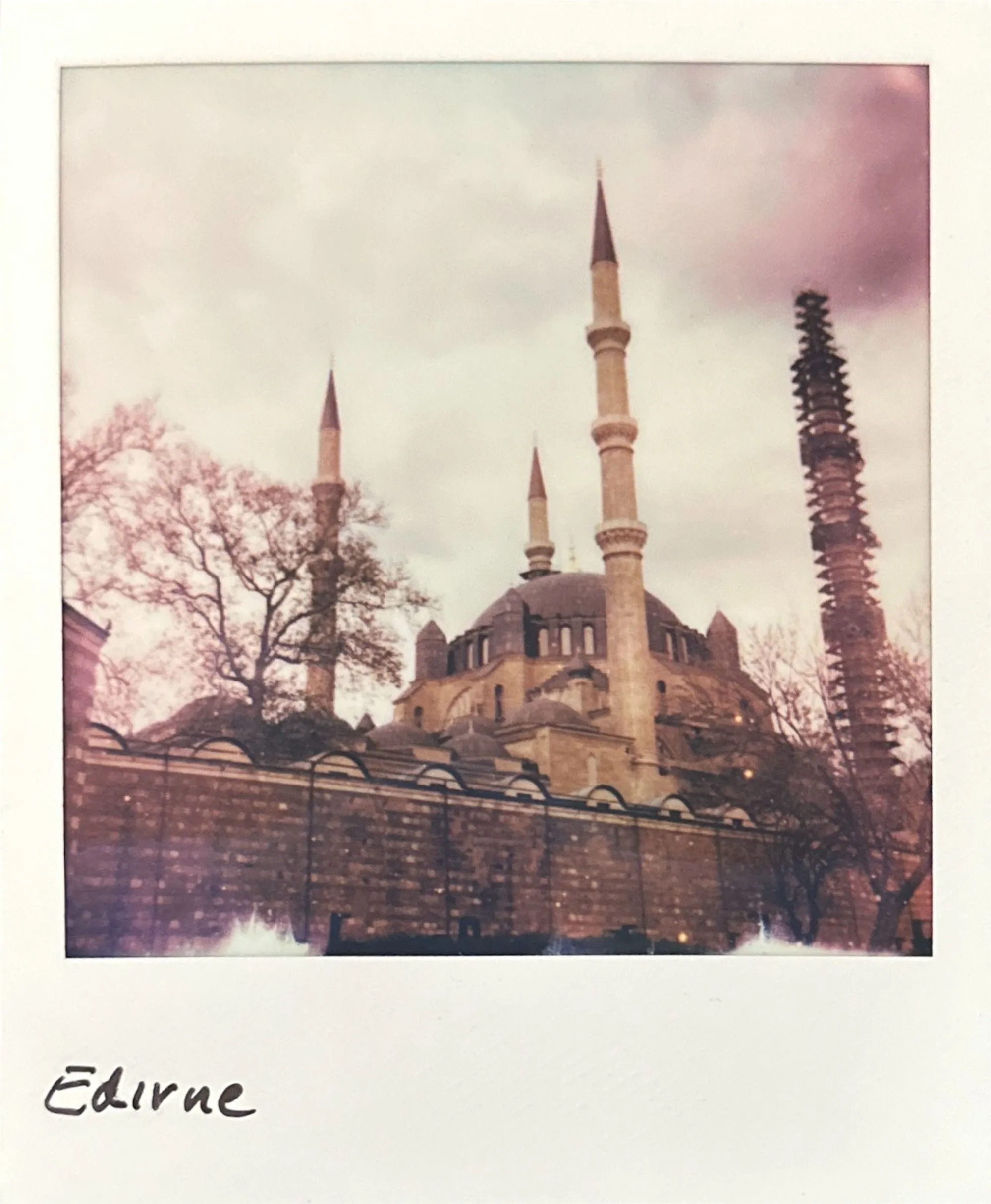
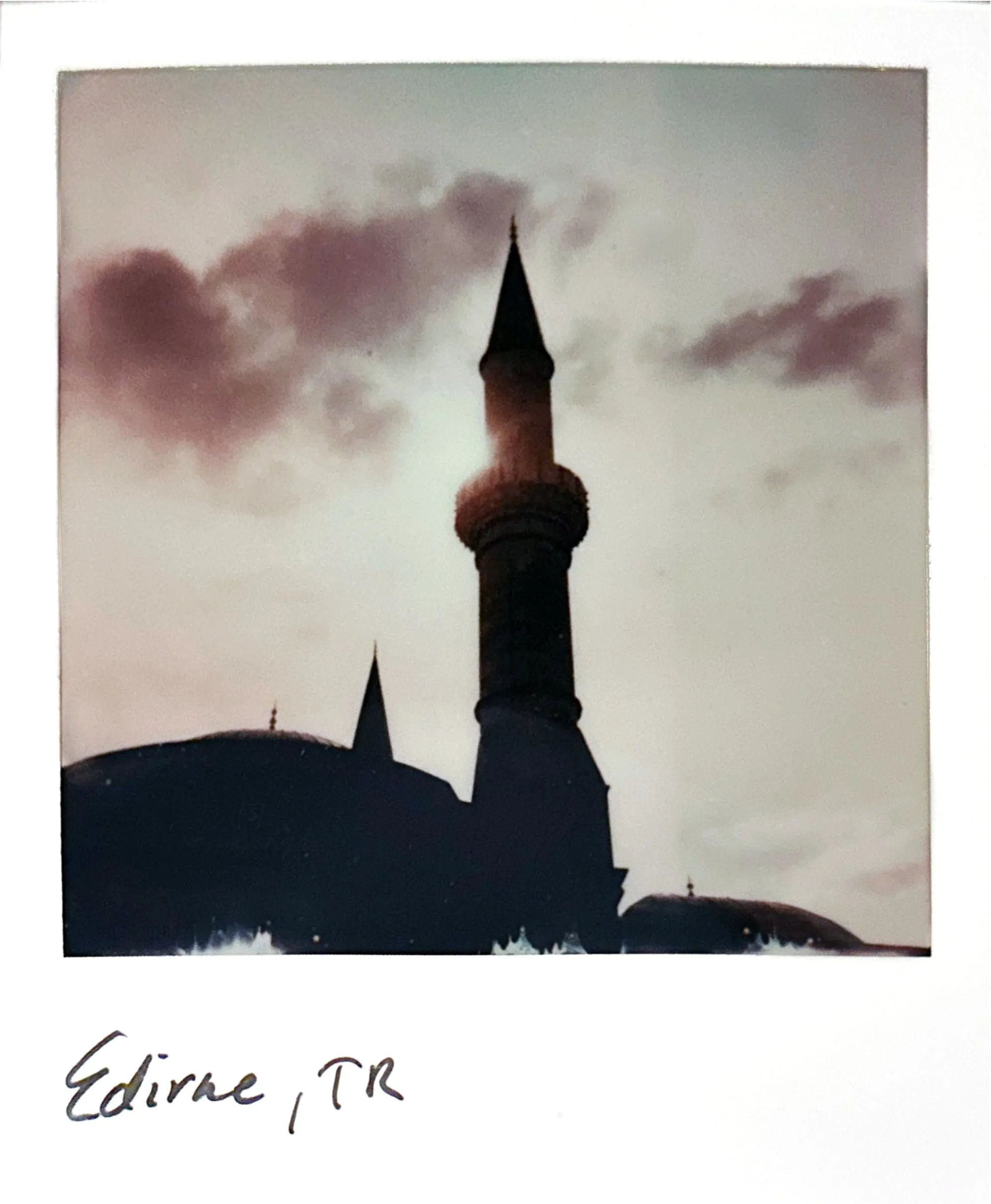
From Edirne, I drove south to the Dardanelles to visit the ruins of Troy.
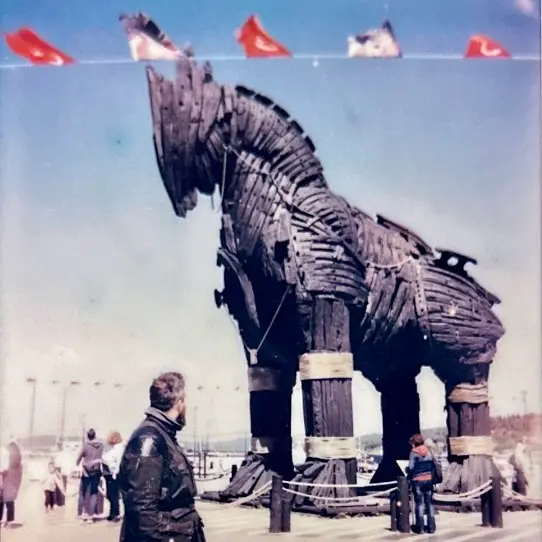
Yes that Troy! In Çanakkale they even have the original horse of the 2004 movie with Brad Pitt, Orlando Bloom, and Diane Kruger.
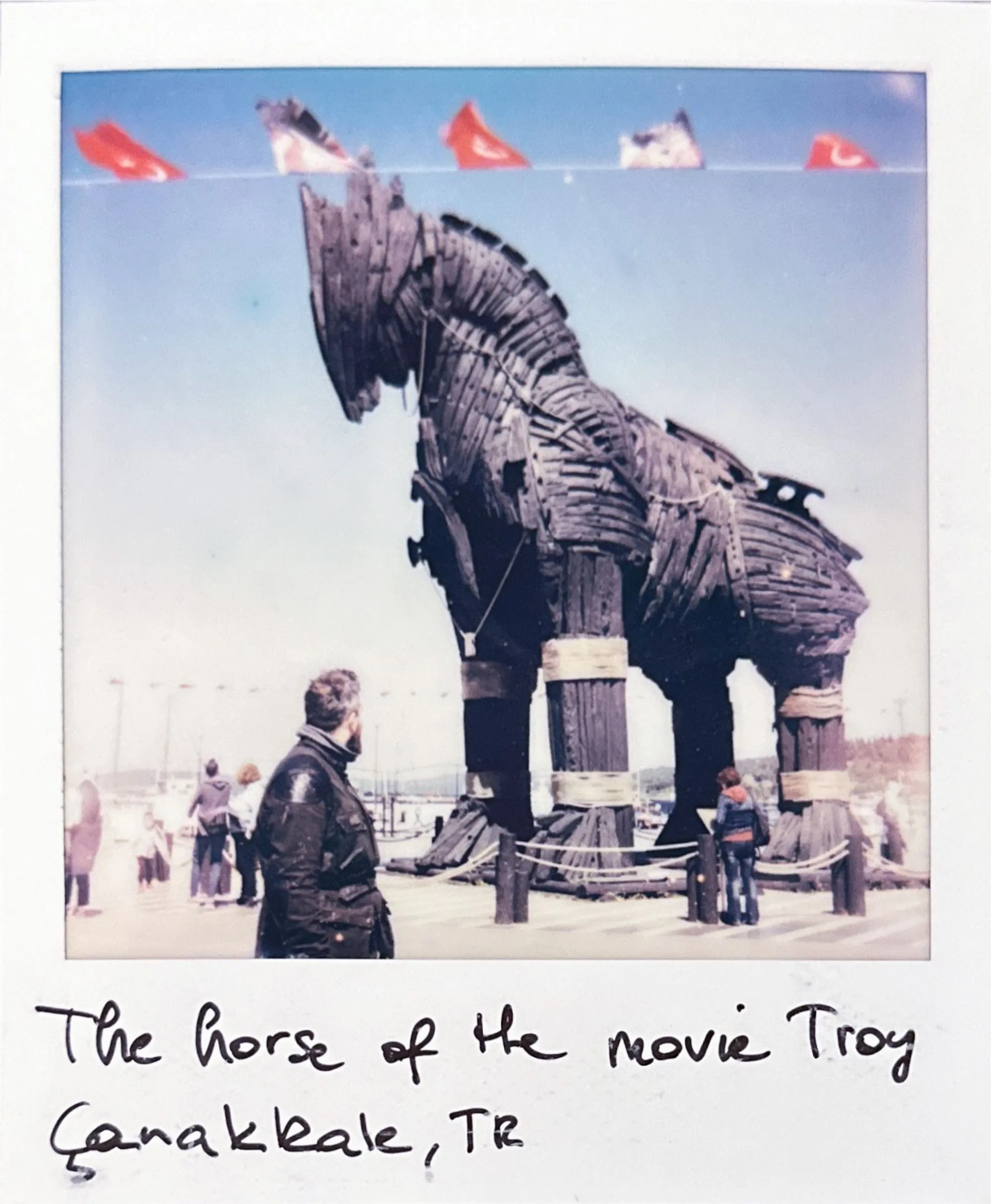
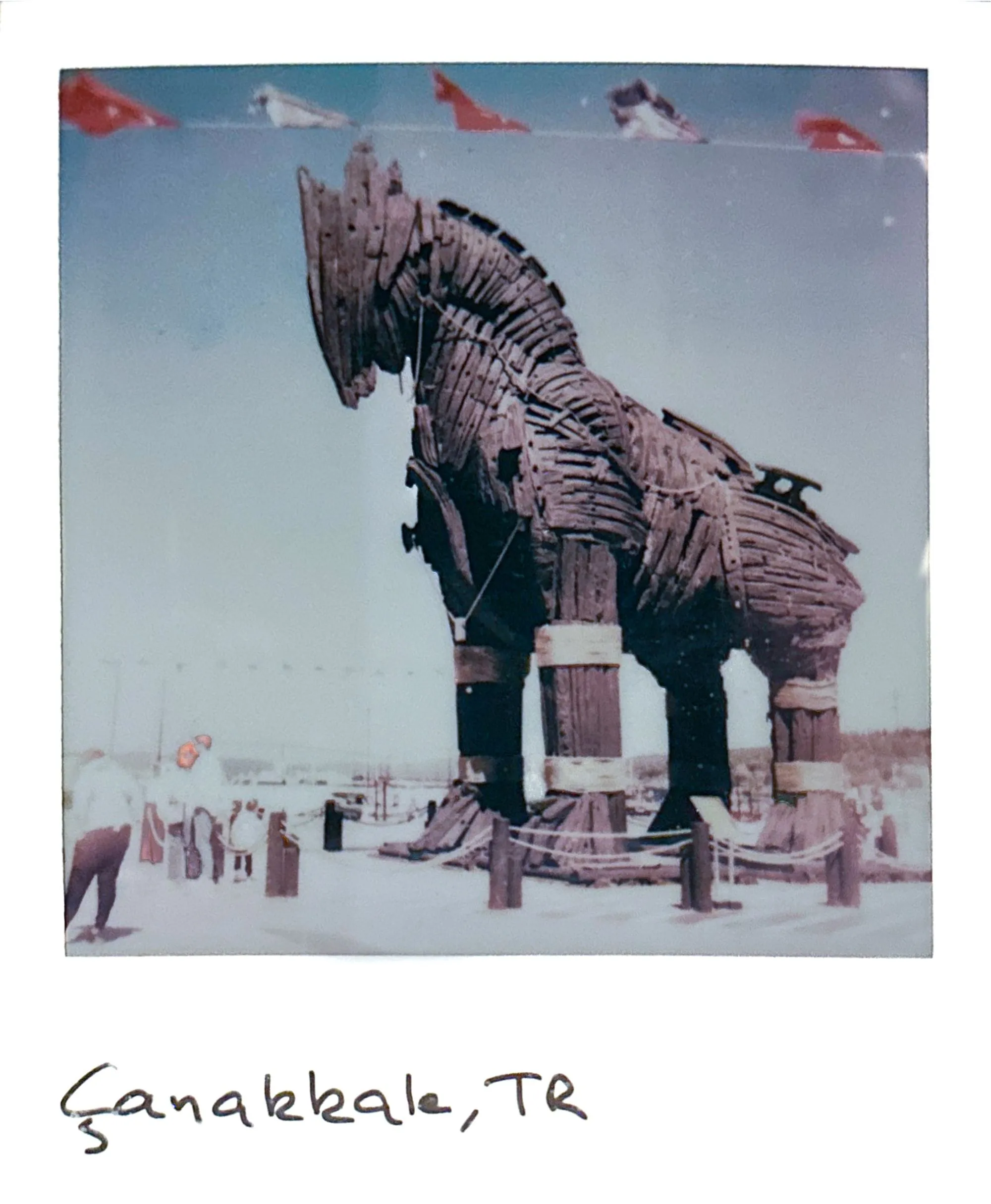
Guess who in the world added the mythical city of Troy to Google Street View.. 😎
From Çanakkale I drove more south along the west coast of Turkiye. What an amazing trip that was.
You can’t see it really well, but that book is a translation of the Epic of Gilgamesh. Foreshadowing!?
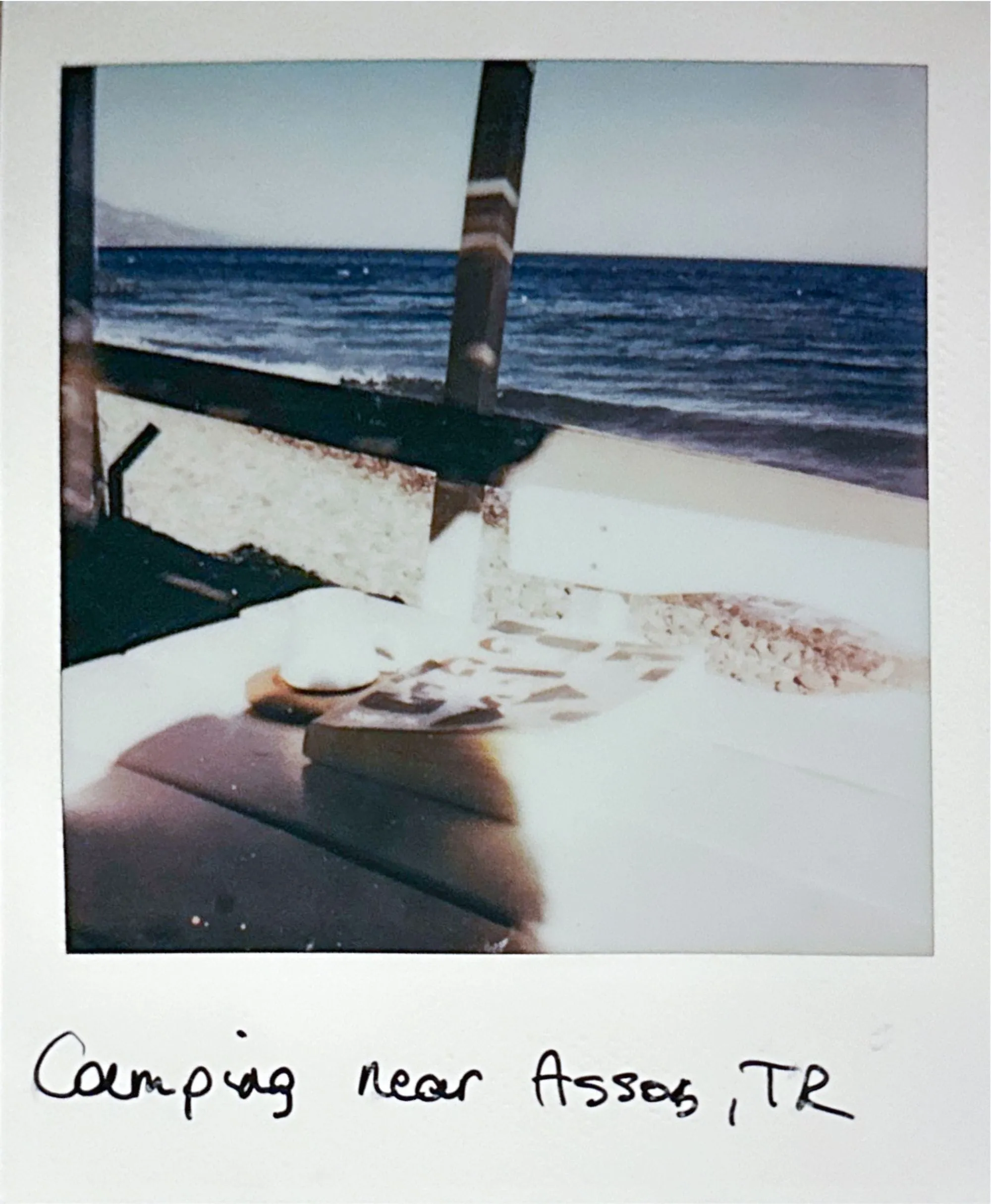
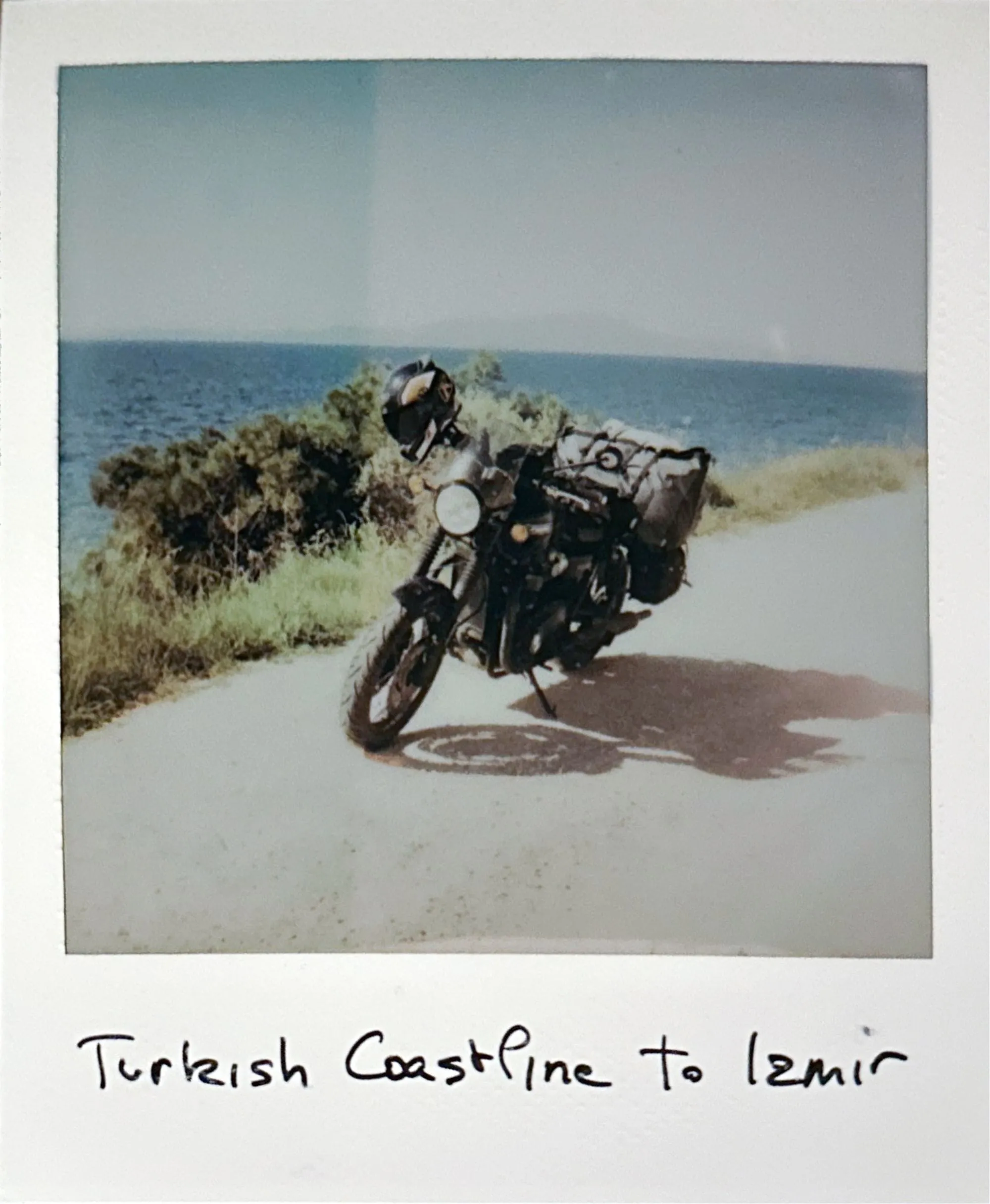
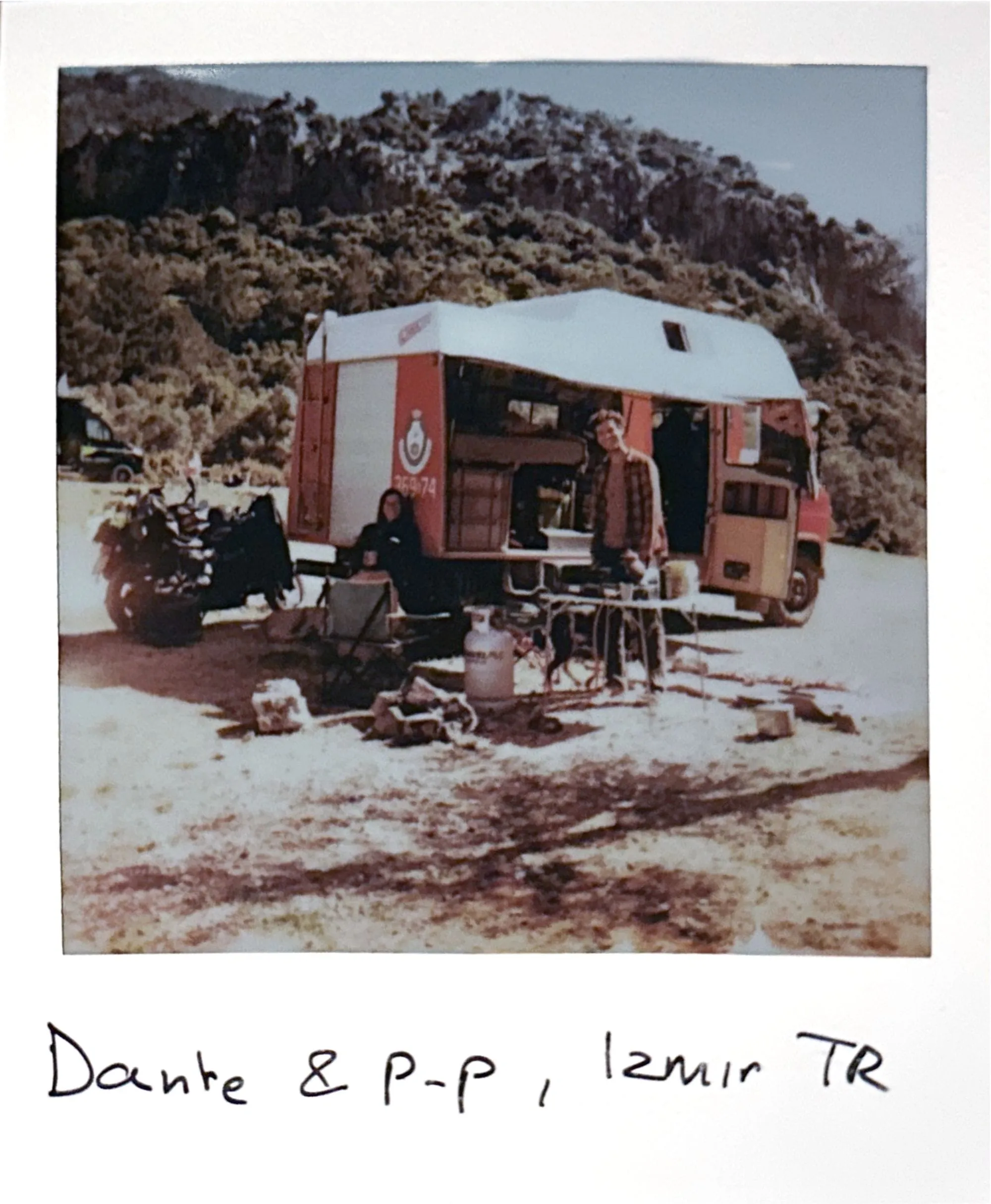
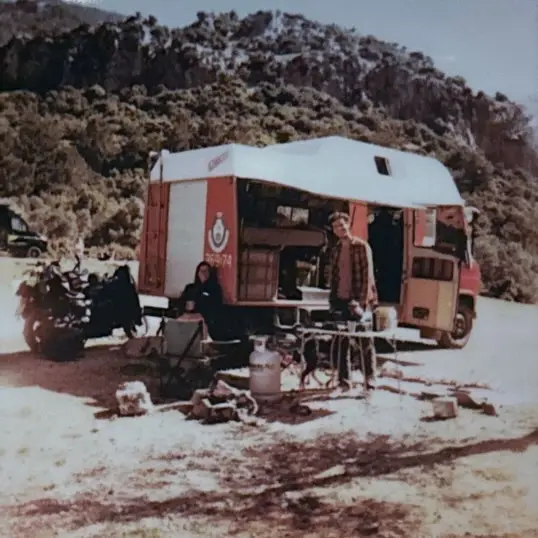
I met these Belgians who transformed an old Polish fire truck to a beast of an overlander camper. You can see my Bonnie left from the truck.
From the west coast of Turkiye, I crossed the whole country from east to west, from Izmir to Van.
Central Turkiye was so nice to drive, the people were so friendly.
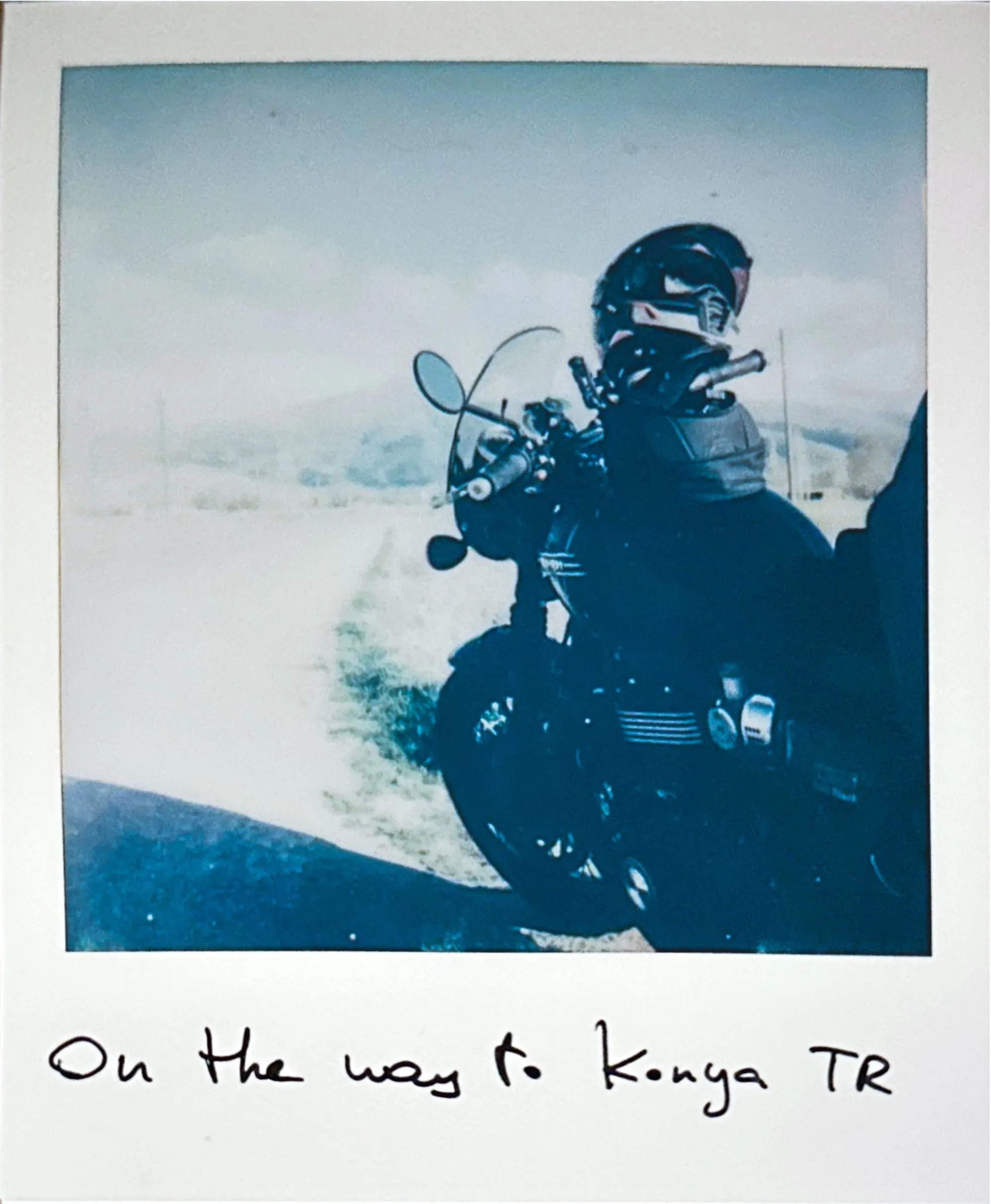
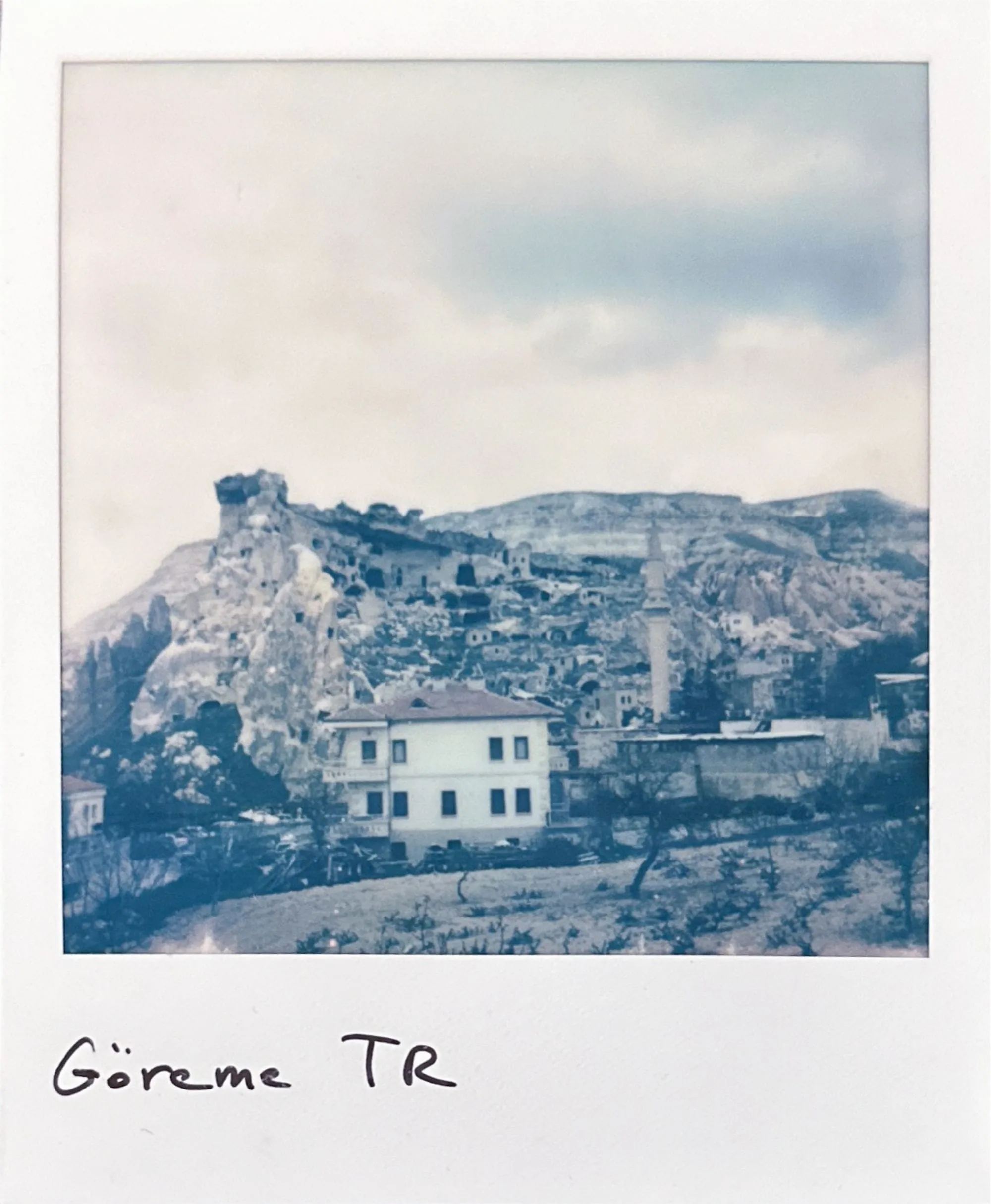
In central Turkiye I visited Konya, Cappadocia, Gobekli Tepe and the amazing city of Batman 🦇 (truth be told, this was a detour, but hey, I’m not gonna miss out on Batman)
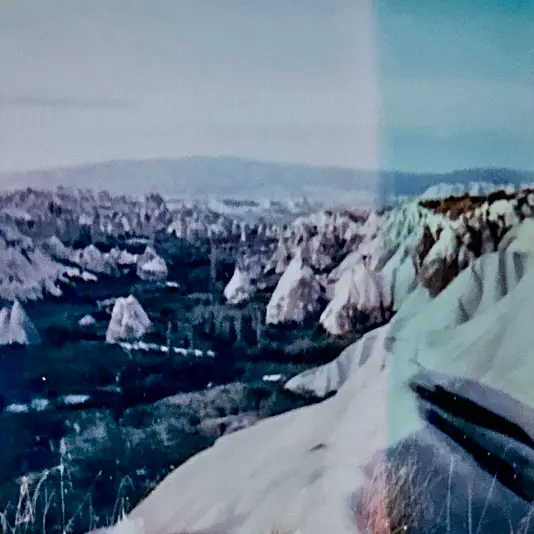
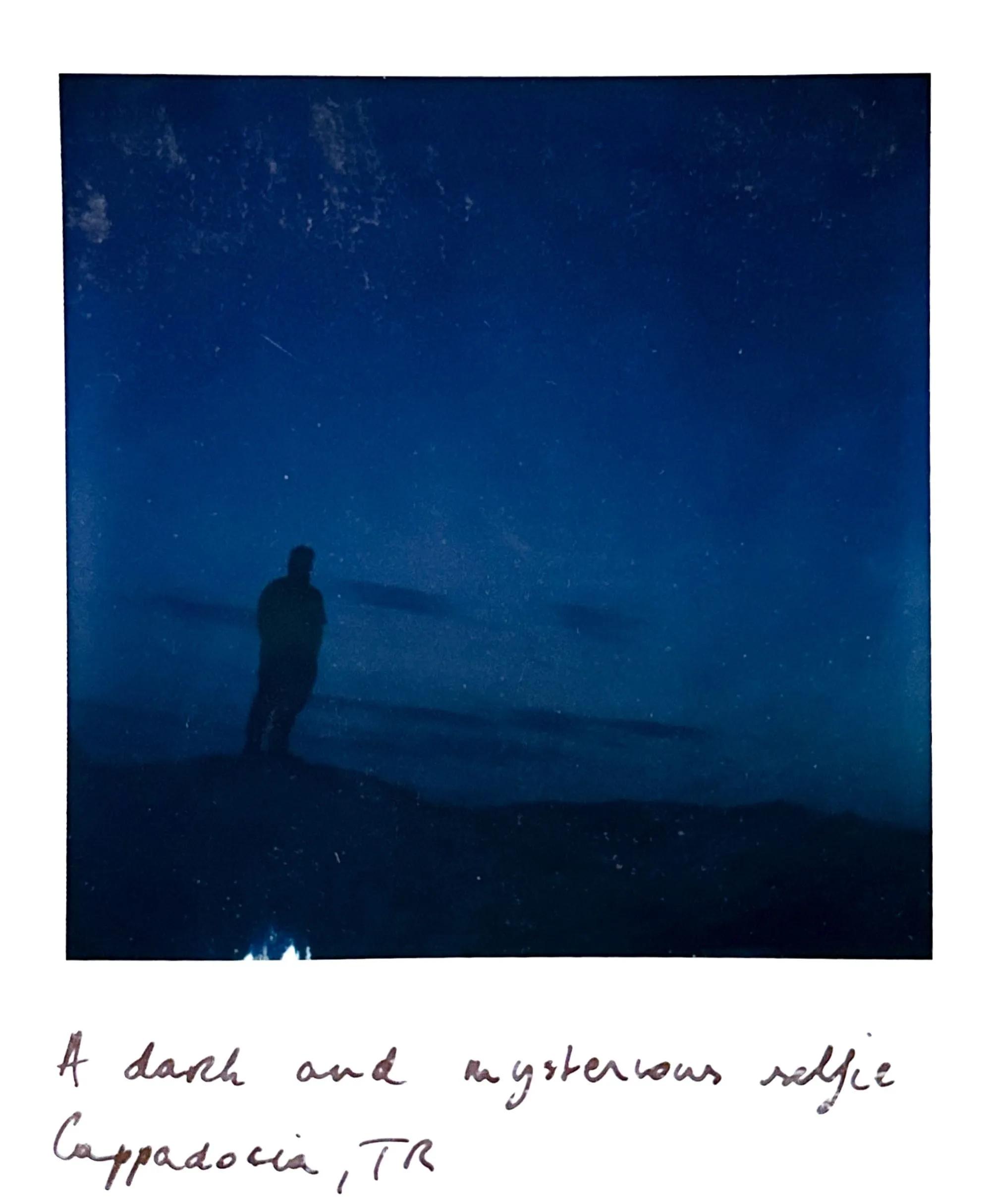
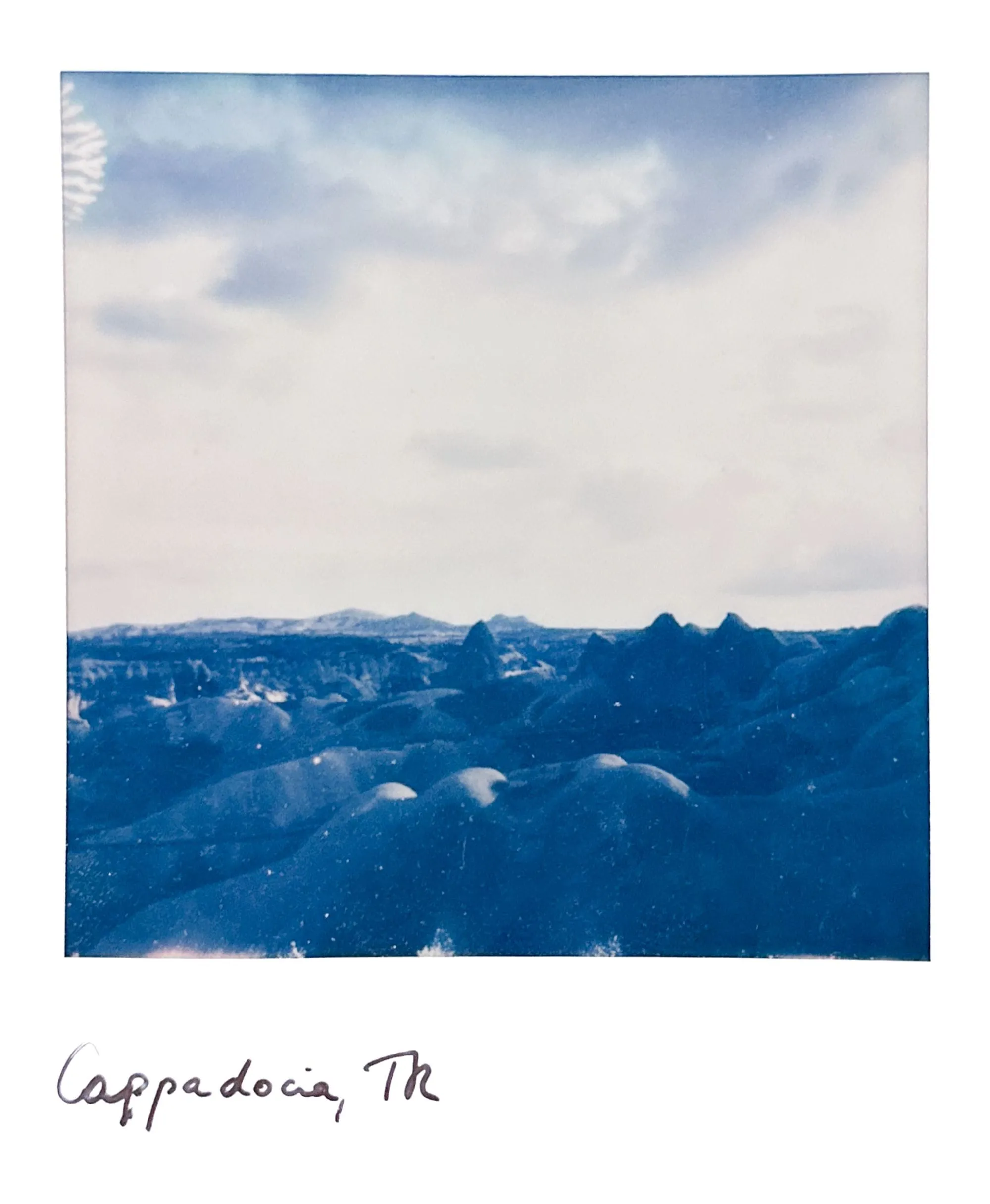
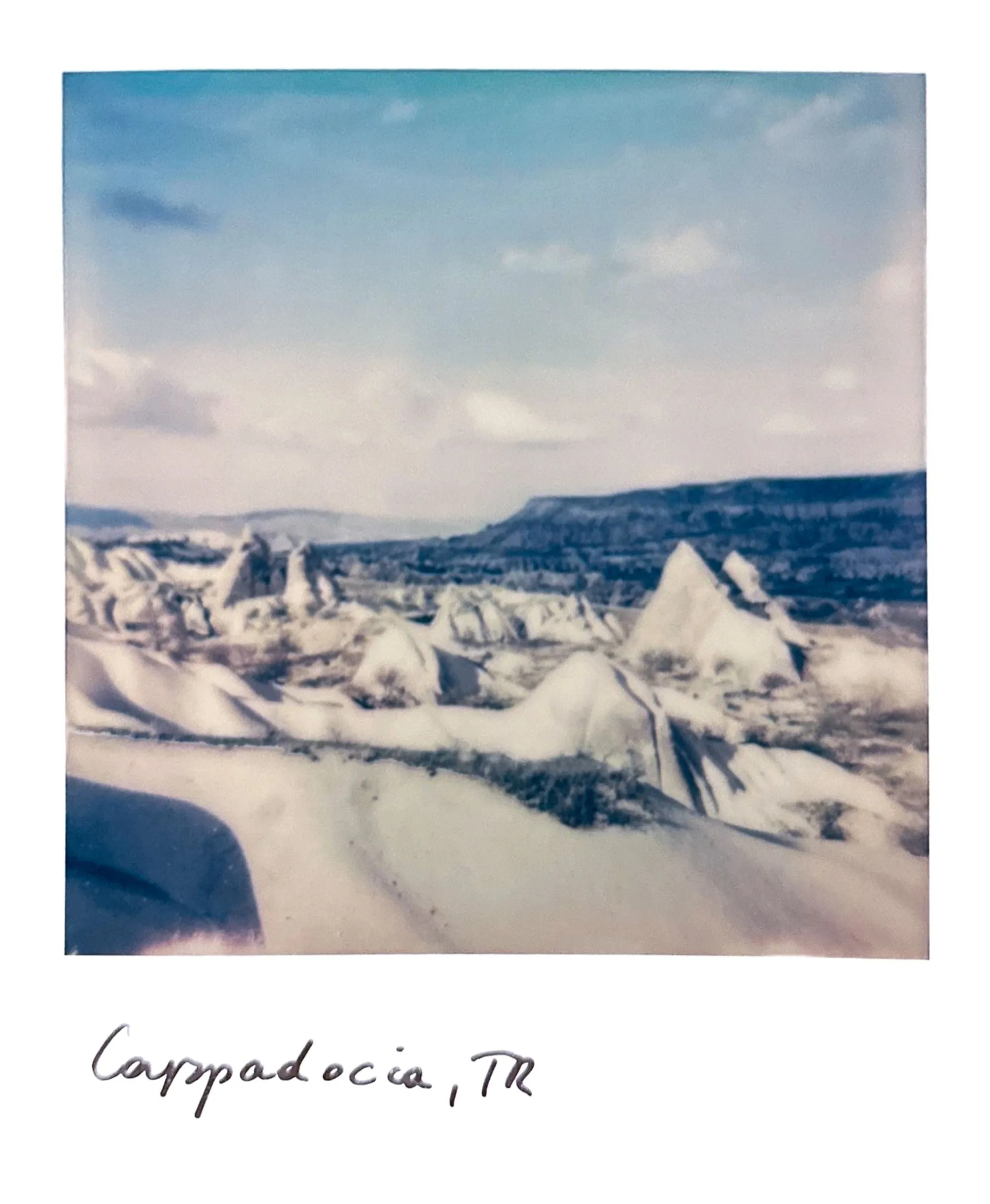
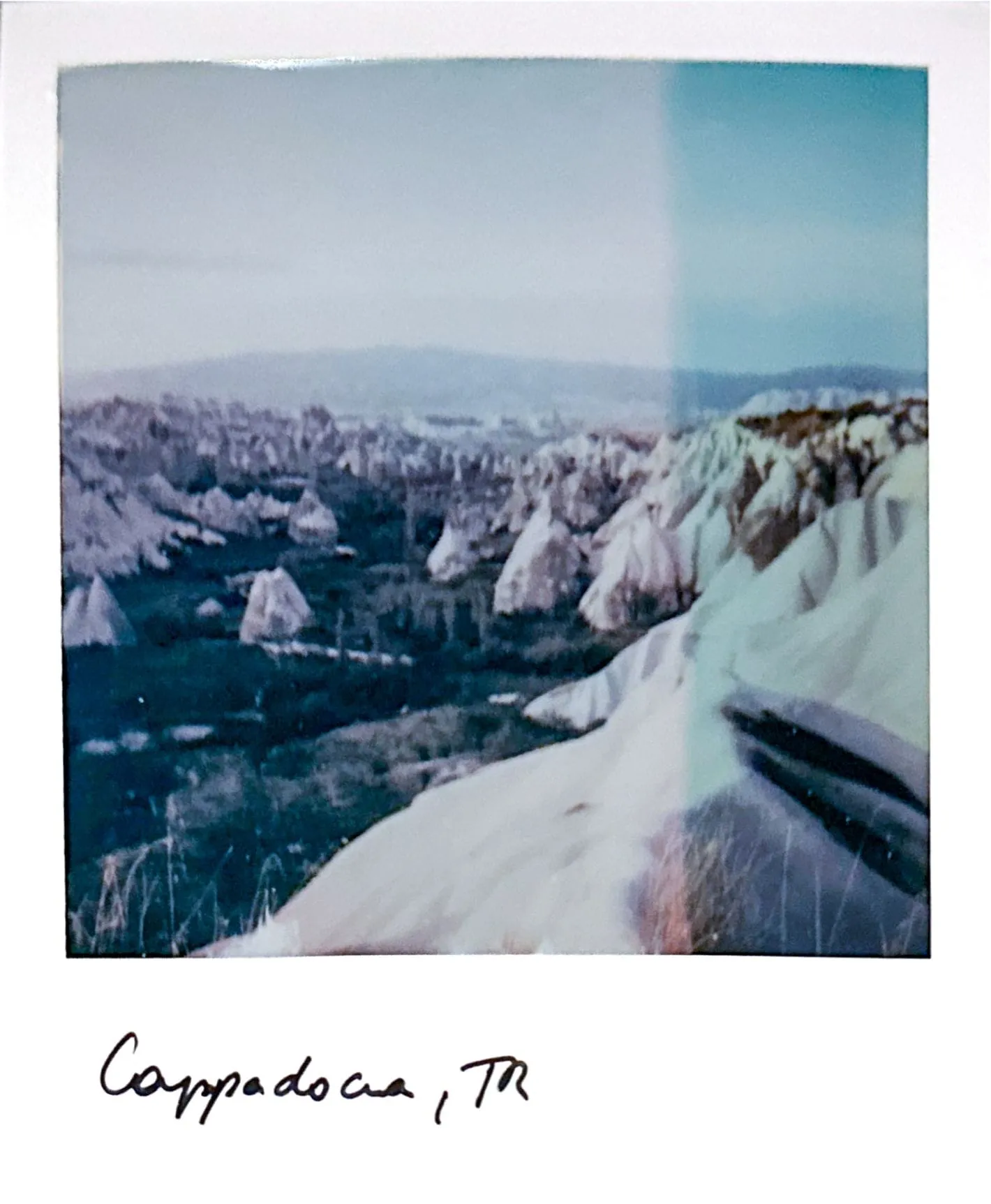
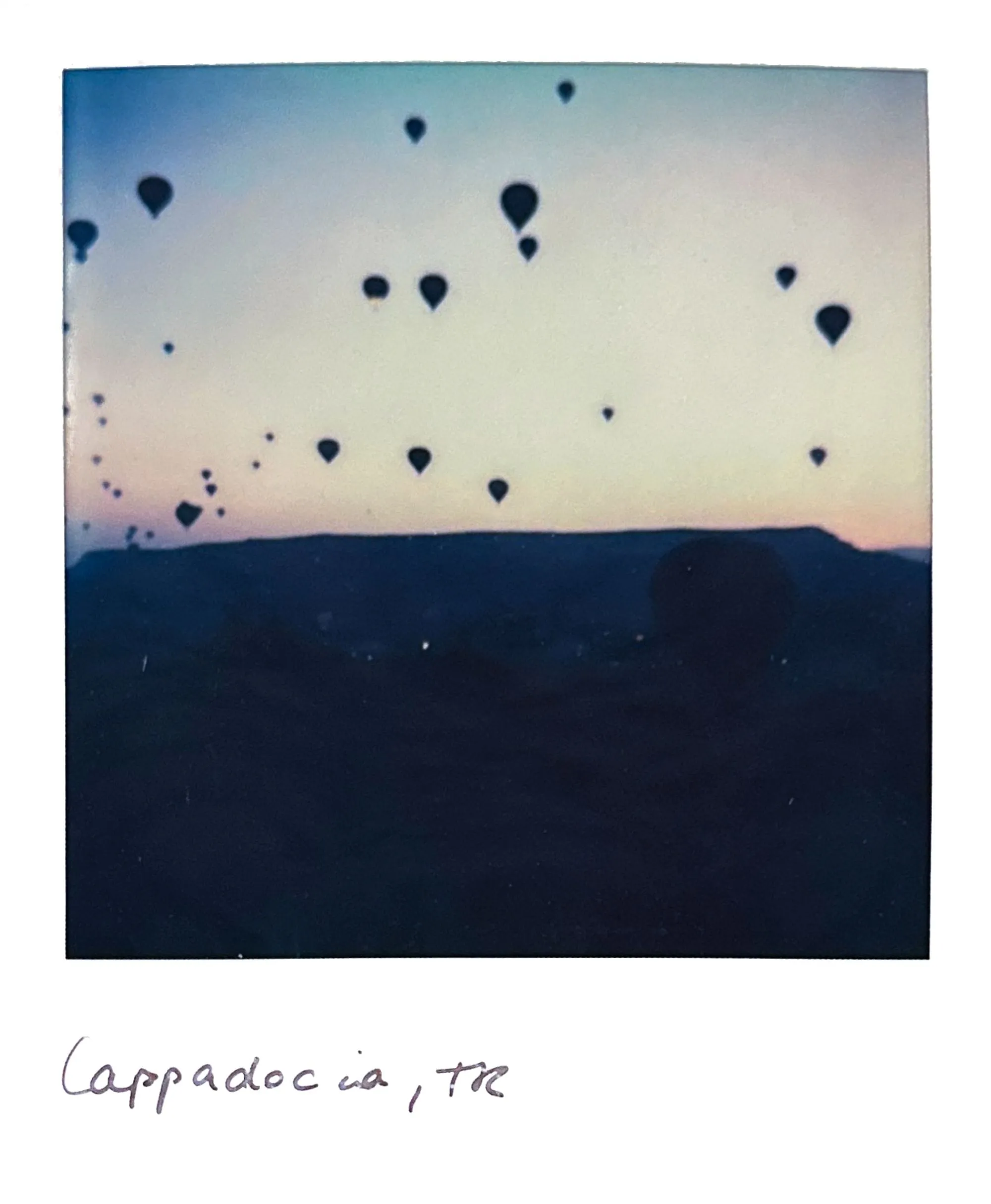
Cappadocia was as magical as you think it is. It feels like you’re driving through the Grand Canyon in the US.
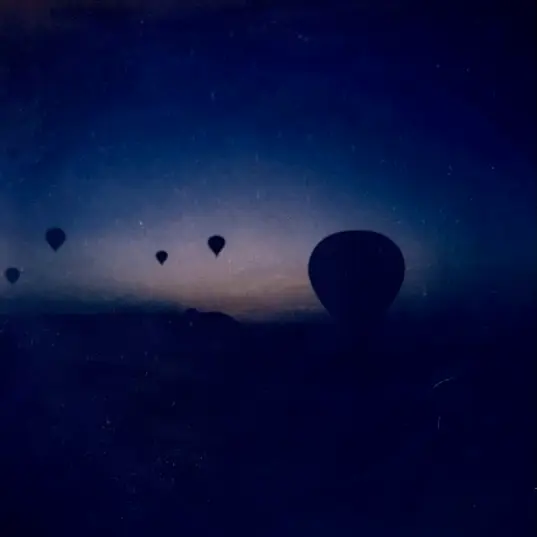
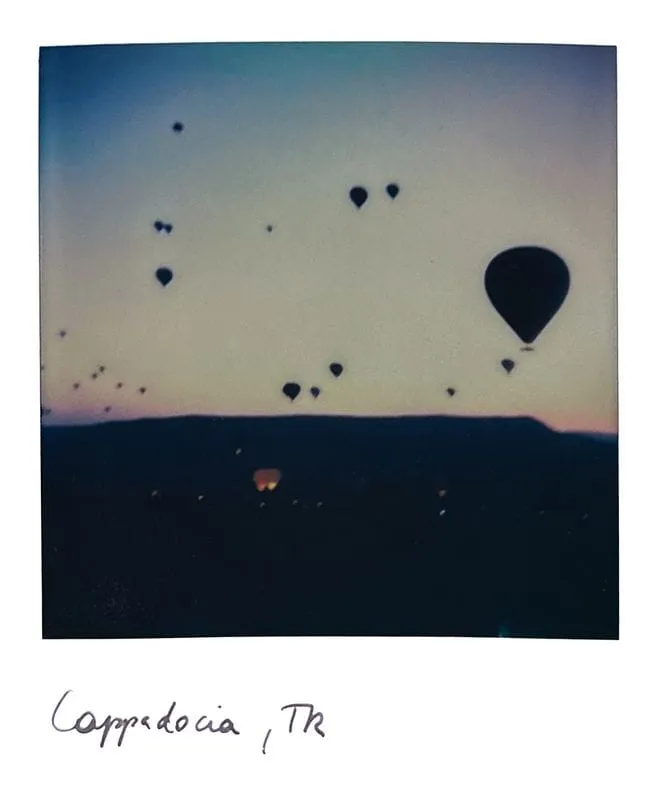
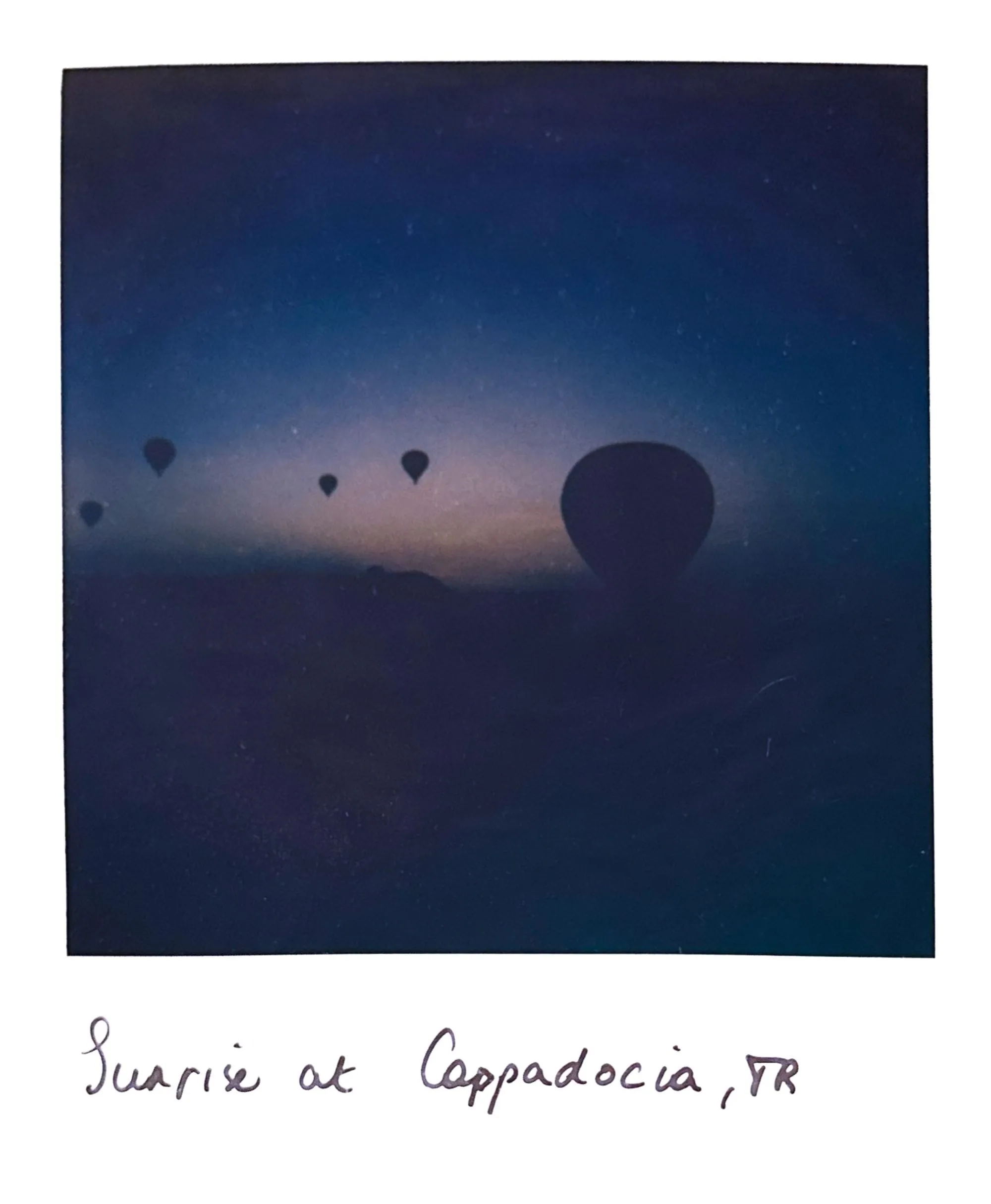
And then in the morning at sunset you have this alien experience of the whole sky filled with hot air balloons while the sun is rising in the background. A truly breathtaking experience.
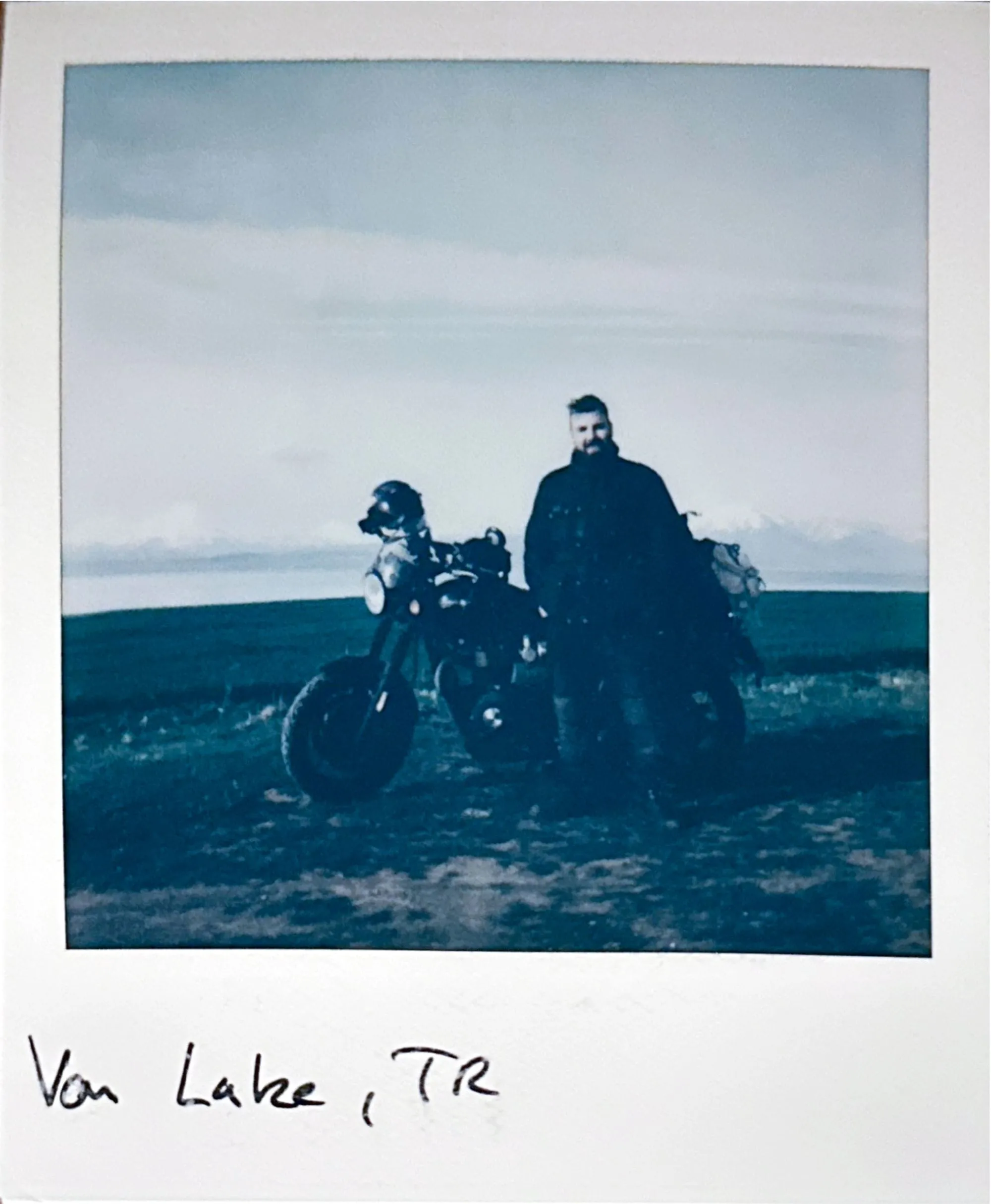
On the way to Van I quickly realised how bad I actually planned this road trip, because Lake Van is apparently located 1600 metres above sea level. I had no clue.
At one point I was driving among the mountain tops covered with snow. I got lucky the weather was really nice, and the roads were not covered with ice.
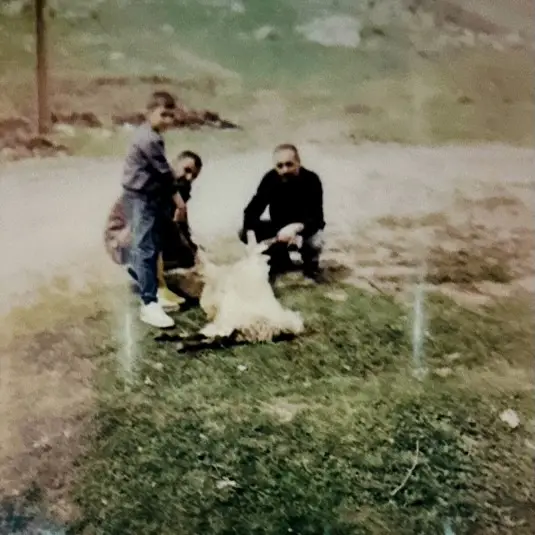
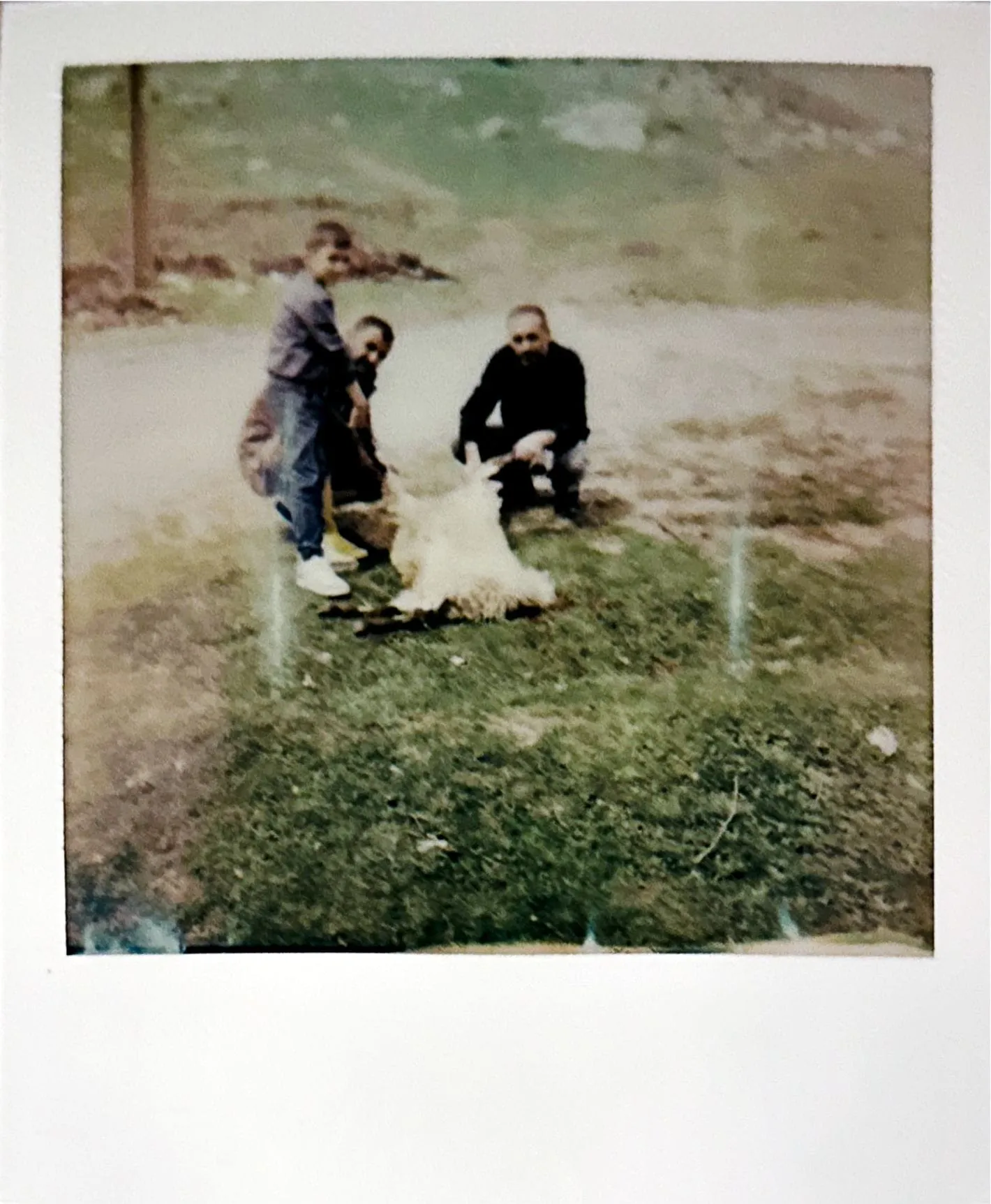
As I stopped at a gas station, I saw a couple of people slaughter a sheep in the garden of the gas station. They invited me for dinner, and the meat they served was soooo delicious.
Iran
From Turkiye I crossed the border with Iran, which went actually much smoother than expected. People were really helpful and the border guards were even trolling me by saying that my motorcycle is a Harley Davidson (Iran does not allow American made vehicles in).
When I successfully crossed the border I got in a bit of trouble. I had no mobile internet, my Google Maps offline maps were not working and I didn’t have any Iranian money. All I knew was that I had to drive to Tabriz, a big city in the east of Iran, and that my hotel was 20 kms south of the city. But I had enough gas left for 150 kms, while the total trip to the hotel was at least 180 kms…
So I started driving, and luckily road signs in Iran are both in Persian and English, which .
I stopped in Khoy, which I remembered from when I was planning this trip.
I saw a motorcycle shop, and thought that the owner must be a young guy that could speak English and he would know where to exchange money and get gas for Bonnie.
But nope, it was an old 70 year old guy who did not speak a word of English. I managed to explain to him that I wanted to exchange money and get gas, and he told me to follow him to see his neighbor. His neighbor was an even older guy who signed me to follow him on his motorcycle.
As he drove in front of me, evading all the cars, and I tried to keep up with him, we stopped at a gas station. They filled Bonnie’s tank. The old guy then handsigned me that I had to pay. I told him I had no money. He said “Card”. I said “European cards don’t work in Iran”.
He then spoke to the gas station clerks and they told me it was fine. I later found out that gas is super cheap in Iran, and 14 liters is around 55 euro cents. CENTS. Literally CENTS. Compare that to 1.7 euro per liter in Belgium.
The old guy then guided me to a money exchange place. We said goodbye and I drove on to Tabriz.
It was getting late, and as it was so early in the year, the sun set at around 6-7pm. And I really did not want to drive in the dark, in a strange country. But I also had no choice, as I already booked a hotel.
I arrived in Tabriz in the dark at around 6:30pm. I got gas and asked some people in shops around the gas station if they had WiFi. One said he didn’t, but another one had internet, so I managed to download my offline Google Maps. My hotel was another an hour drive, in the dark. I didn’t really know what to do.
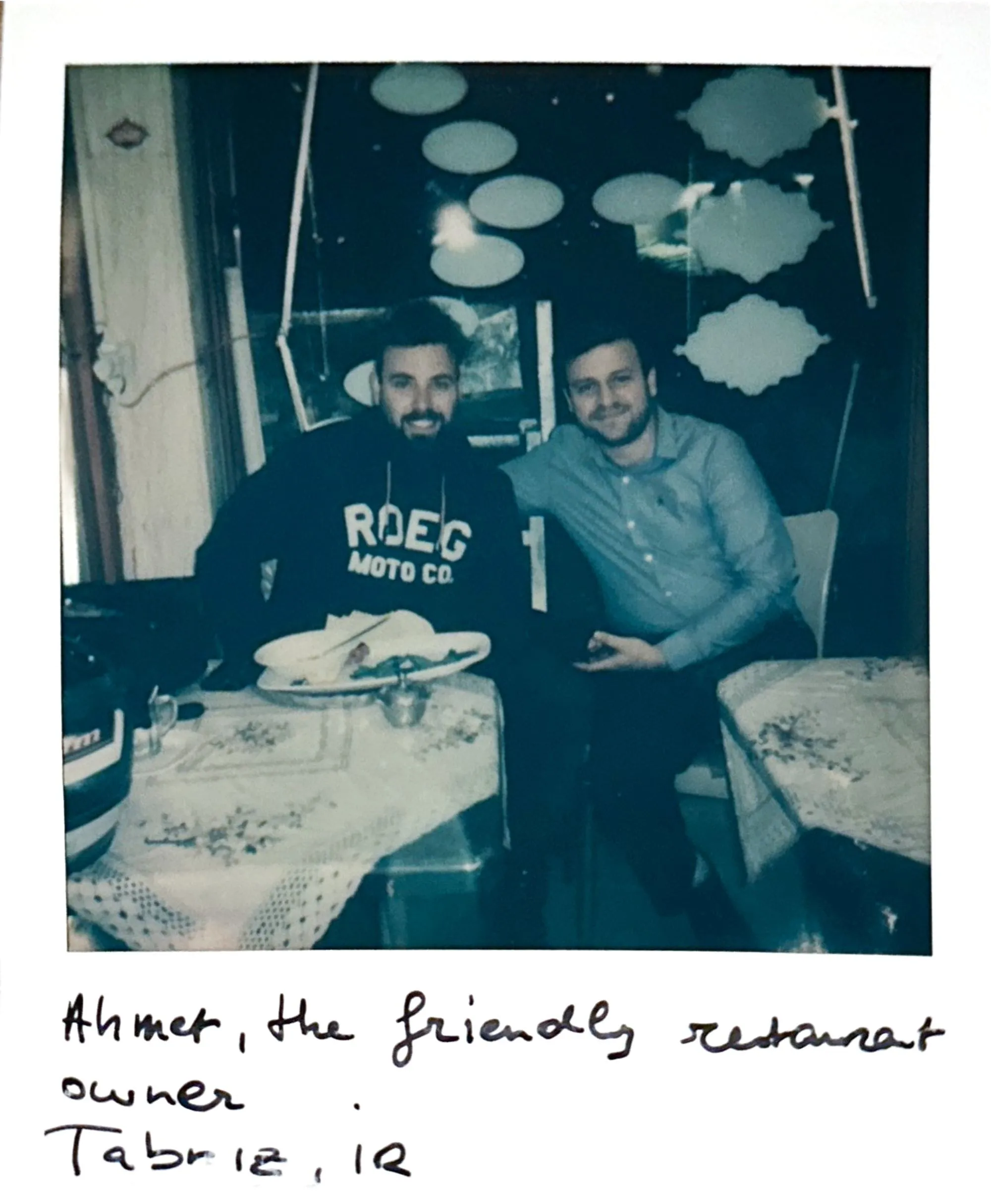
As I was standing by my motorcycle thinking what I was going to do, the guy who didn’t had WiFi told me I could come inside his restaurant and use his hotspot. I gladly accepted his invitation. He gave me something to drink and told me that it was not a good idea to go to the hotel, as it was in the middle of nowhere and the roads were bad and dangerous.
He suggested to call some hotels in the center of Tabriz (only 1km away from his restaurant), and negotiate a good deal for me.
The friendliness of Iranian people is out of this world. That really motivated me to be way more proactively helpful to travelers I see in Belgium.
From Tabriz I drove to Tehran. I arrived at 6pm, right in the middle of evening rush hour. But I think in Tehran it’s always rush hour. The traffic was insane, cars and scooters everywhere.
The first day I was in Tehran, I was so overwhelmed. It was my first day in more than a week where I was not riding my motorcycle. I explored Tehran, and everyone I met invited me in for tea. The first few times I kindly refused their invitations. Hey, I’m European. Nothing is free here. If a random person in Europe invites you in for tea, they’re going to guilt you in buying something or they have some other ulterior motive. At least that’s how I was brought up.
But at one point I was like “okay let’s just say yes, we’ll see that happens”. And it was just that: a Belgian and some Iranians drinking some tea, talking about traveling, things to visit in Iran, what it’s like to live in Iran, and stuff like that.
The most dangerous part of that was because I offered to pay for my tea, which is a big no no.
I was slowly getting relaxed all alone in this strange new country.
We all have read some horror stories about tourists taking photographs of (government) buildings and getting jailed. As I was walking around with my Polaroid in my bag, I was really paranoia. I really thought if I just take one picture of the wrong building, twenty police officers are going to surround me and I’m gonna be put in an Iranian jail for forty years.
I also didn’t see any western tourists to talk with and ask their experience. When you read online on websites like Reddit, they say that it’s all fine, and the buildings you can’t photograph are clearly marked with signs, but I know better than to trust some random stranger on the internet!
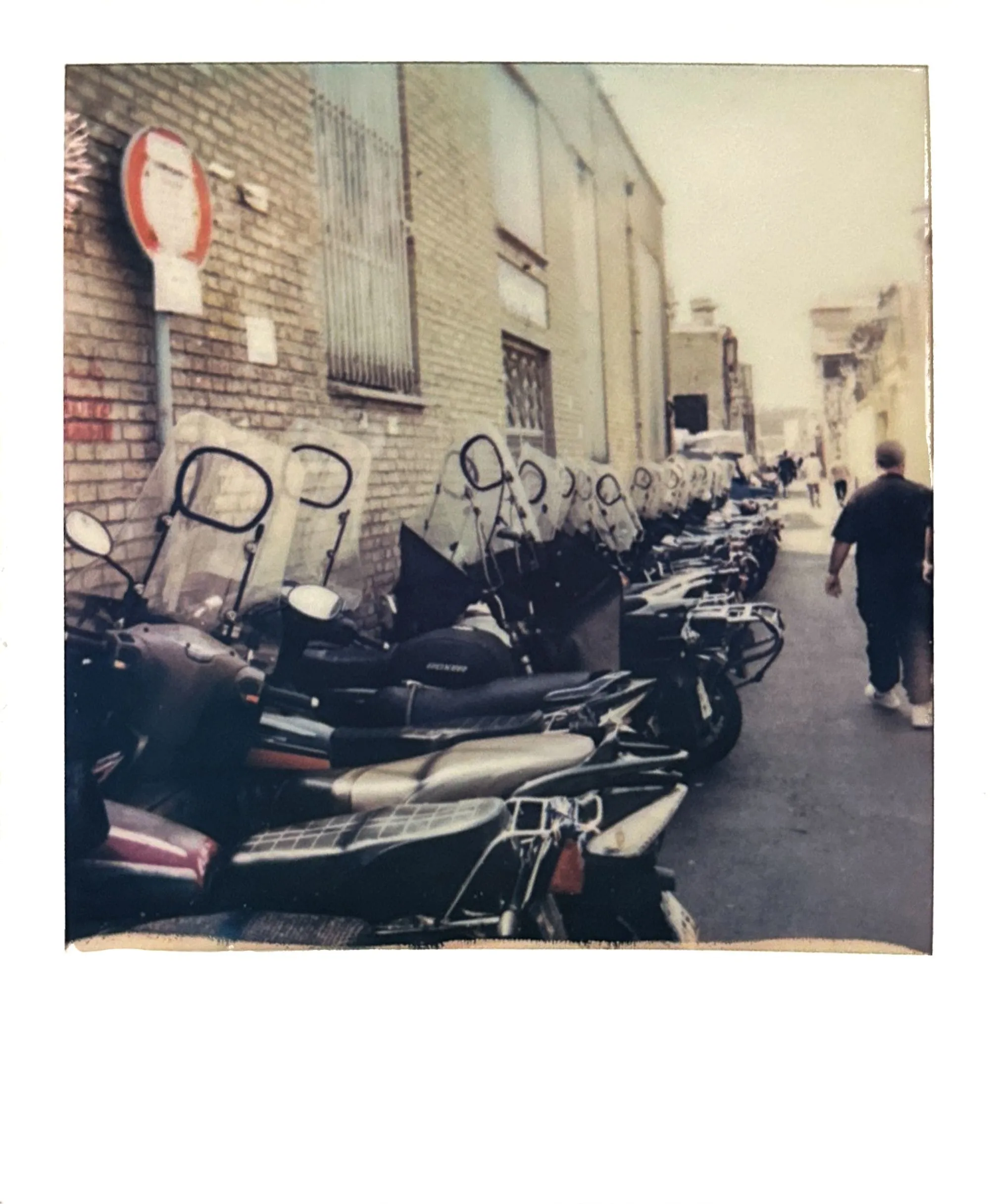
This was my first image I took somewhere in an alley in Tehran. The more I walked around with my Polaroid out in the open, the more I realized I was going to be fine.
I also saw a bunch of girls taking pictures of each other in the gardens of historical houses and in museums. That’s when I realized that taking pictures in the streets of Tehran is fine.
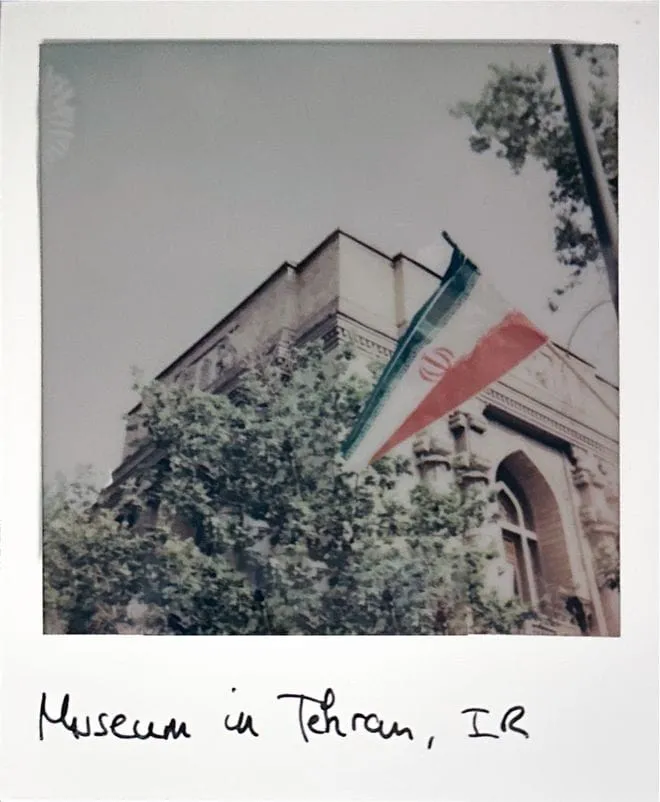
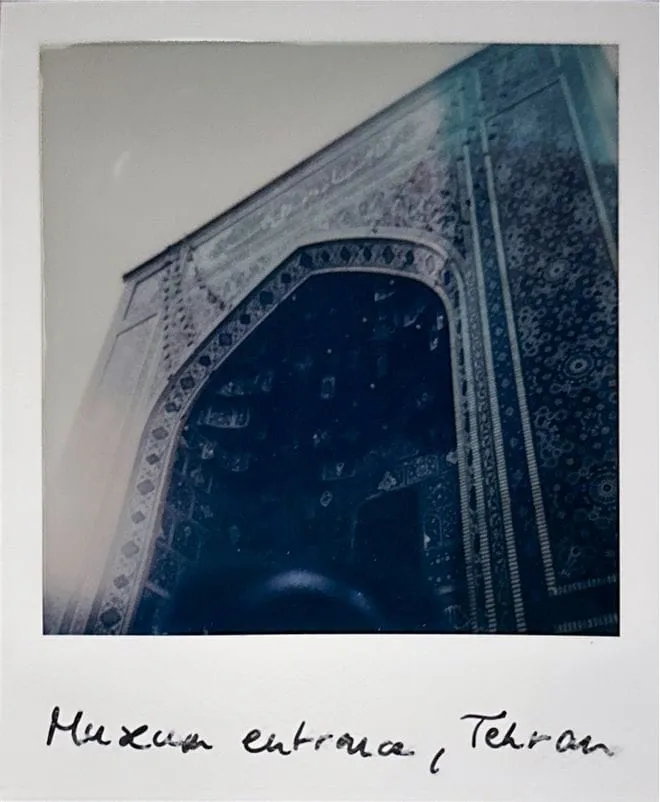
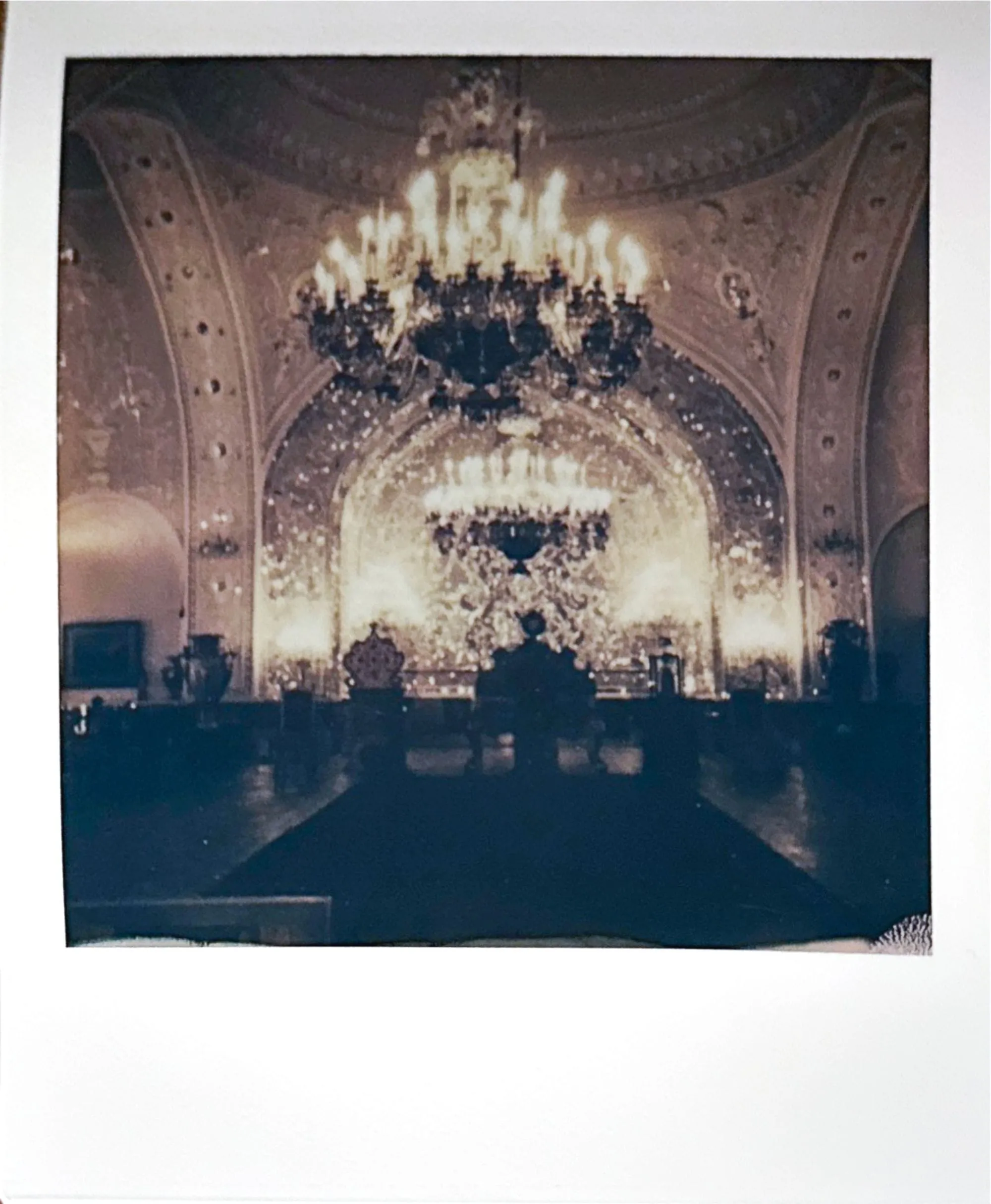
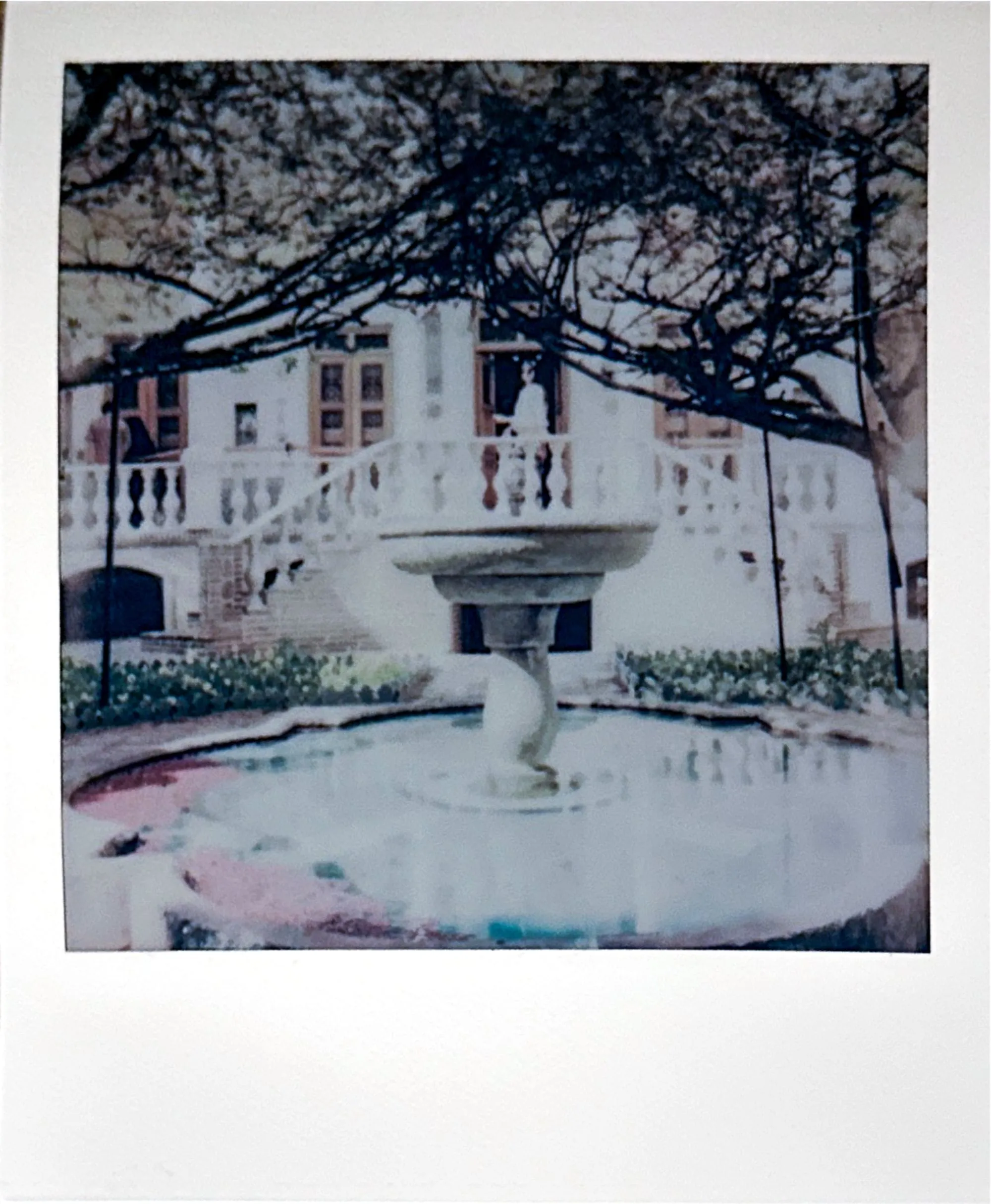
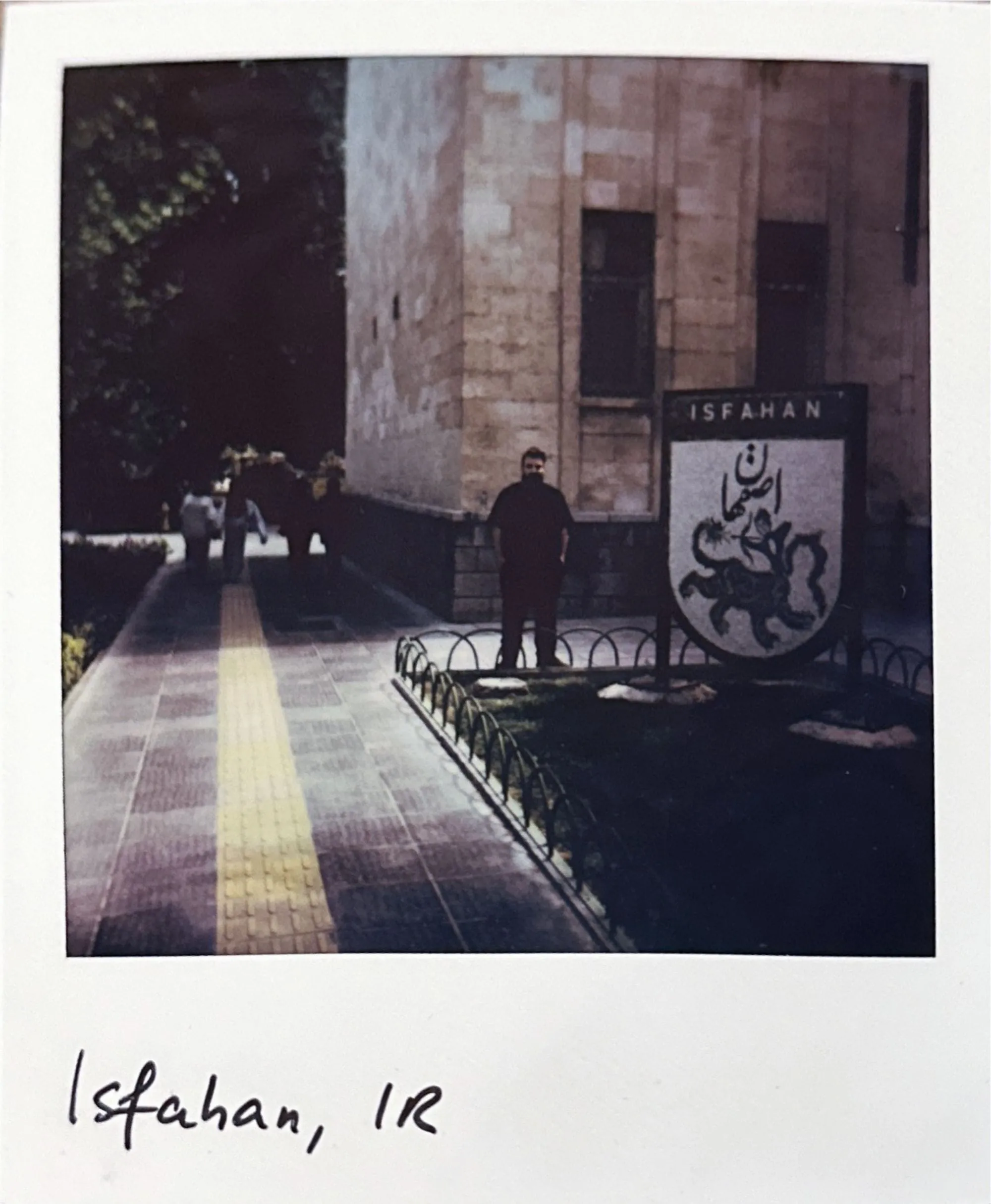
After a couple of days in Tehran, I drove south to Isfahan. I stayed in this amazing historical house called Ghasr Monshi hotel. If you decide to travel to Iran/Isfahan, I can highly recommended it. It’s right in the center of the city, really calm and just a really beautiful hotel.
I really prefered Isfahan over Tehran. Tehran is really busy and noisy and there are cars everywhere.
Isfahan was really walkable and calm. It seemed more like a family city
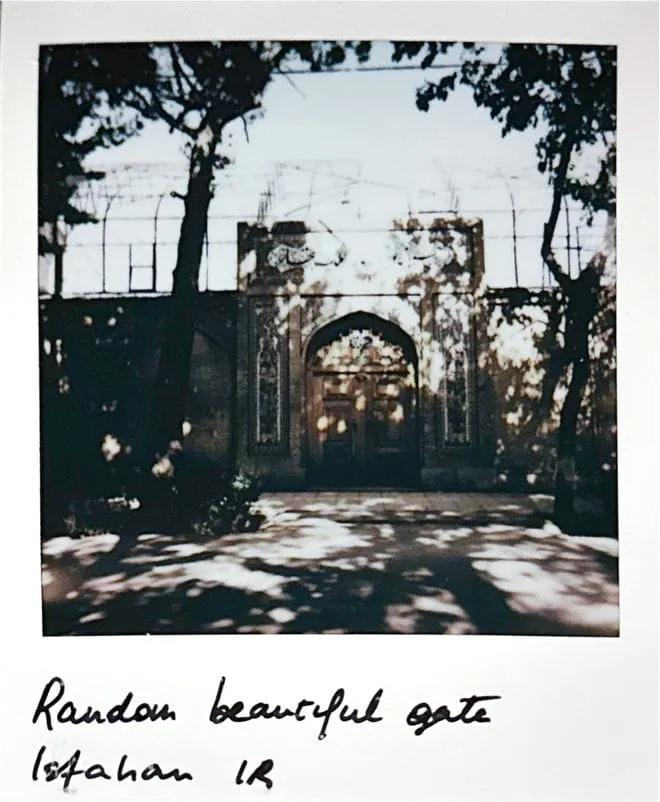
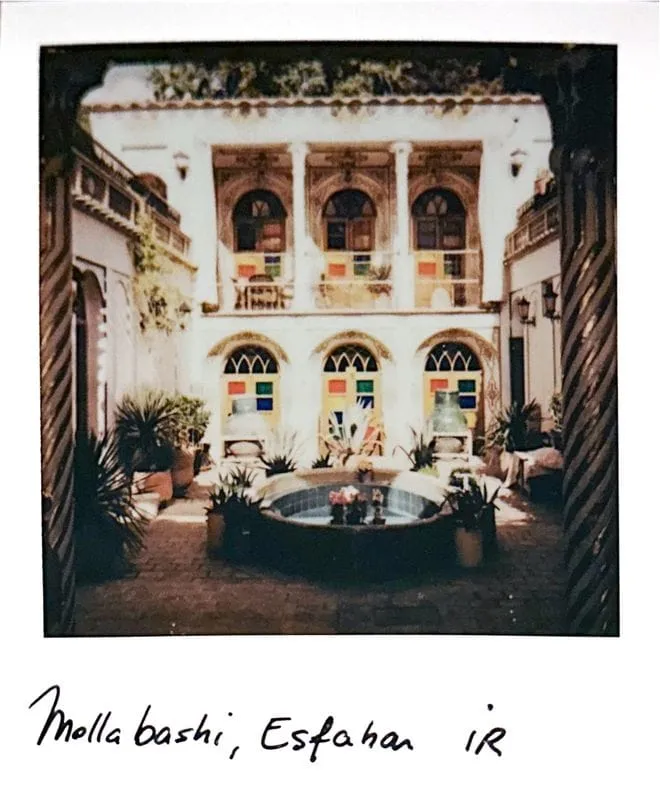
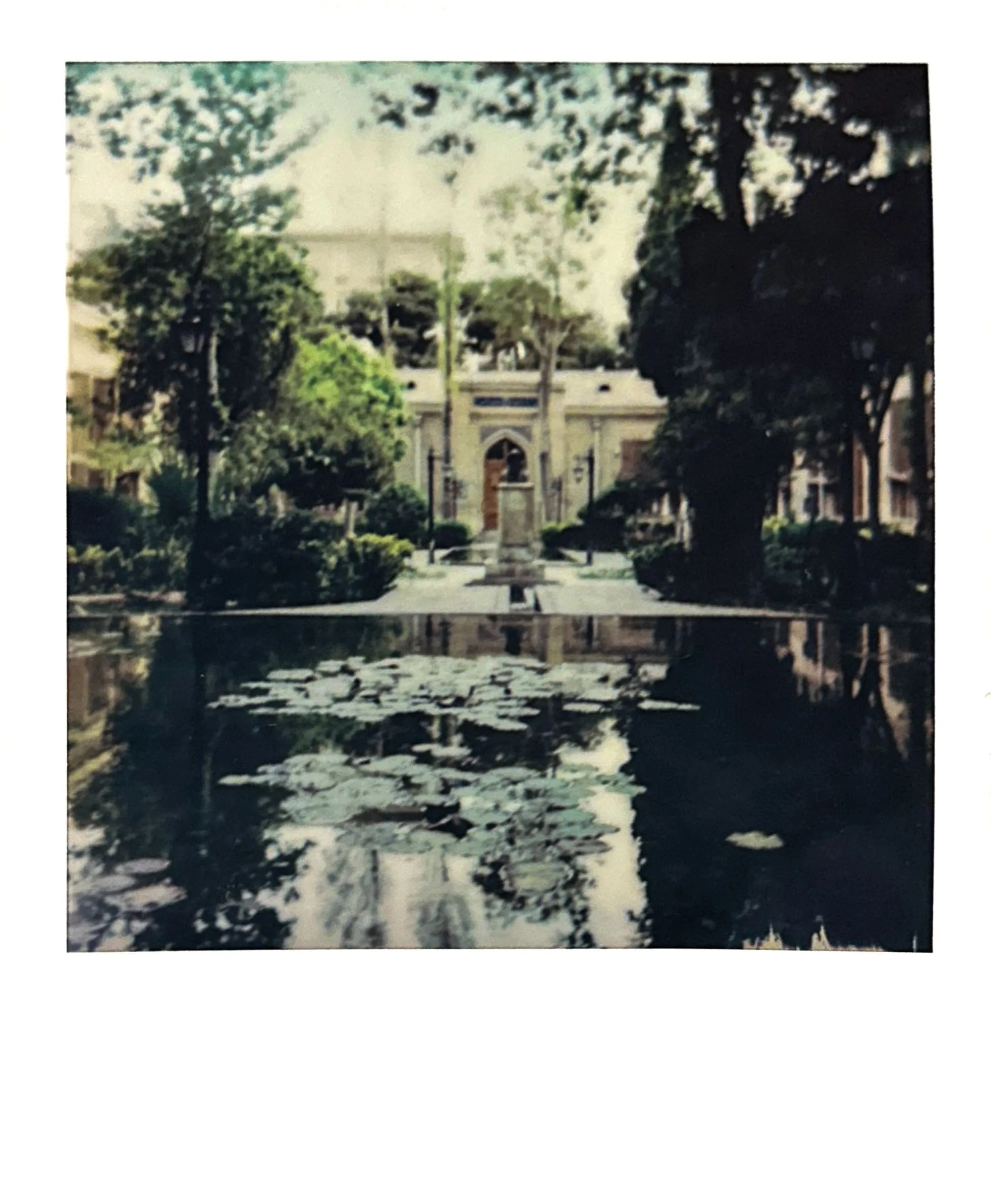
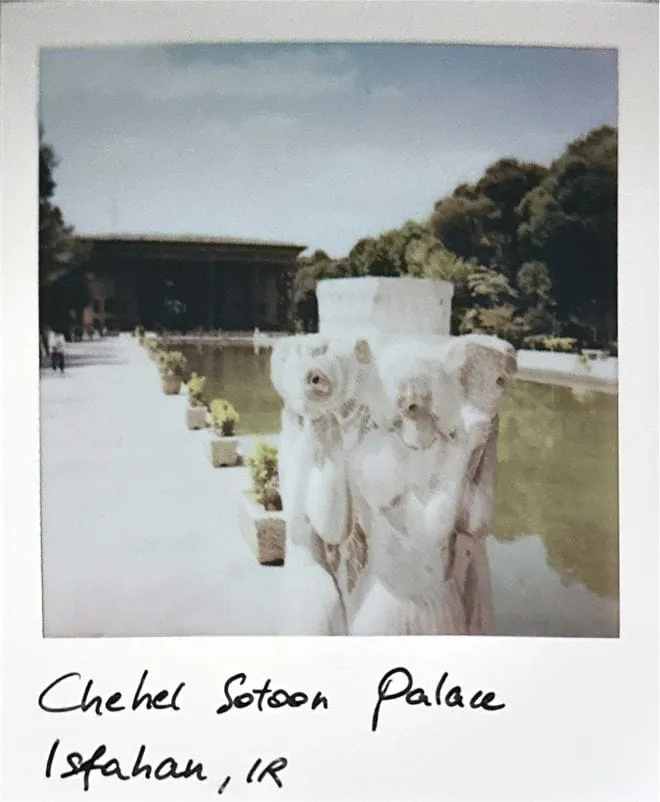
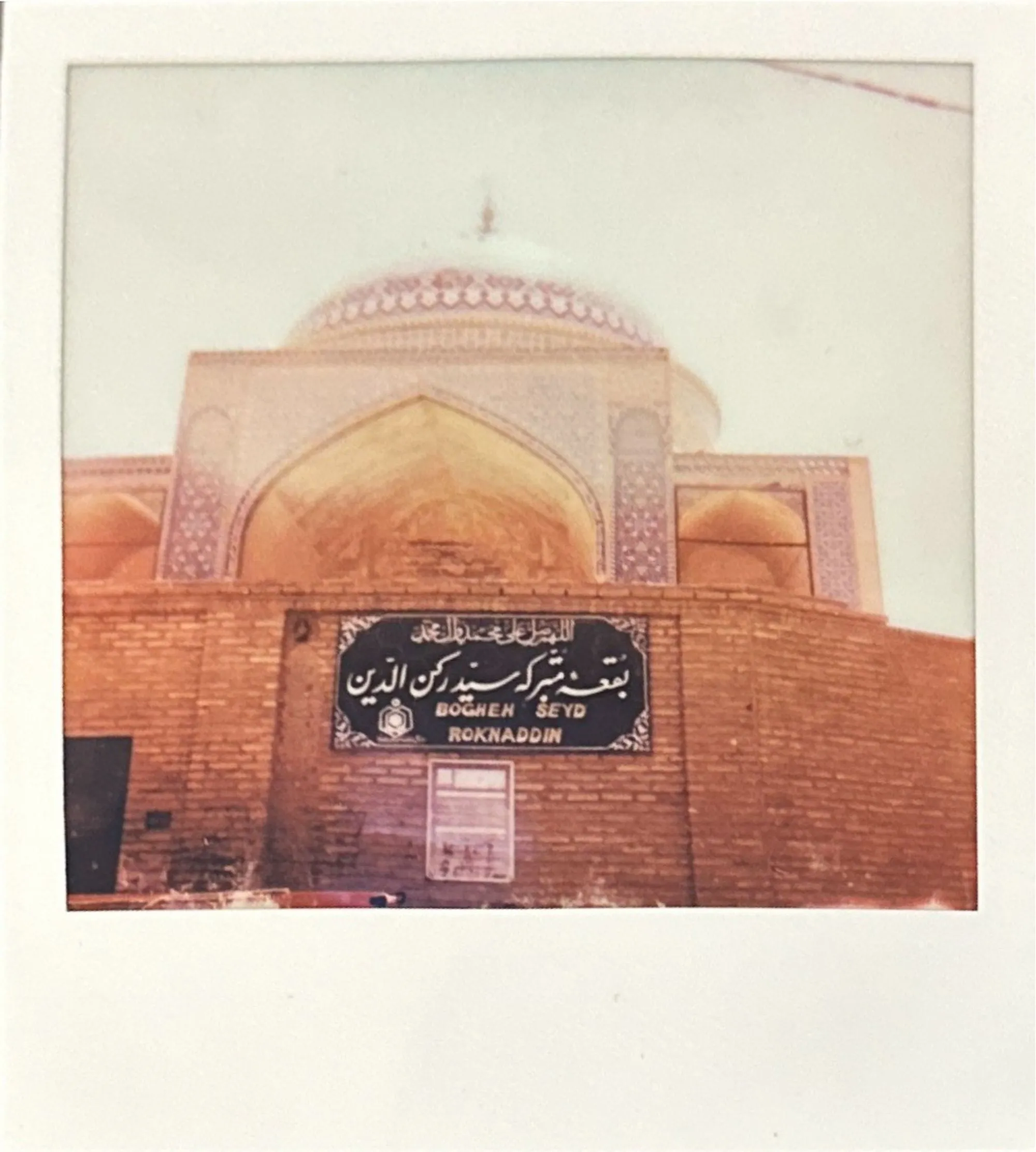
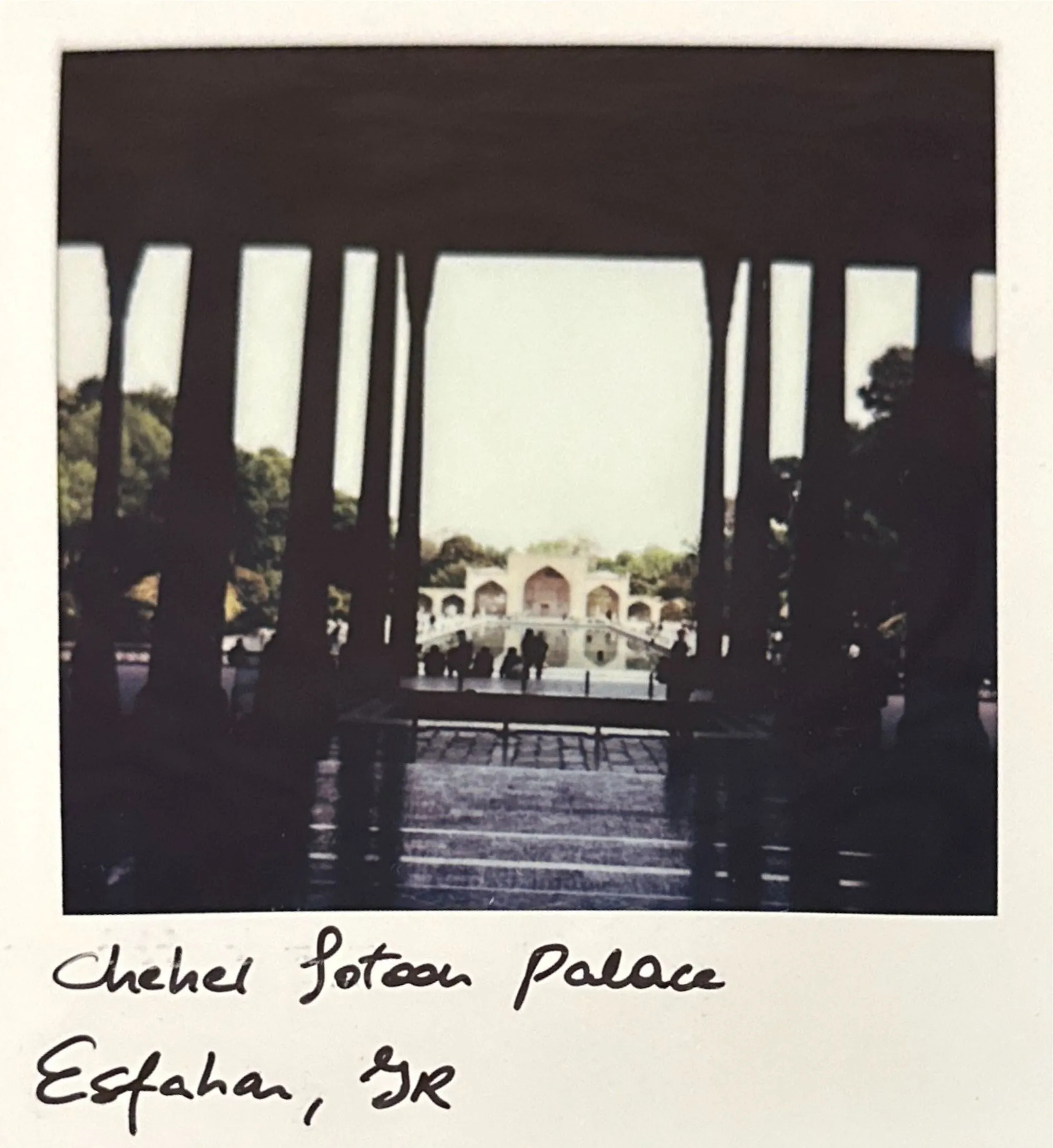
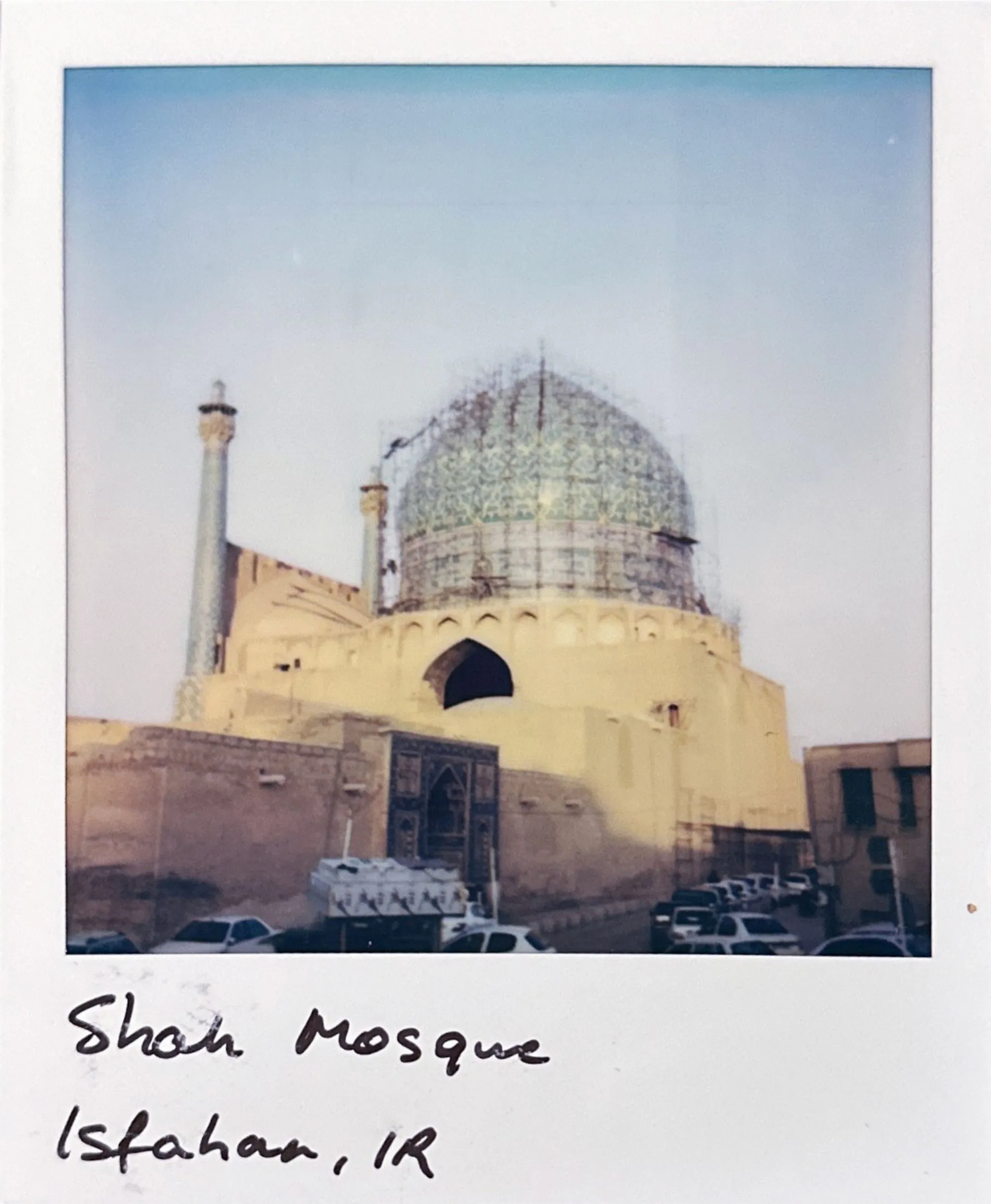
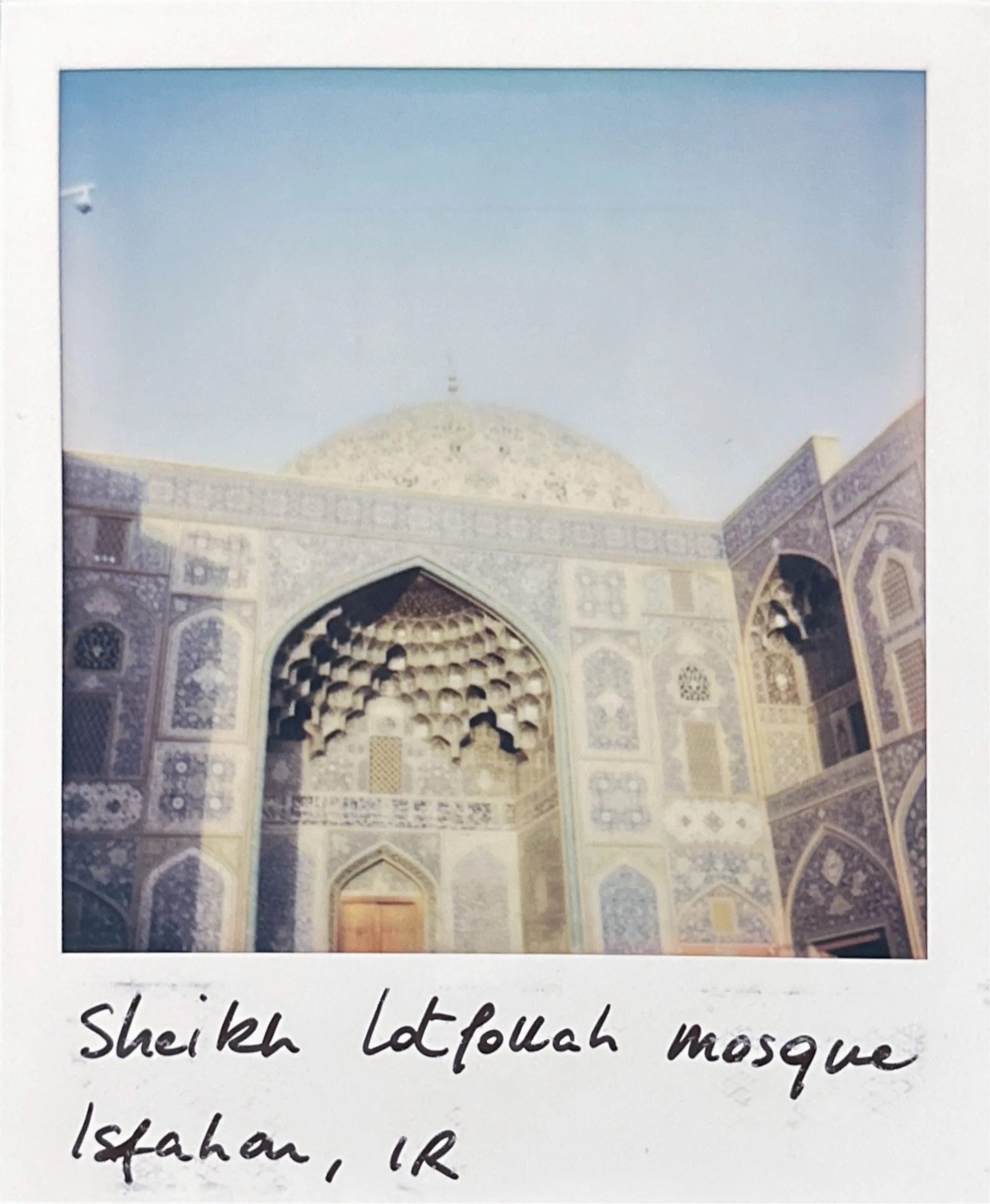
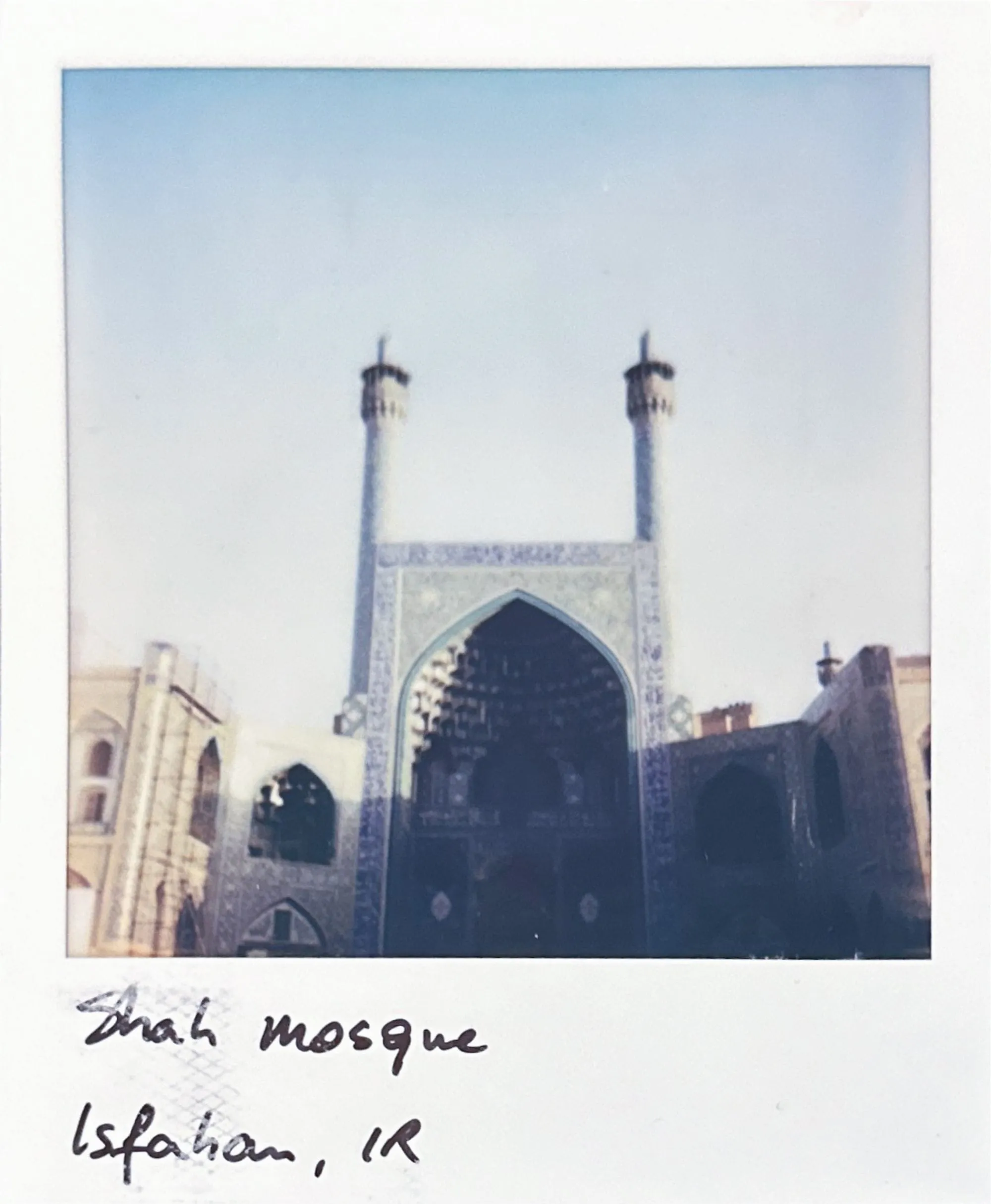
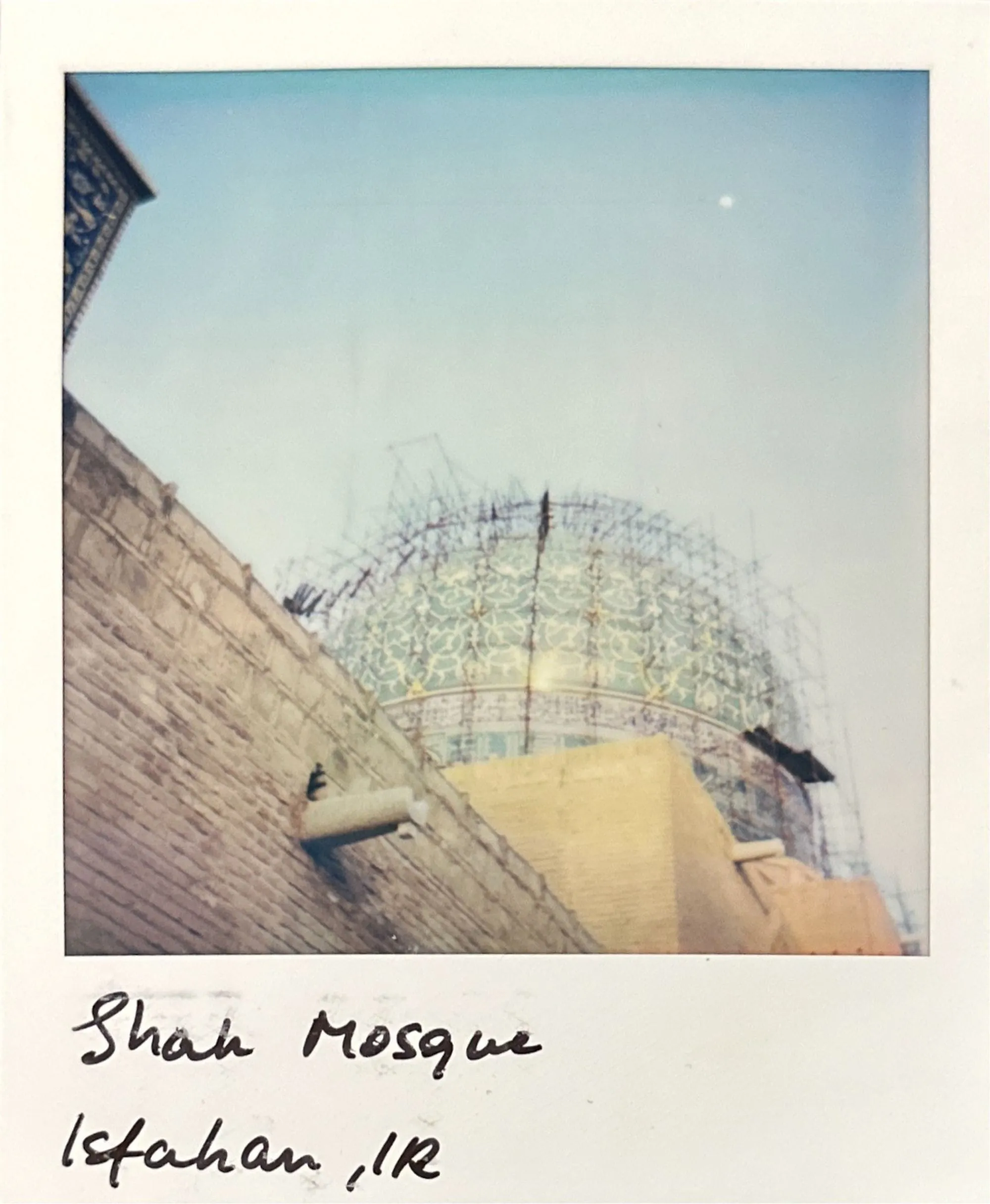
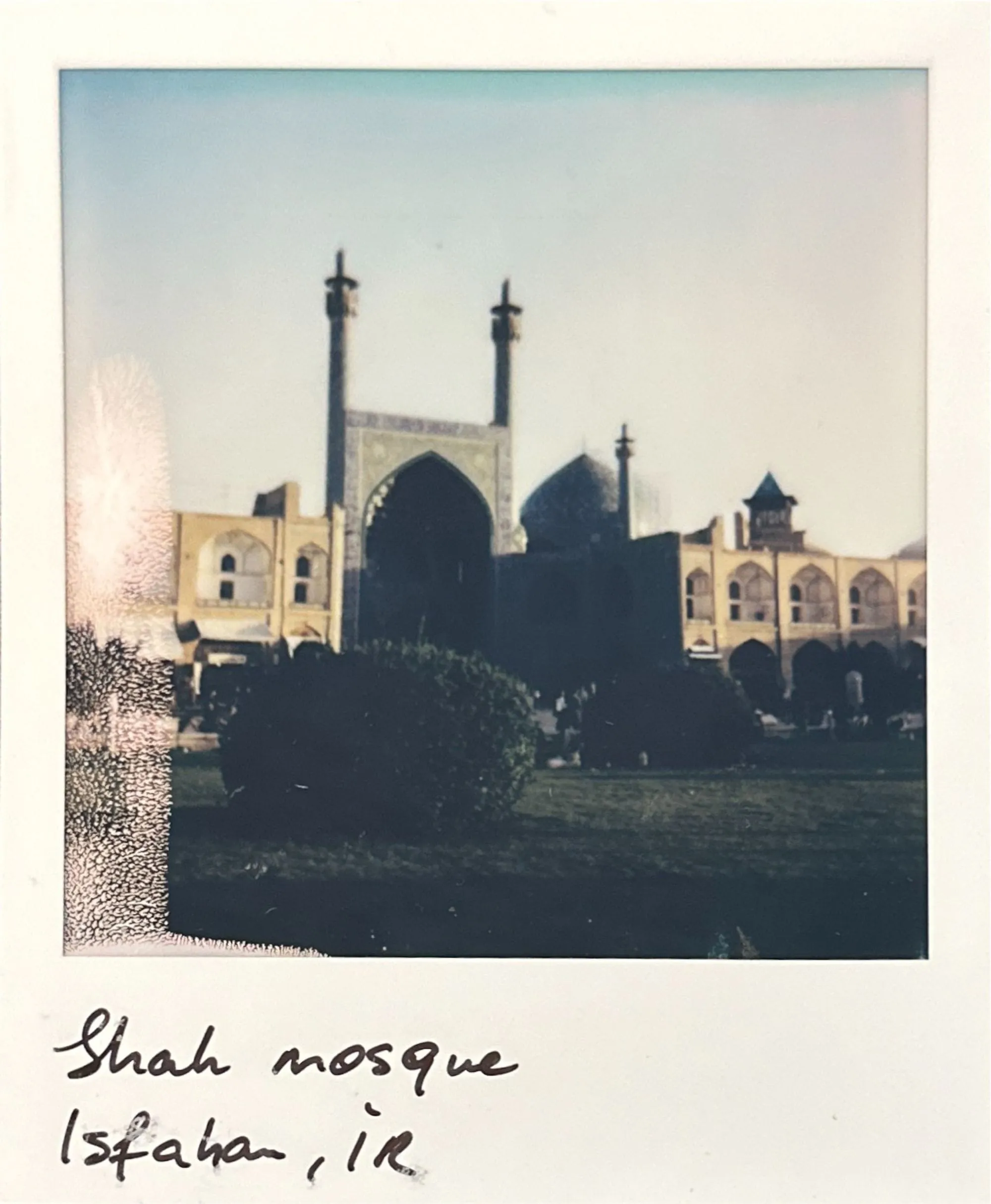
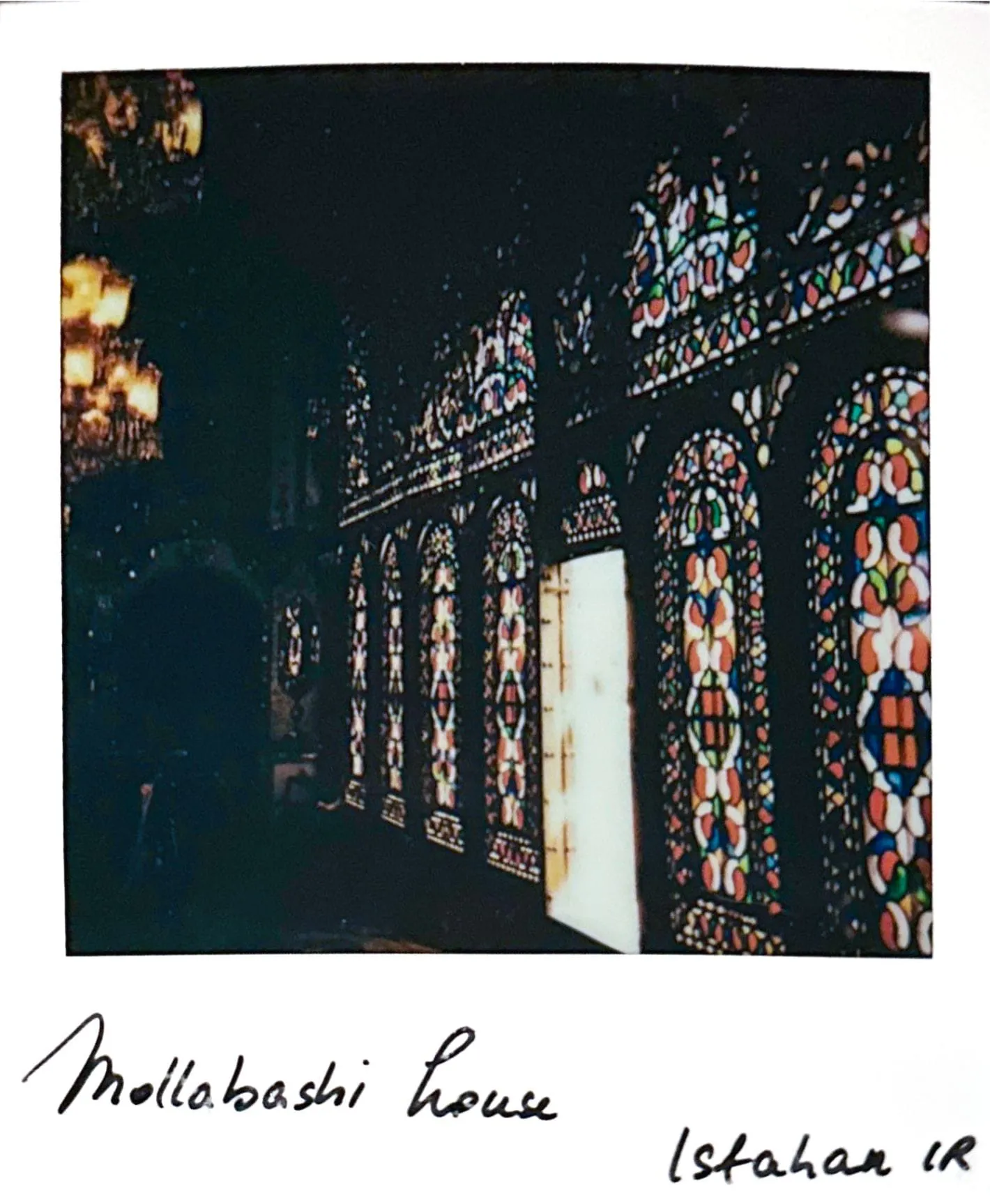
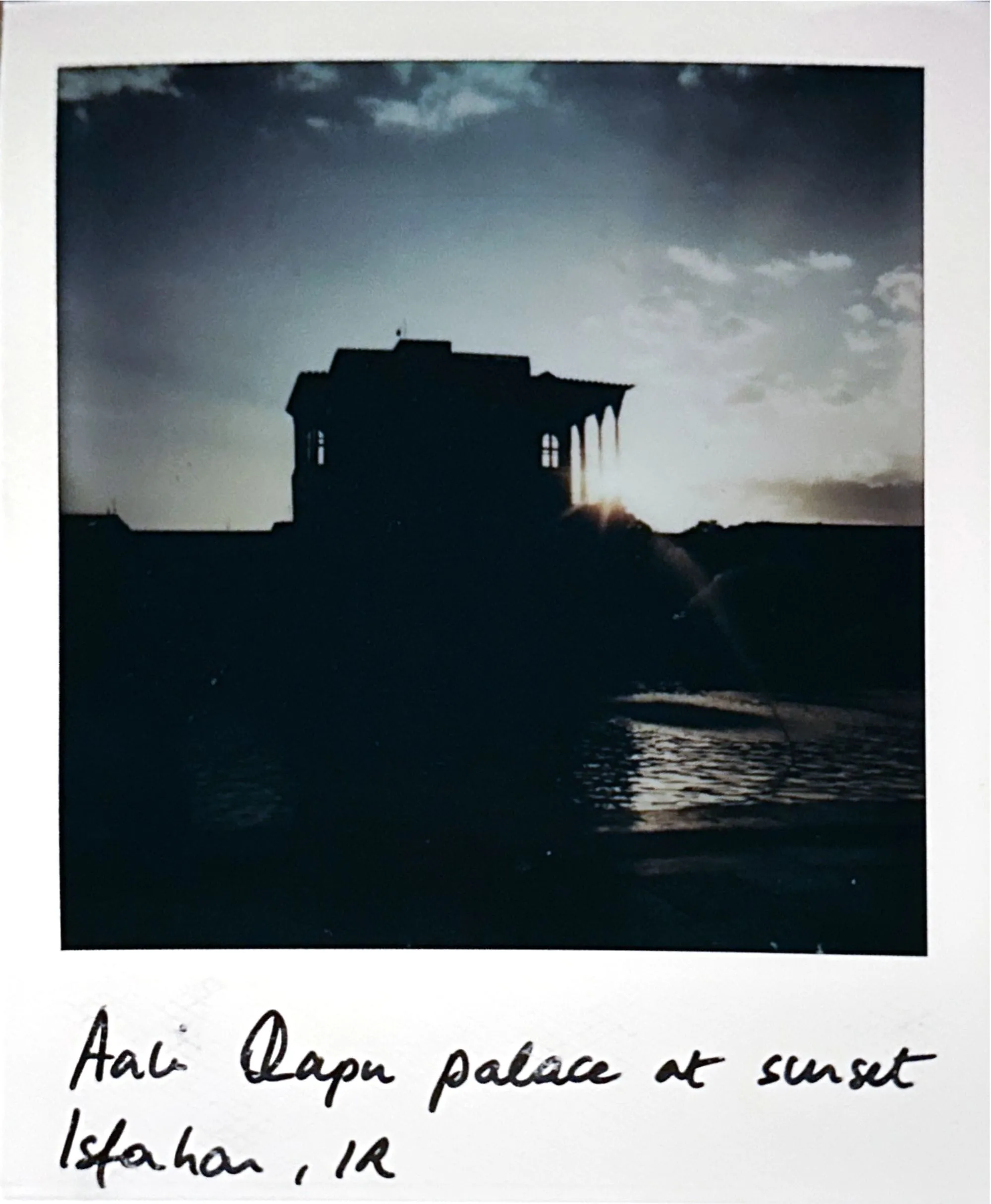
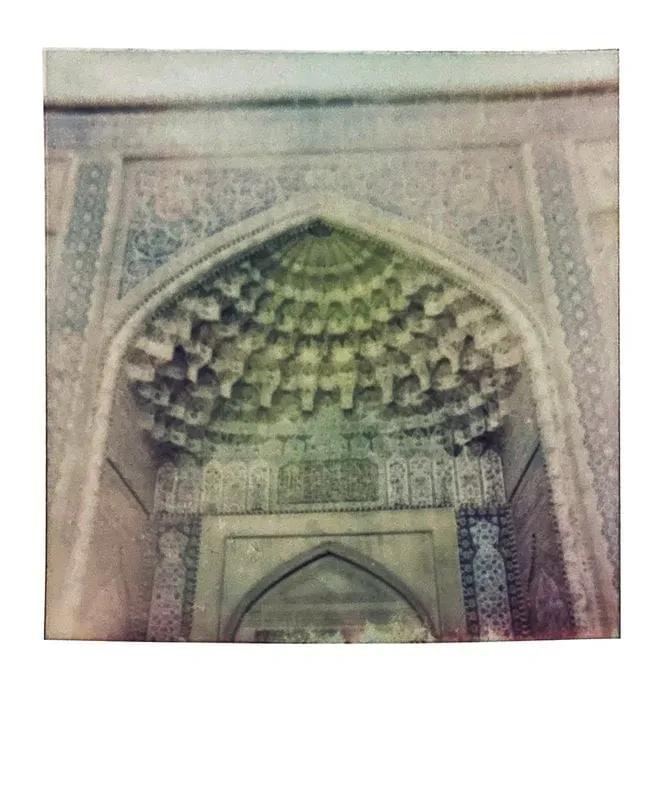
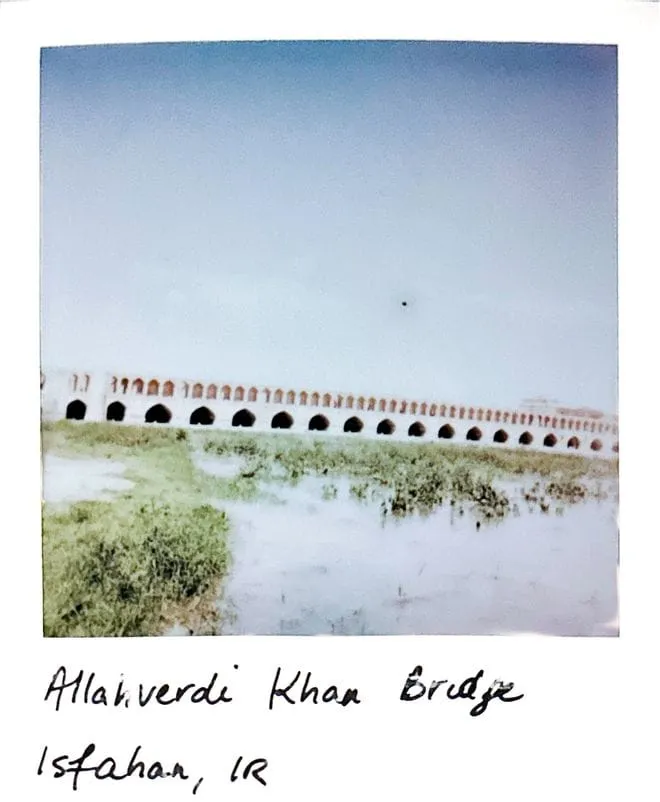
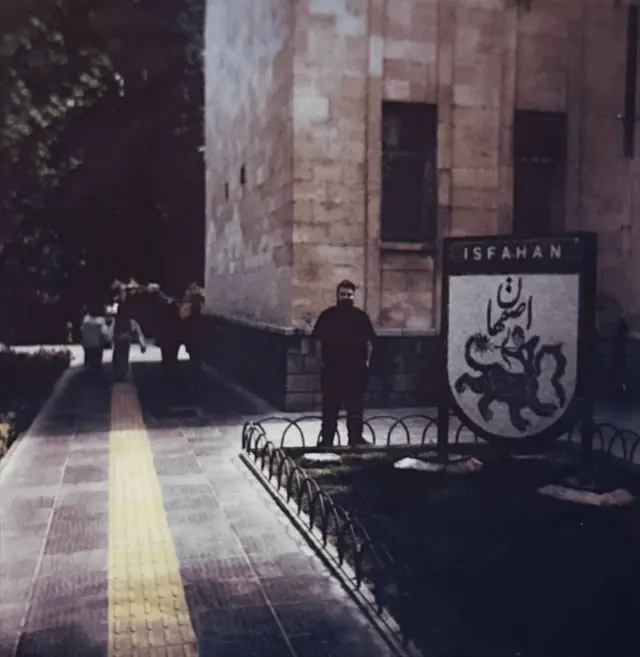
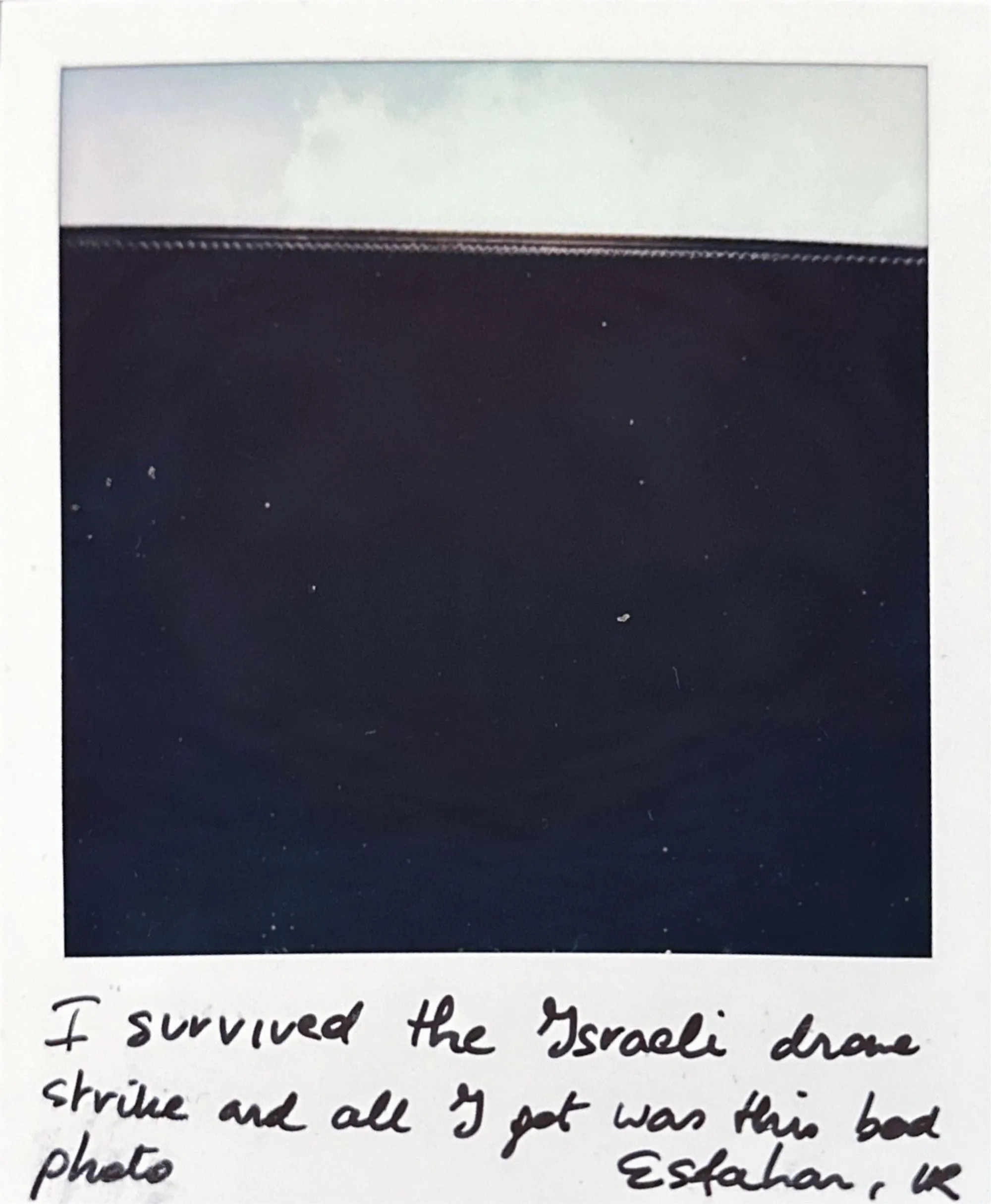
One morning I woke up and I had a ton of missed calls and messages from friends and family. Turns out that Iran was “attacked” by Israel, aka Israel crashed a couple of drones on an air base near Isfahan. The newspapers were talking about World War 3, and there I was, in the city that was “just” attacked.
I had breakfast and started exploring the city, and I noticed nothing of what happened. No news, the people were not stressed or anything. I don’t know if they knew it and didn’t care or the attack was not discussed on the news.
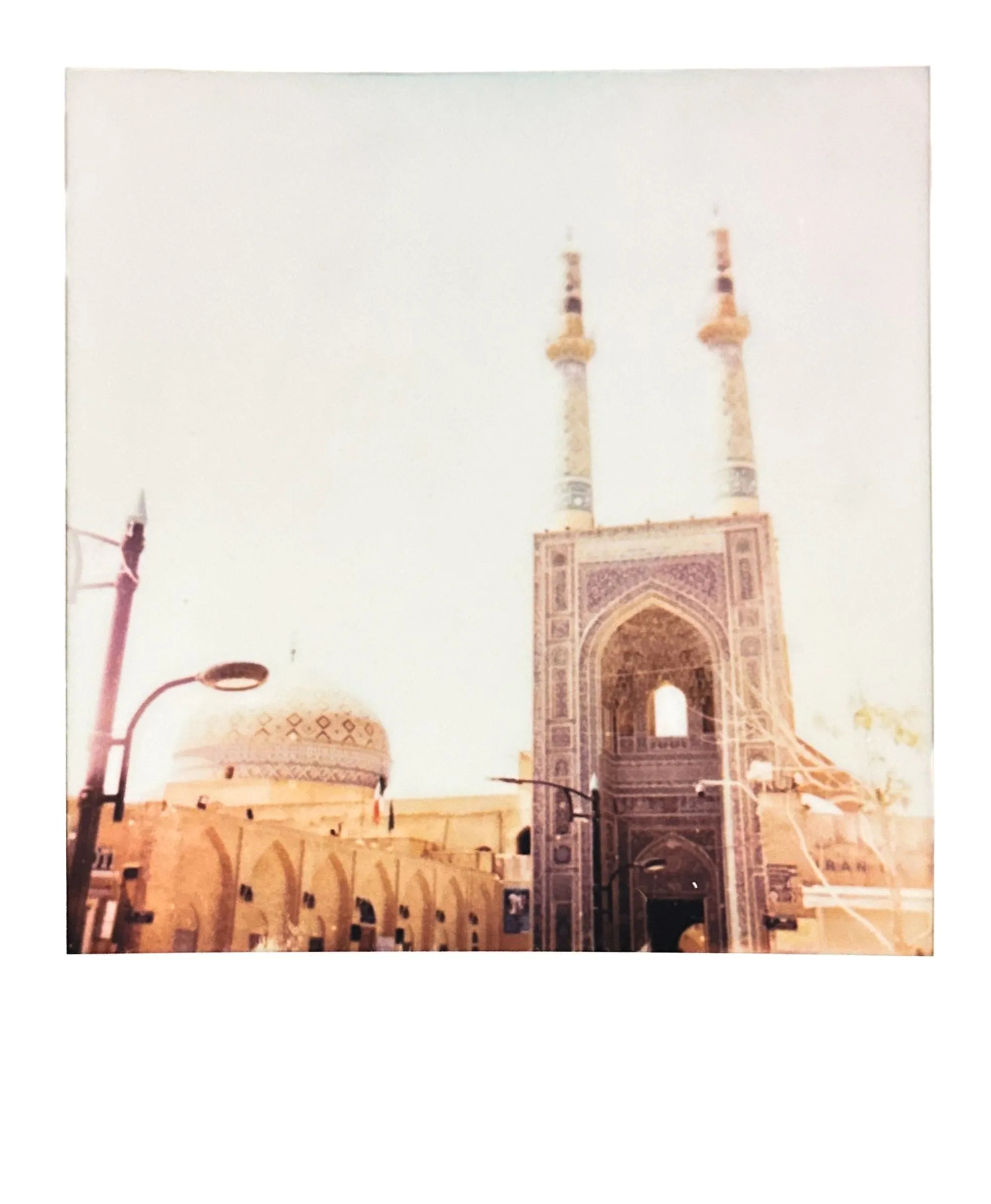
Anyway, I went looking for a sign of the city as a nice souvenir that I was once attacked by Israel. And this bad picture I took of the entrance of a mosque will be forever my souvenir of the Israeli drone strike.
The day after I drove from Isfahan to Yazd. On the way I got in a really bad storm, with hail as big as marbles.
A pickup truck came driving in front of me and signaled me to stop at the side of the road. He invited me to his guest house to cover for the hail, and after the storm I could continue my travel to Yazd.
I accepted his invitation and followed him to his amazing guest house where we had tea and talked about traveling.
When it was time for me to move on, he gave me the advice to take the long route to Yazd, instead of the short one that GPSes recommend.
I thanked him for that advice and went on my way.
Unfortunately, at one point I took a wrong exit, and because I had no mobile internet Google Maps didn’t reroute. All I knew is I had to drive east to Yazd. I continued driving on, saw a sign pointing east that said Yazd and took the exit.
I entered a highway that seemed to be brand new. After a few kilometers I got a bit suspicious. I only saw trucks and heavy machinery on this highway. I was clearly in some sort of industrial zone. Ah well, as long as I’d get to Yazd.
At one point there was a military checkpoint, which was not the first one I encountered so I happily gave my passport to the police officer. He walked way with my passport and after ten minutes he came back, and asked him to join him.
He took me to a room where he interrogated me for almost two hours.
“Where are you going?”
- “Yazd”
“Where are you staying in Yazd?”
- “Fazeli hotel”
“Where are you going after Yazd?”
- “Kerman”
“Where will you stay in Kerman?”
- “Don’t know, I’m going to camp in the desert”
…
“Where are you going now?”
- “Uhm, to Yazd like I to-”
“Where will you still in Yazd?”
- “Fazeli hotel”
I don’t know what the point of that was, but after two hours he decided I must really be going to Yazd and he gave me back my passport, offered some tea and bottles of water for on the way and let me go.
I later asked at my hotel in Yazd what that was al about, and apparently the short route between Yazd and Isfahan has a lot of industry and military complexes, with a few military checkpoints. With the “attack” by Israel happening a day earlier, they were extra curious why a European guy on a motorcycle was driving all alone there.
Glad that ended well!
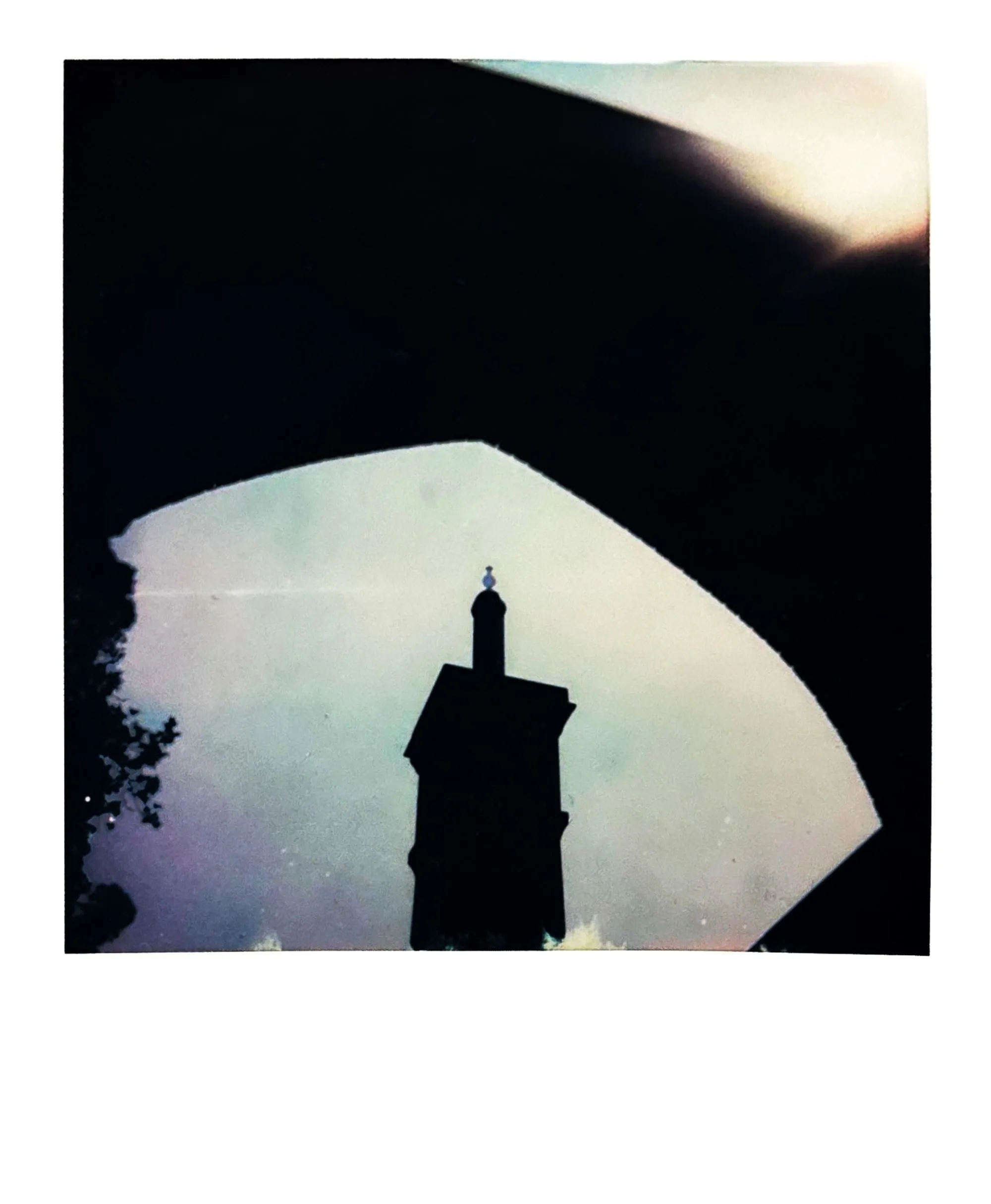
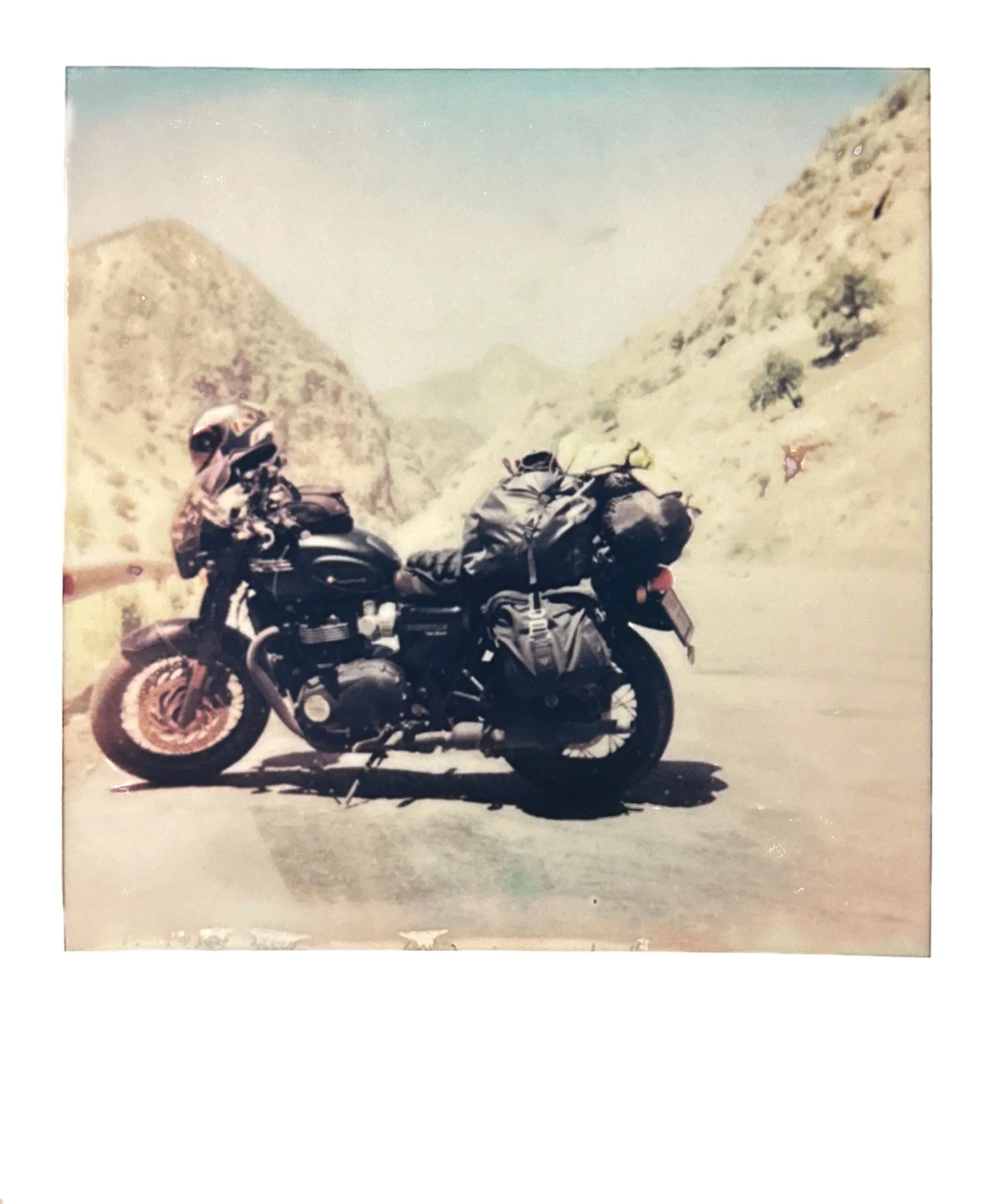
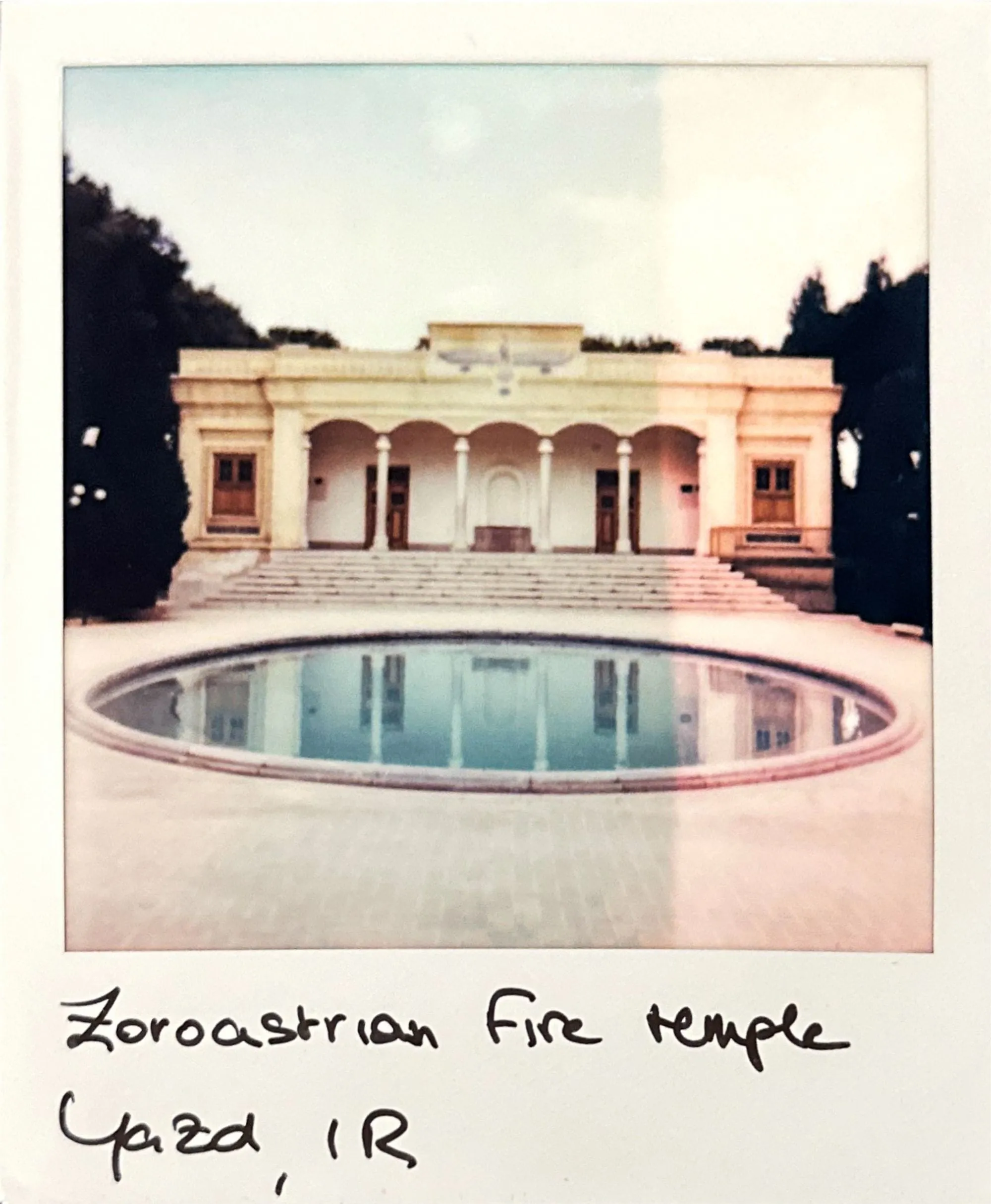
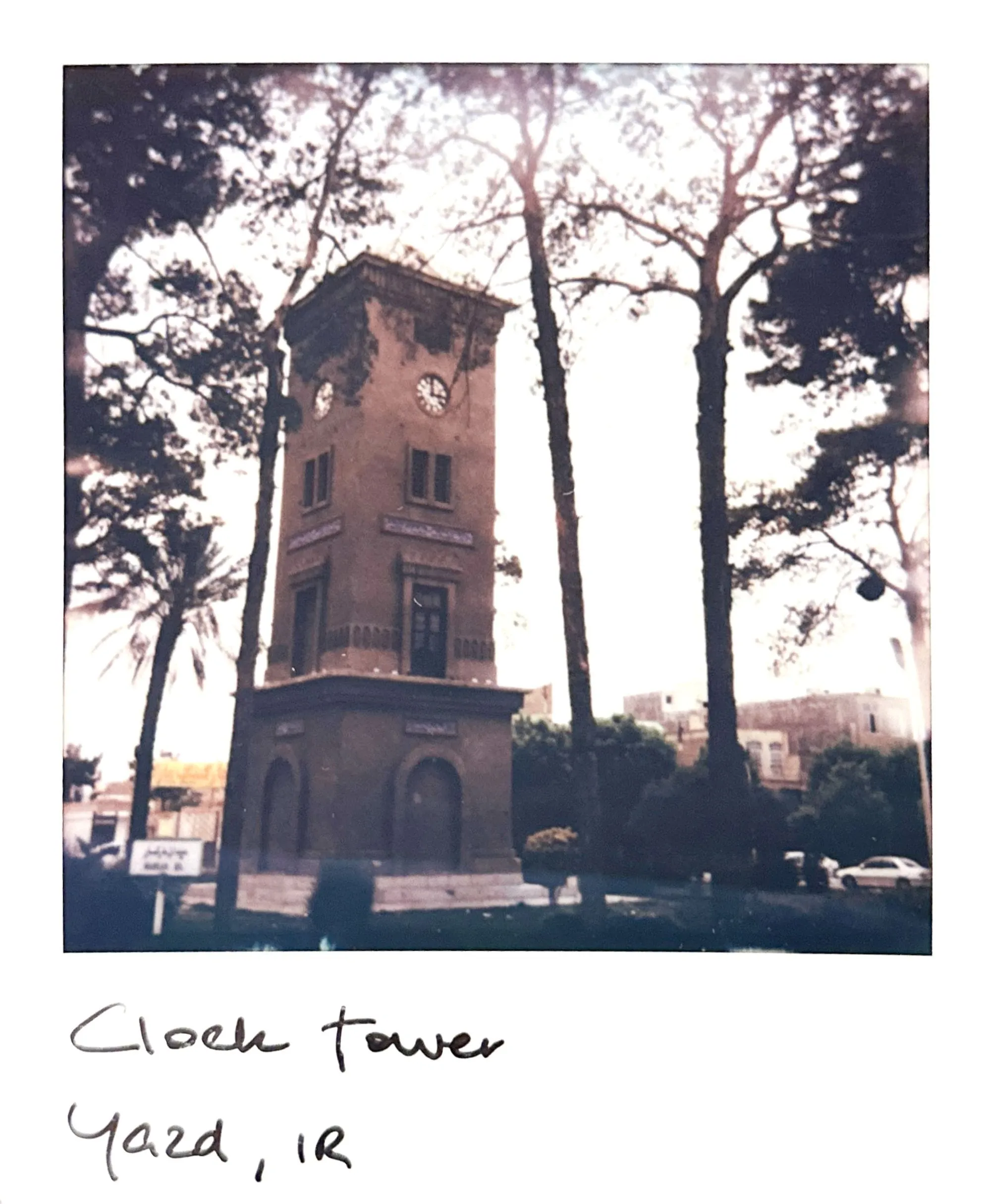
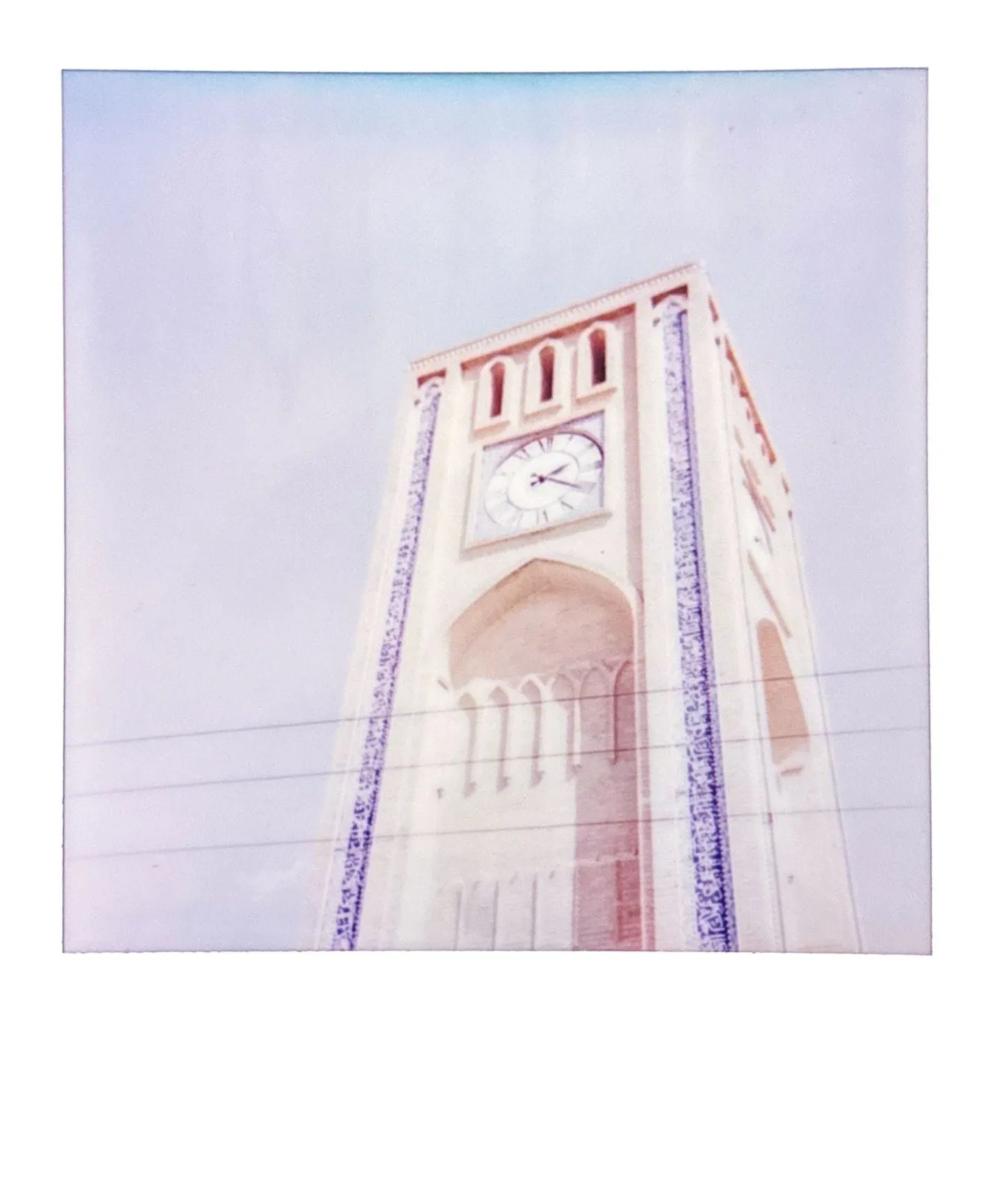
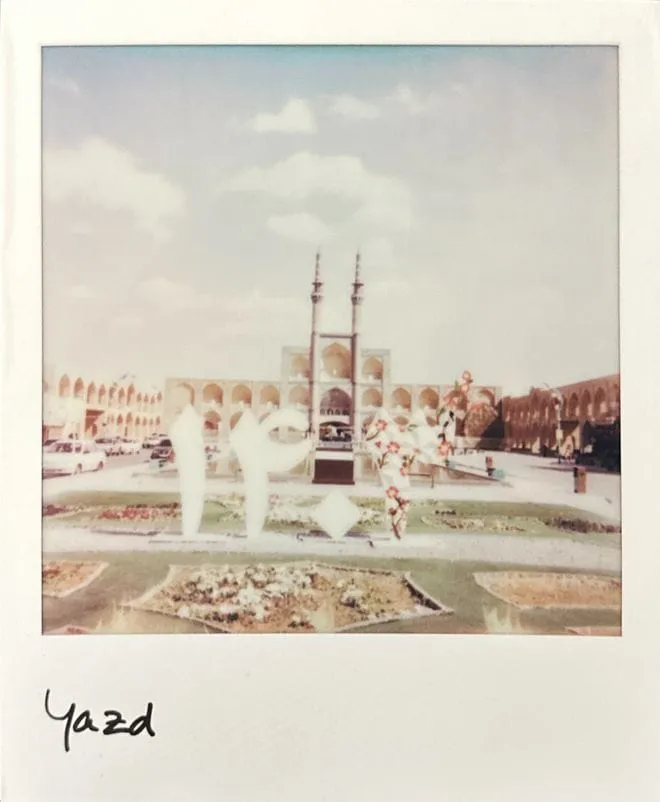
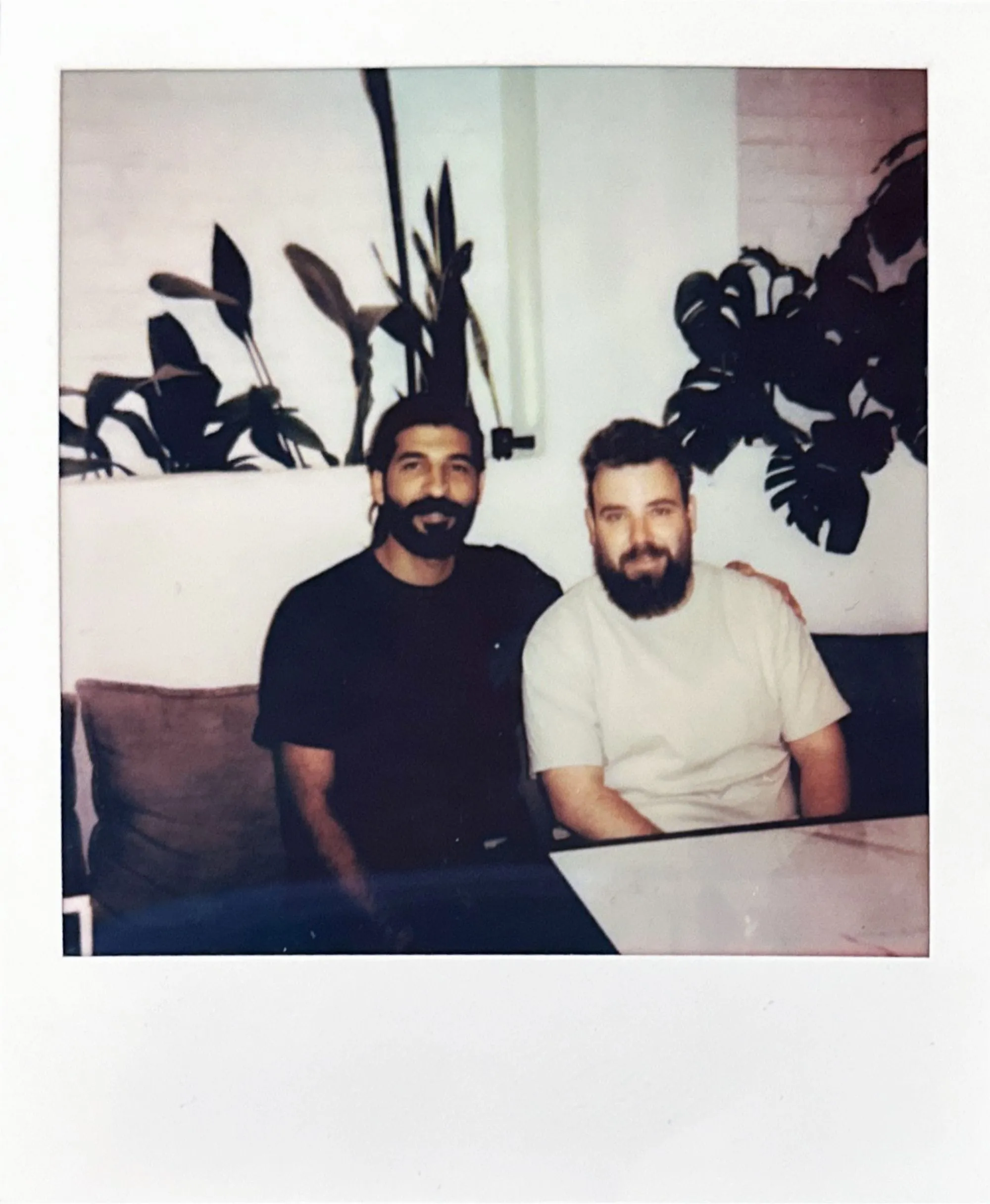
In a coffee bar in Yazd I met Kamran, a super friendly Iranian whose dream is to one day move to Italy.
He gave me some amazing recommendations about things to visit in Yazd and Shiraz.
Yazd was a really calm desert city. It was really hot (for European standards anyway, I’m sure those Iranians were freezing) - around 33 degrees celsius.
When I was walking around Yazd I realized how big and different Iran is, and that every region in Iran has its own history in culture. The three cities I visited thus far, Tehran, Isfahan and Yazd, are so very different.
After four days in Yazd, I was ready to go to Lut desert, the hottest place on earth.
On the way there I stopped at a gas station, to get gas and buy a few bottles of water for on the way.
When I wanted to continue my journey, I couldn’t start my motorcycle anymore. The key was totally bent, and it wouldn’t go all the way in the ignition anymore.
Together with the help from some Iranians (their willingness to help a stranger in need is really the common thread in this story), we managed to get it somewhat straight again by hitting it with a stone.
Instead of continuing my journey towards to desert, I decided to turn back to Yazd and to get a locksmith to make a copy of my key.
As I was waiting for the locksmith to make a duplicate, some people from the touristic infodesk came and say hi, as they heard a traveler with a weird plate on his motorcycle was in town.
We talked about my plans to go to the desert, and they advised against it. It was already really hot there, but as it was outside the tourist season, it was even more desolated as before. They told me I could try to find a tourist agency to take me with them, but I really didn’t want to do that.
As I just had this big trouble with my key, their discouragements were successful and I unfortunately decided against going to the Lut desert. I regret it now, but back then I was just happy I didn’t get stranded with a bent key in the middle of Lut Desert.
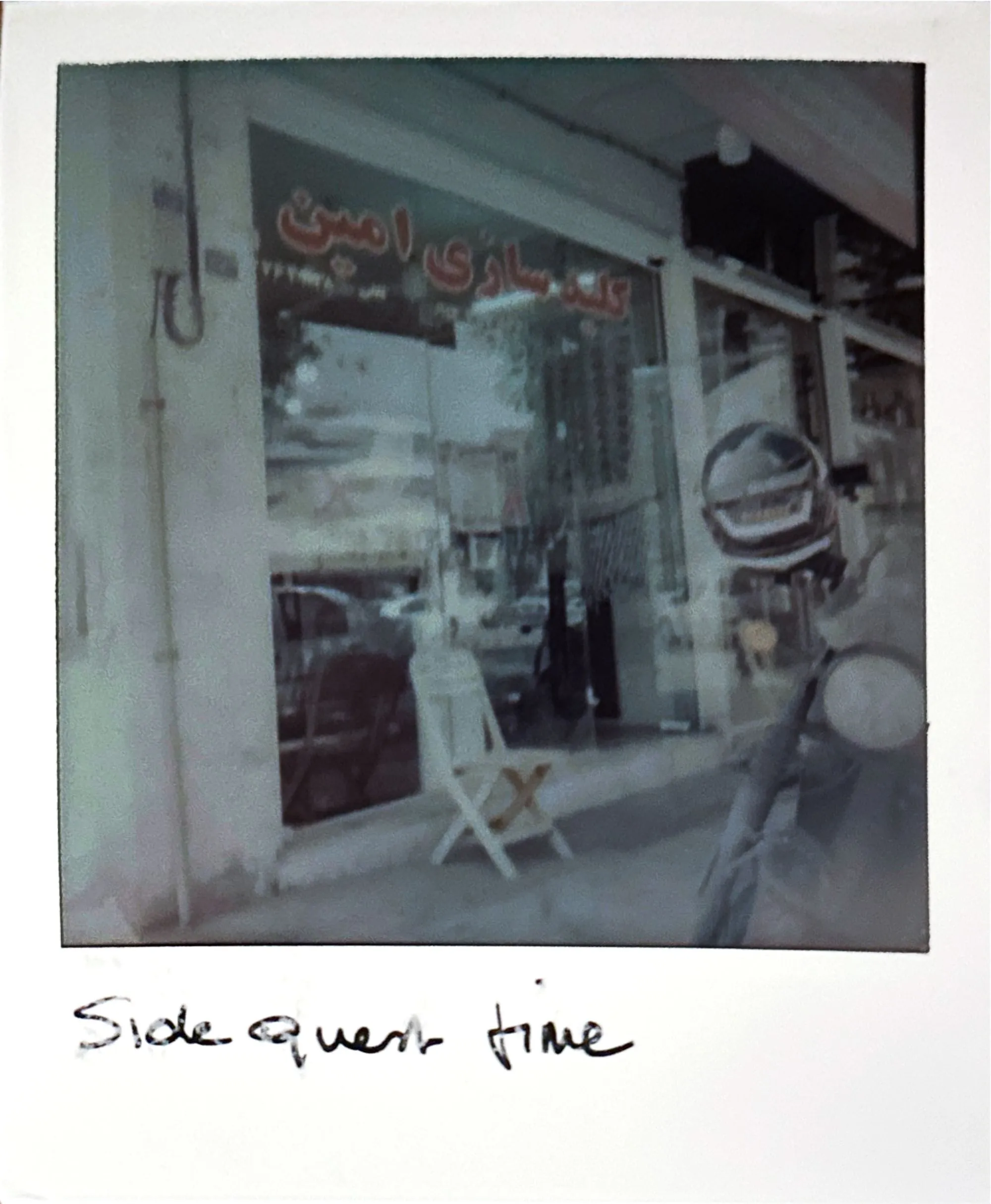
The locksmith who fixed my key
Instead of driving east towards the desert, I drove south to Bakhtegan National park.
I was once again stranded in a storm in the dark. As I couldn’t find any hotel or camping (they don’t really exist anyway in Iran), I just pitched my tent behind someone’s garden wall.
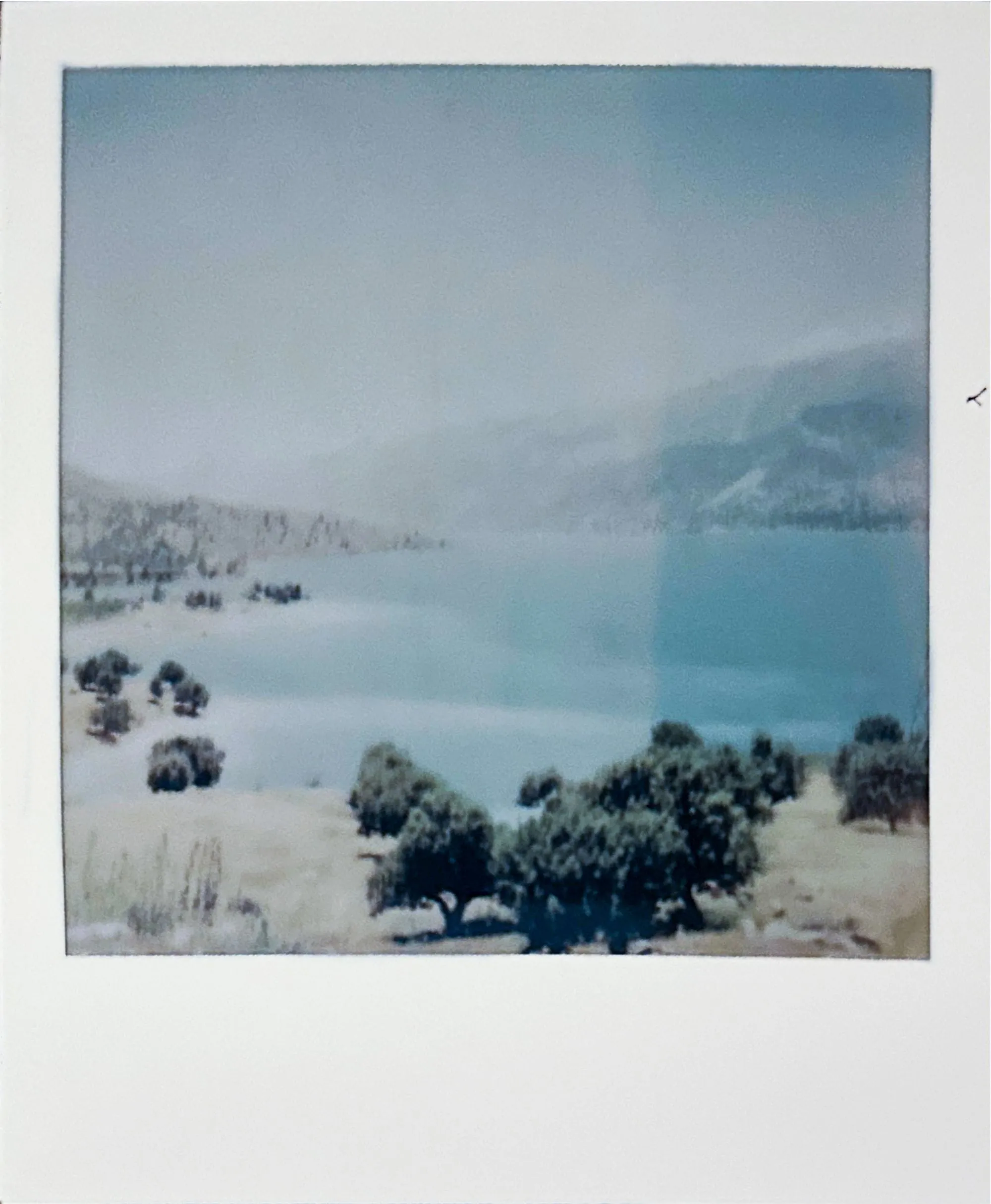
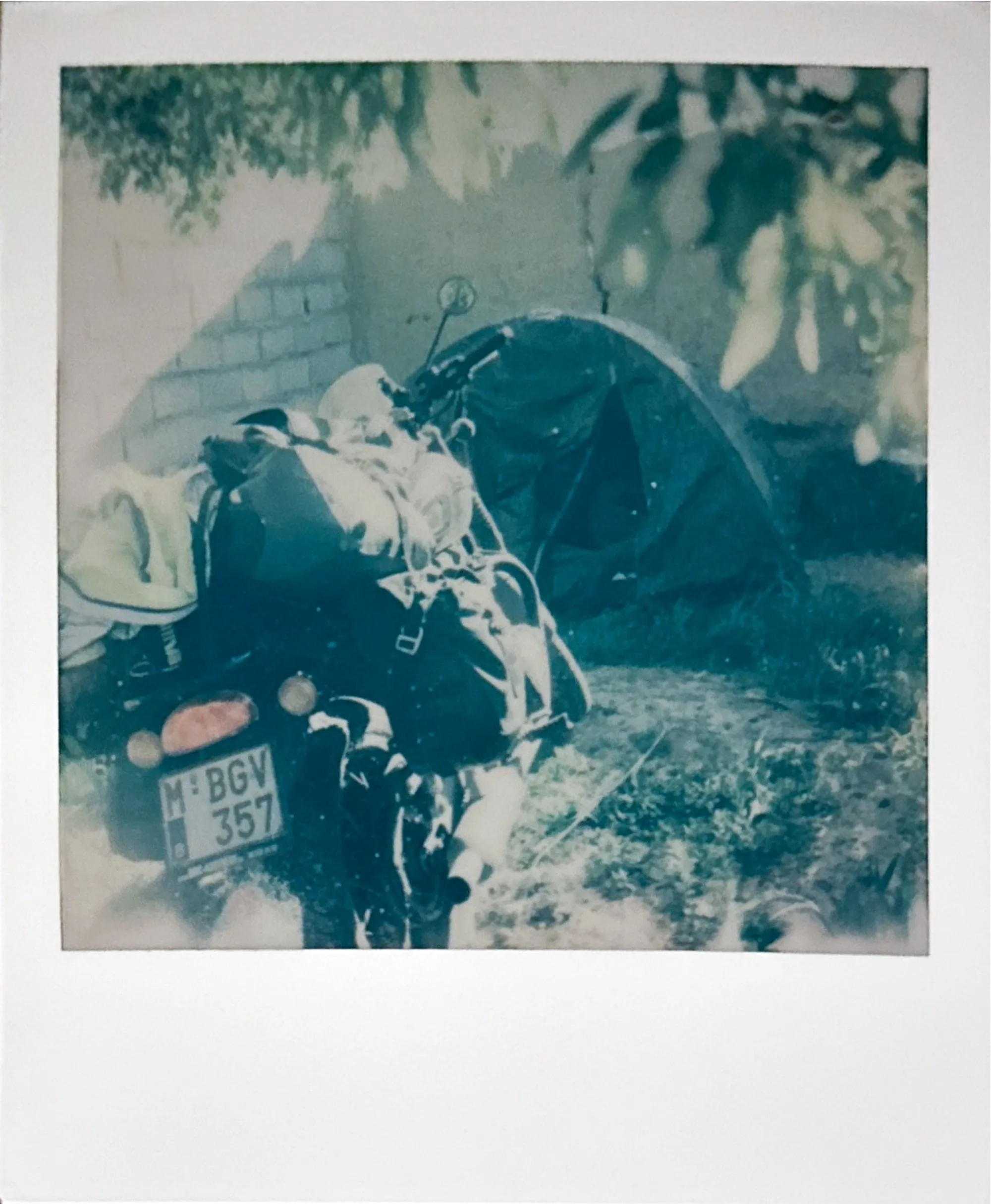
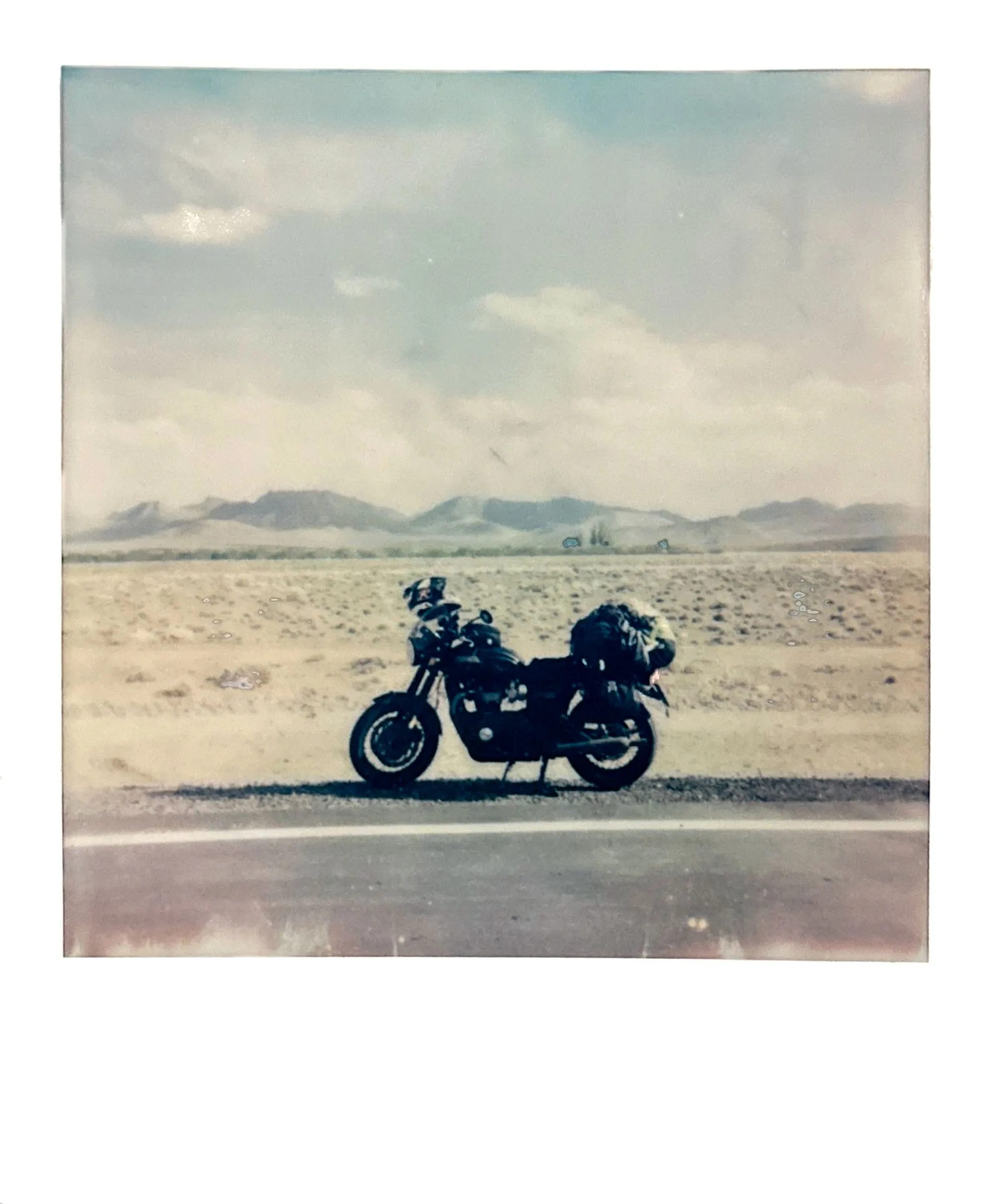
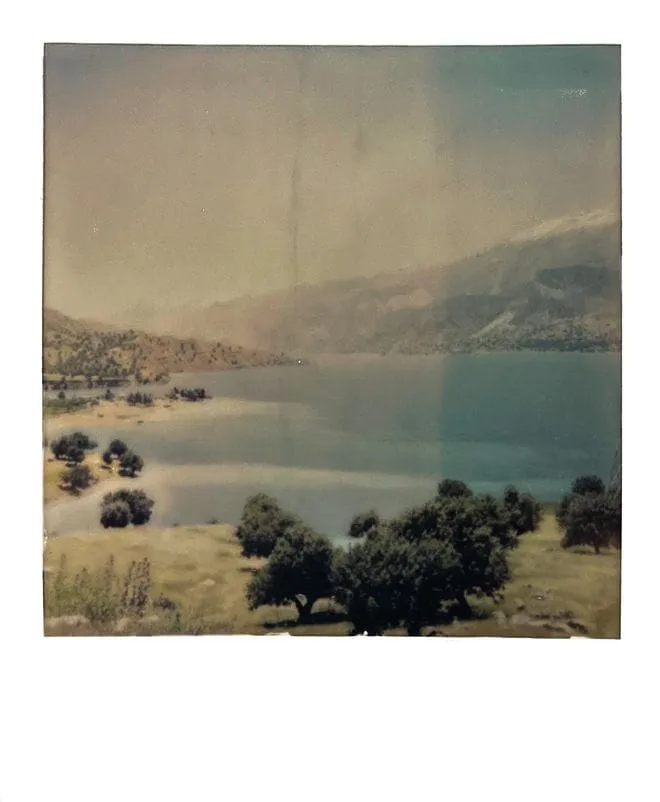
From there my trip to Shiraz continued.
In Shiraz I decided to take a few extra days to recover and explore the city, as I quickly find out it had a really amazing atmosphere.
I stayed at the Seven Hostel/ Rashedi House in Shiraz. It was an amazingly beautiful hostel, with the most friendly hosts.
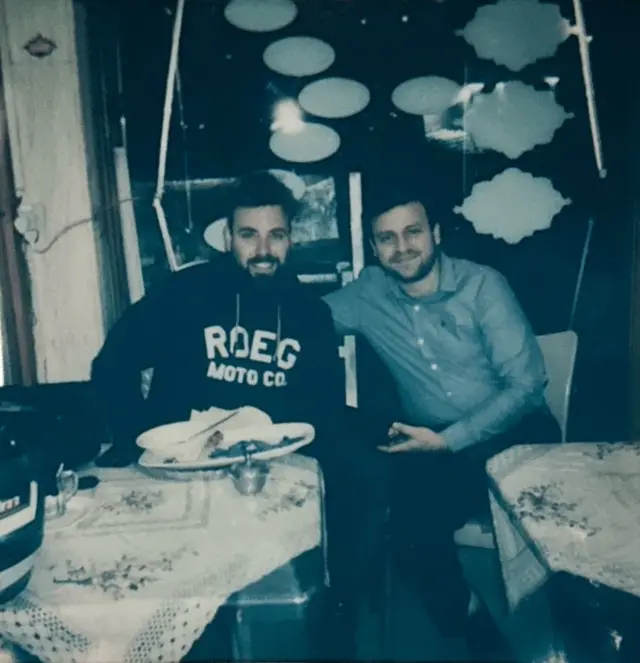
I met some of the guests and together we explored Shiraz
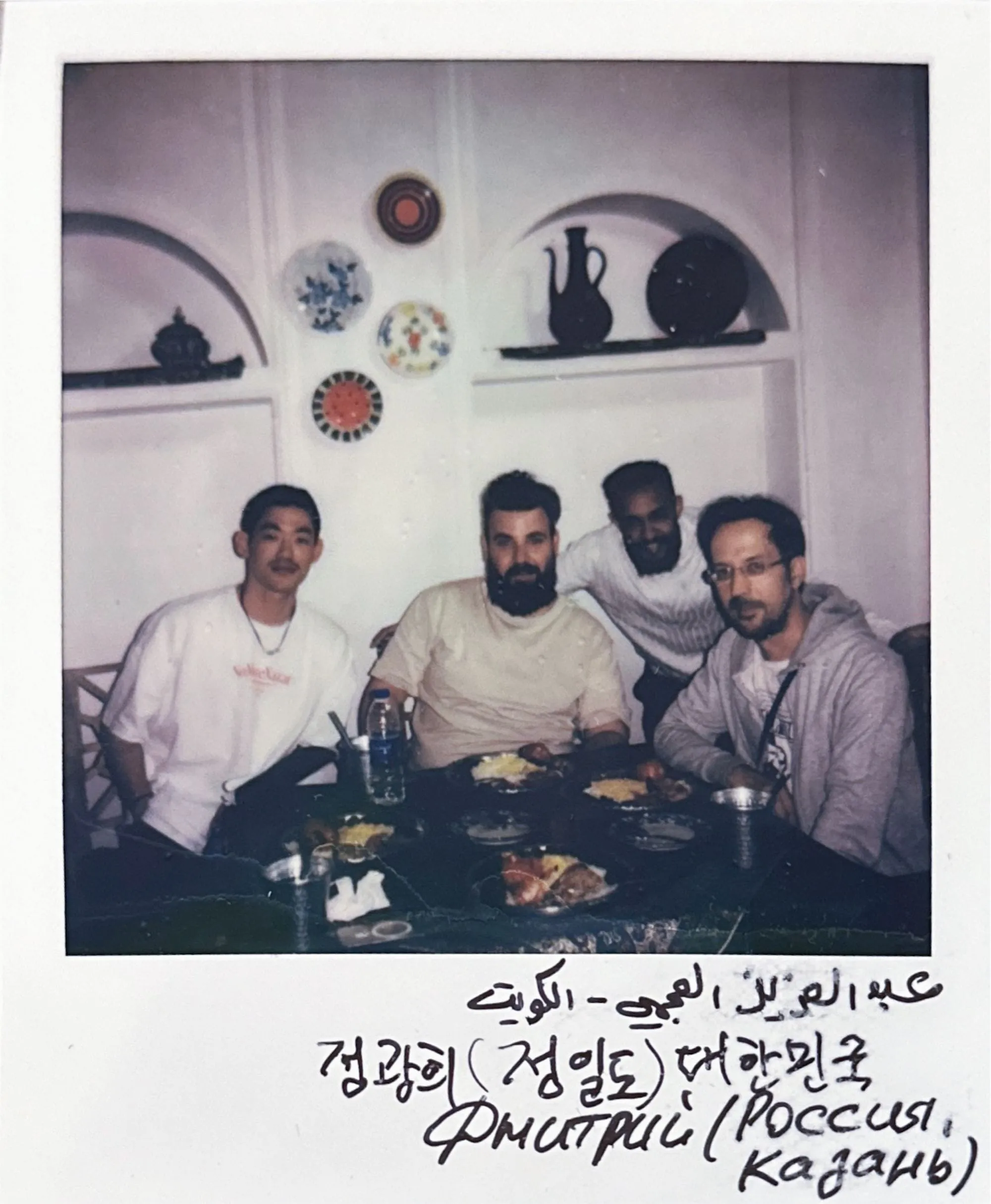
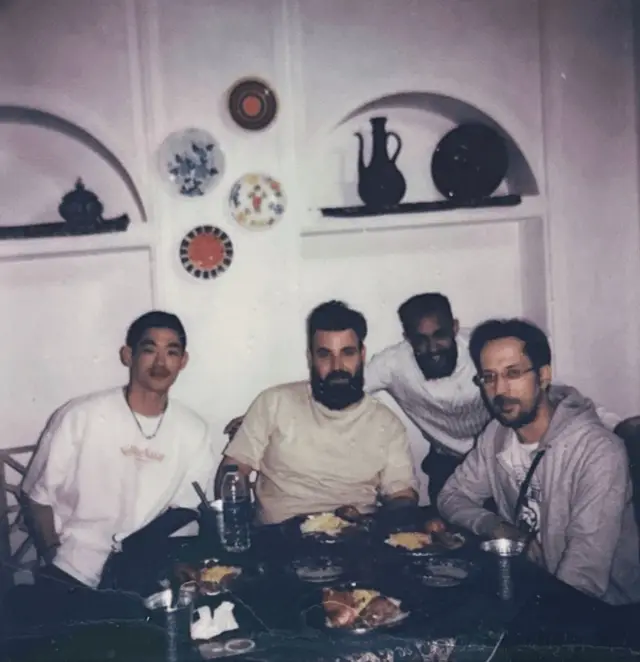
A Korean, Kuwaiti, Russian and a Belgian walk into an Iranian bar
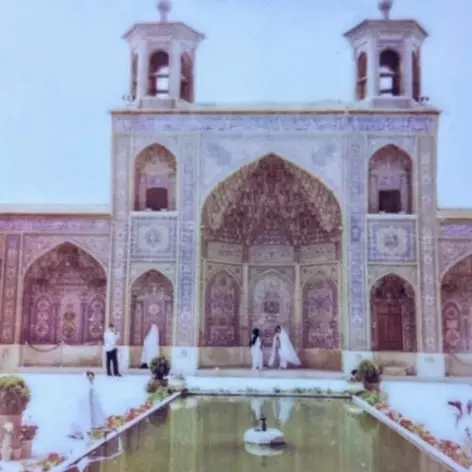
The hostel was also really close to the famous Pink Mosque of Shiraz. Which was filled with teenagers and young girls taking pictures next to the leaded windows.
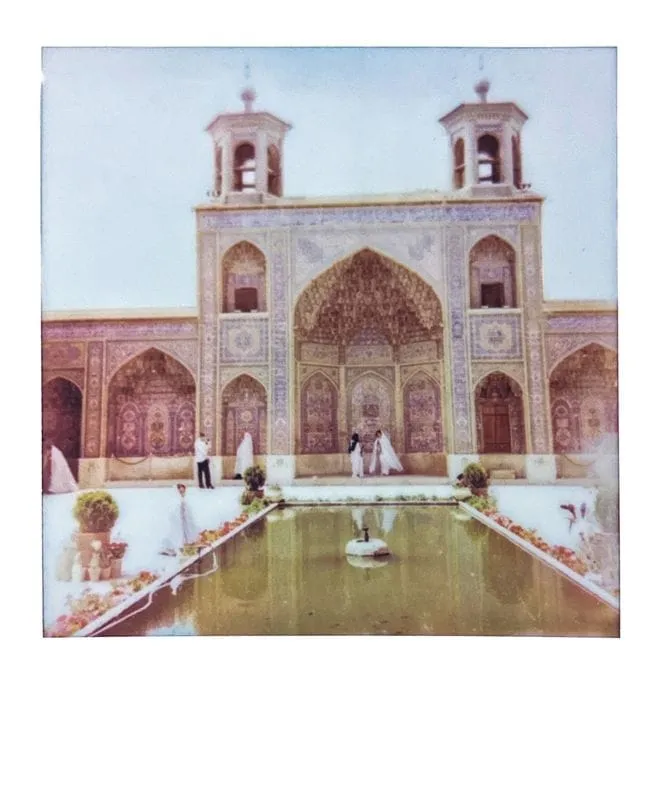
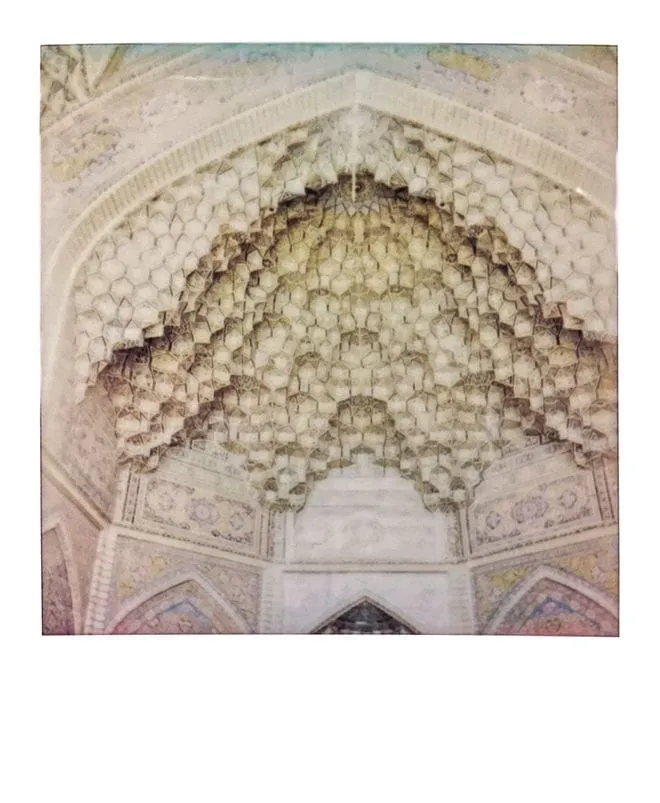
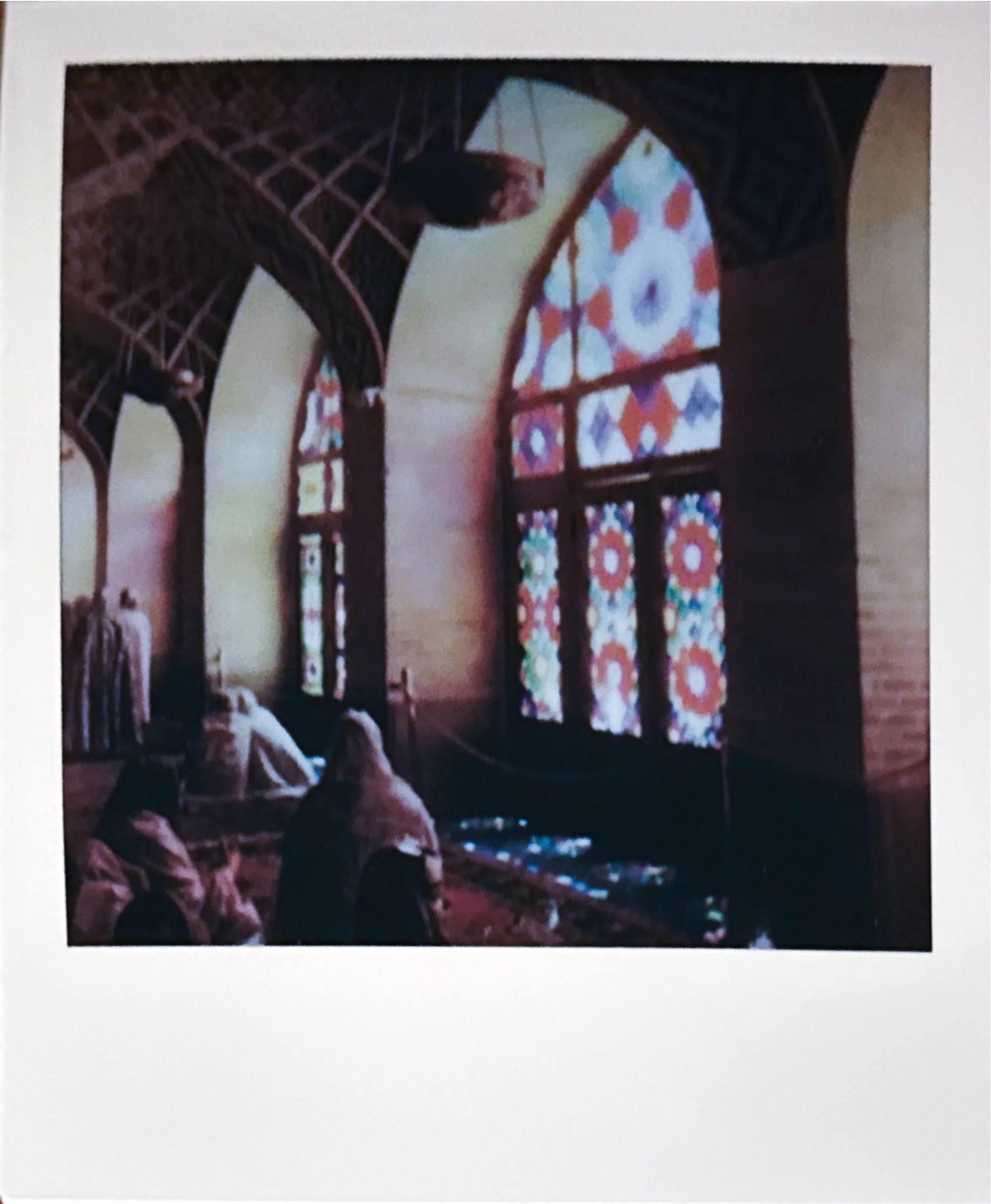
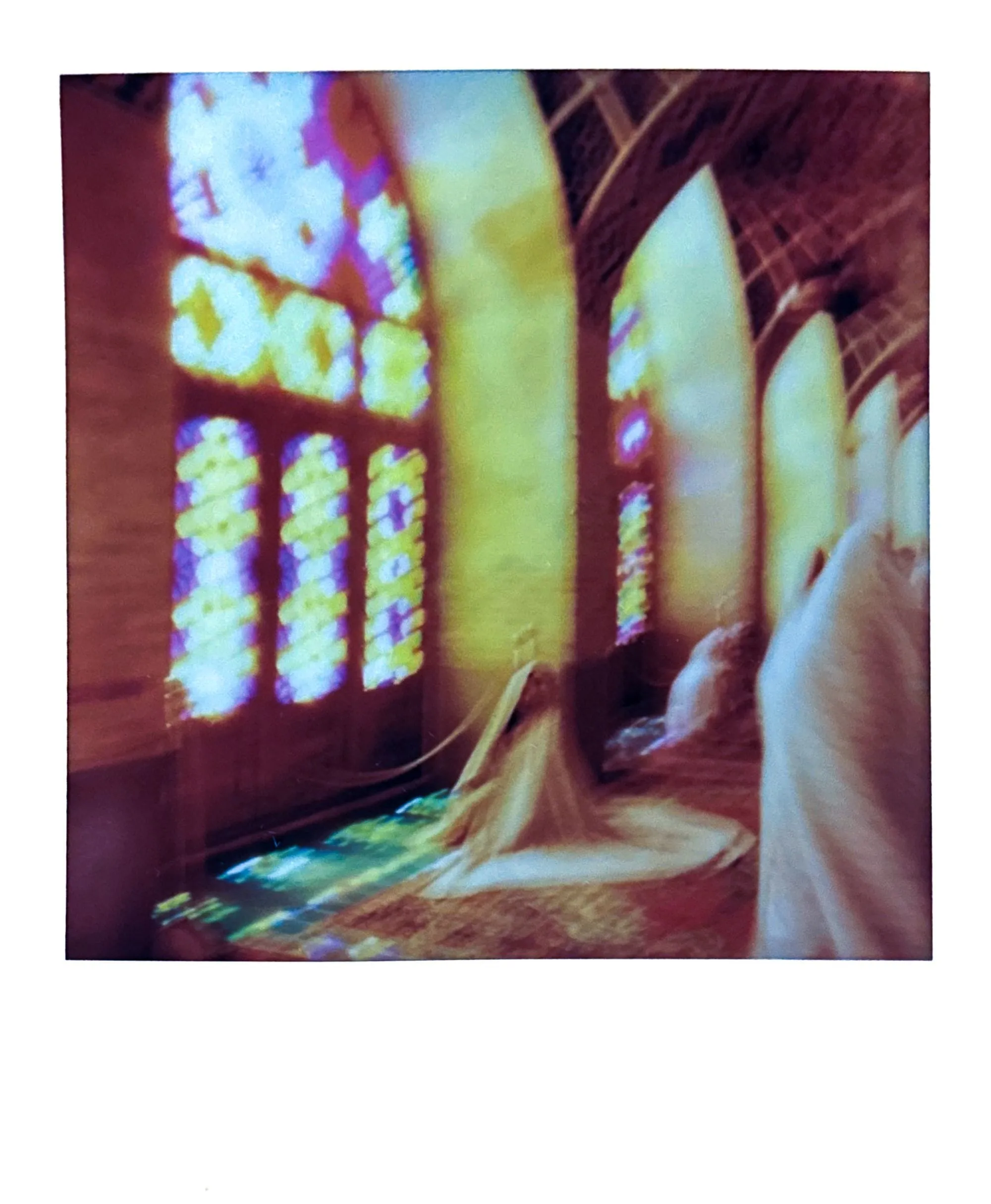
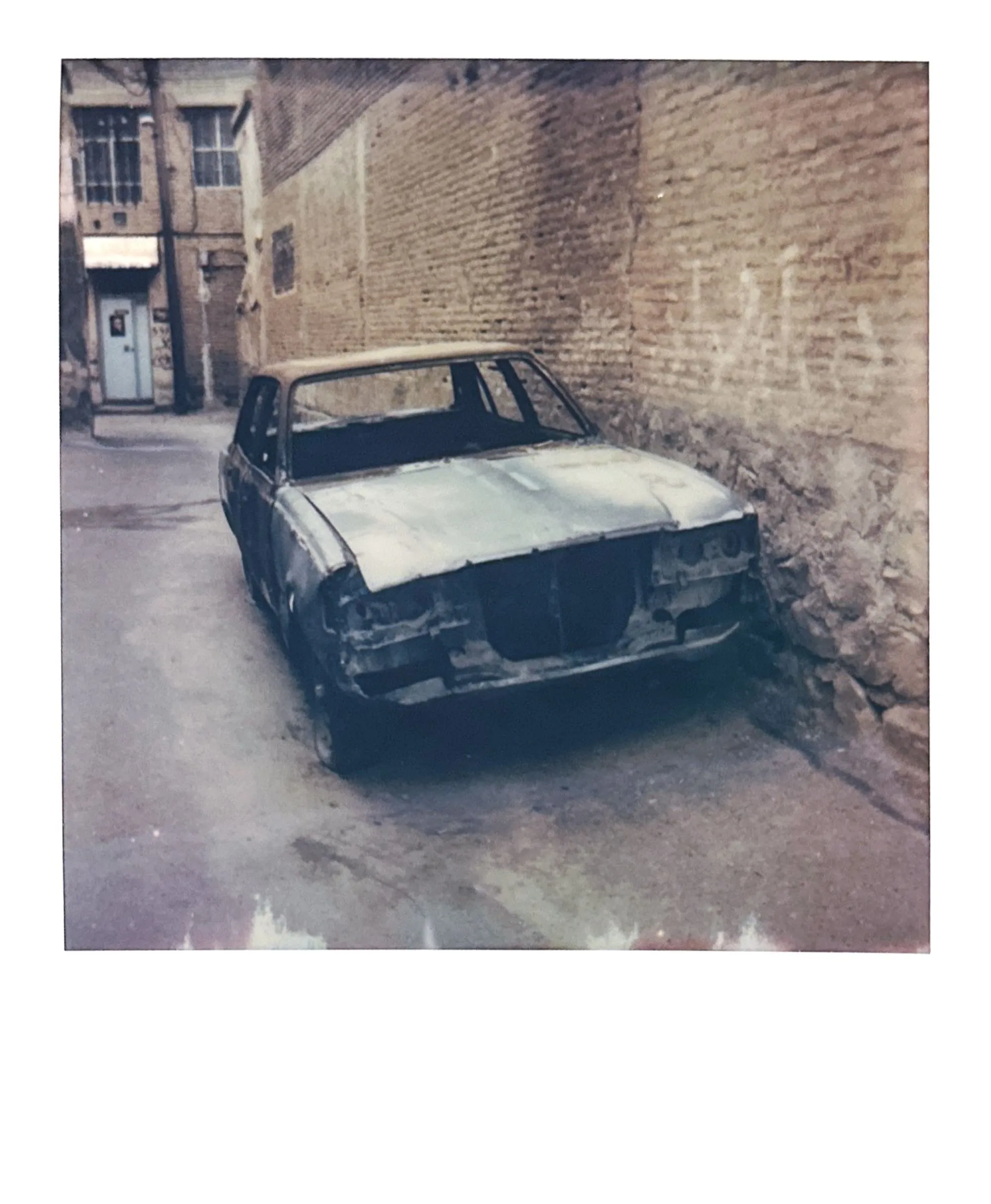
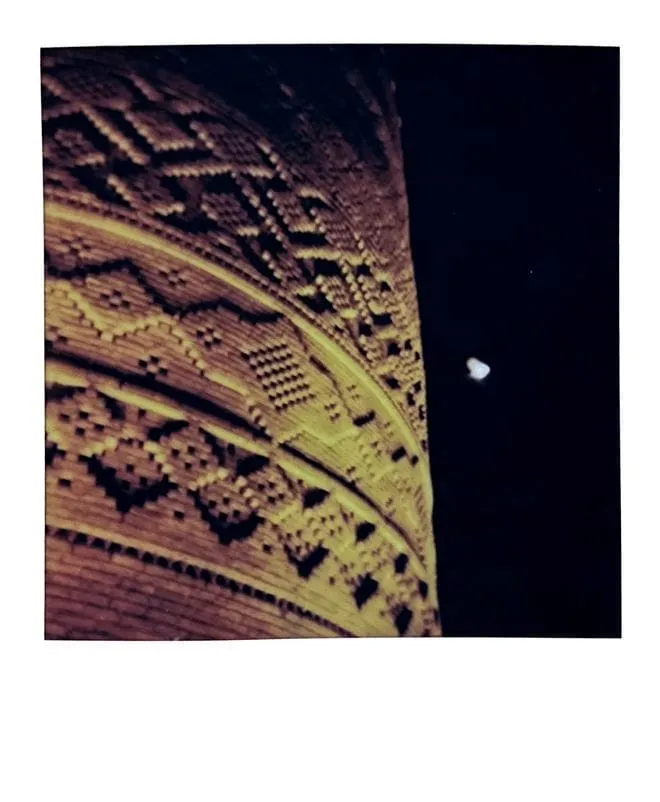
One of the most famous inhabitants of Shiraz was Hafez, a Persian poet who lived in the 12th century.
His poetry is very famous and important in Iranian/Persian culture. I thought it would be similar to Shakespeare in the UK.
I was wrong.
I went to visit Hafez’ tomb where he’s buried, fully expecting it to be a really calm experience.
Wrong again.
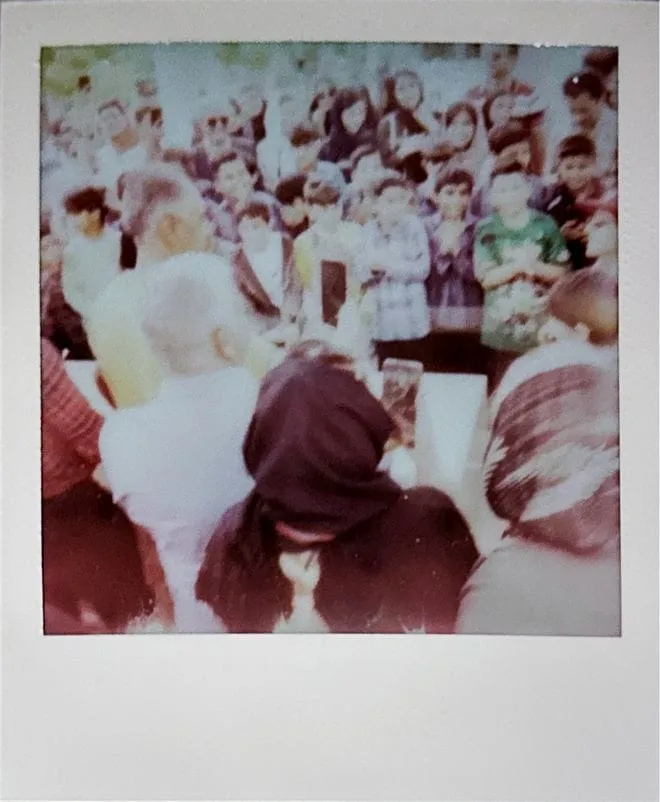
I entered the site where his tomb is and it was absolutely packed. Lots and lots of children, but also couples, families, and even some tourists.
Okay but apart from the big crowd, it will be calm, right? It’s after all his burial place, a bit like a graveyard.
Wrong. Again.
People were reciting his poetry next to his tomb, people were clapping, cheering on the reciters, applauding, dancing. What an amazing experience that was. I got a very cool video of a young boy reciting poetry, and the whole crowd clapping rhythm. At one point he even made some special sound effects, which had the crowd in stitches. Unfortunately as you can see from the polaroid it were a lot of kids, so it would not be okay to share this video.
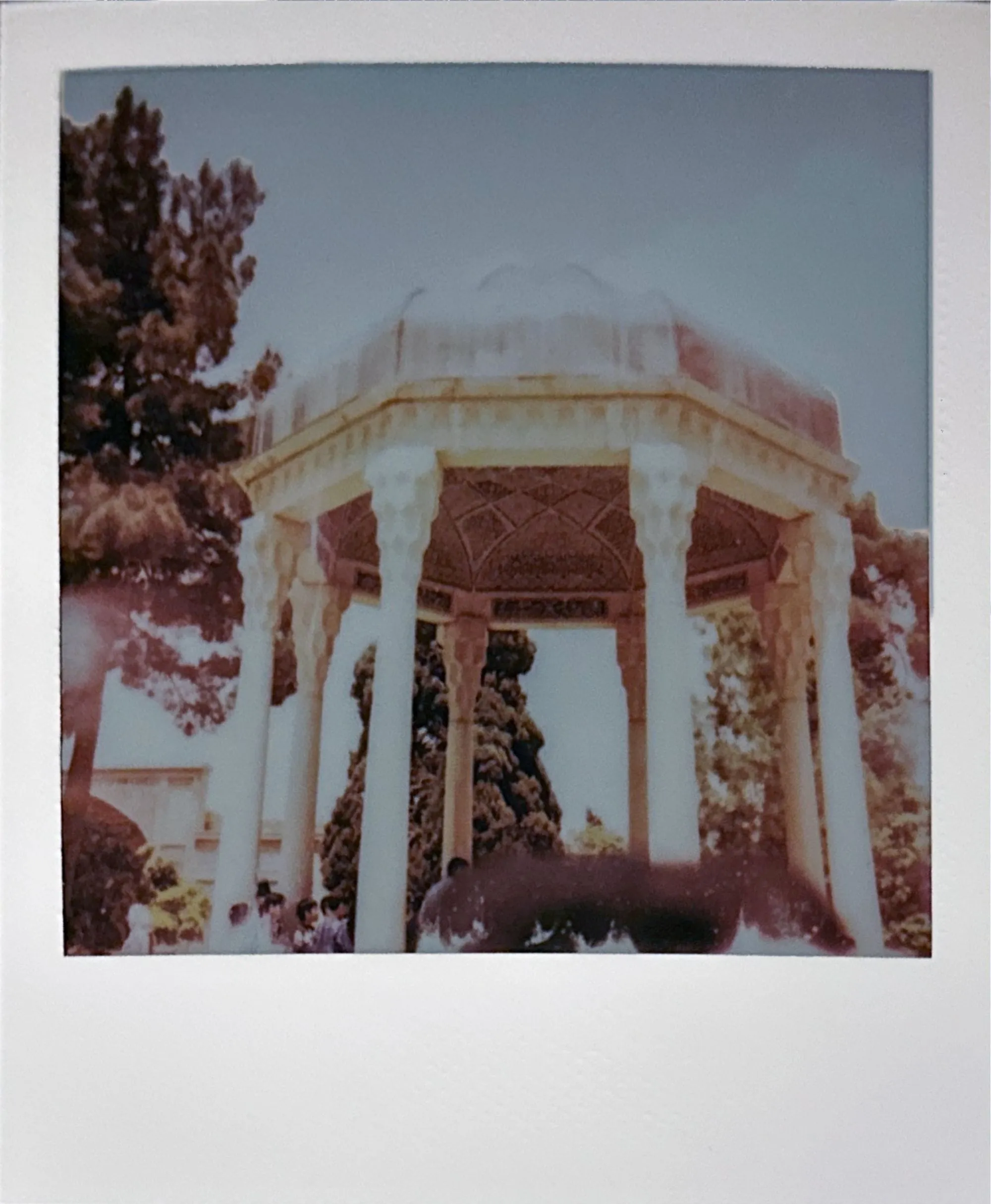
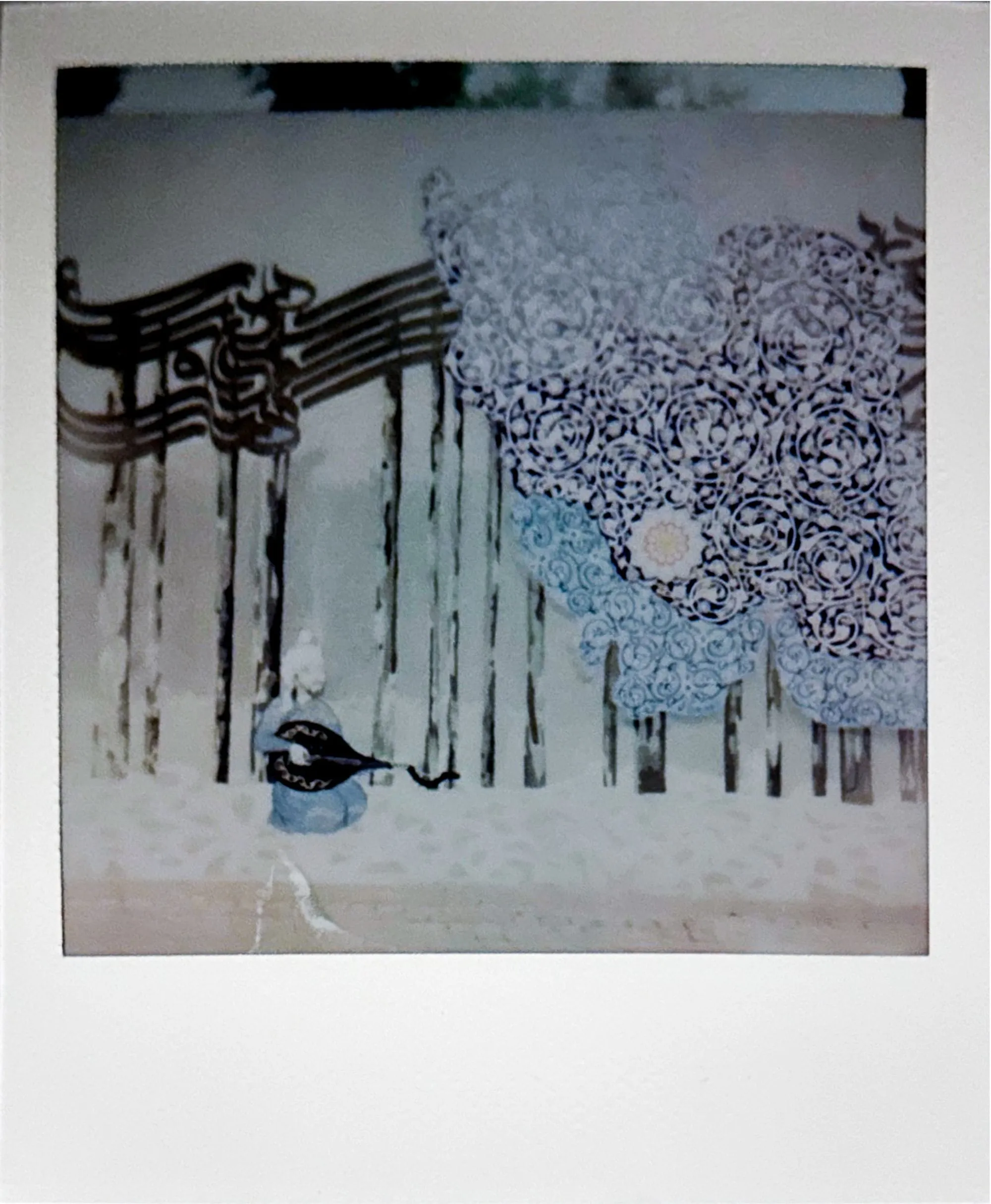
Hafez mural outside his tomb site.
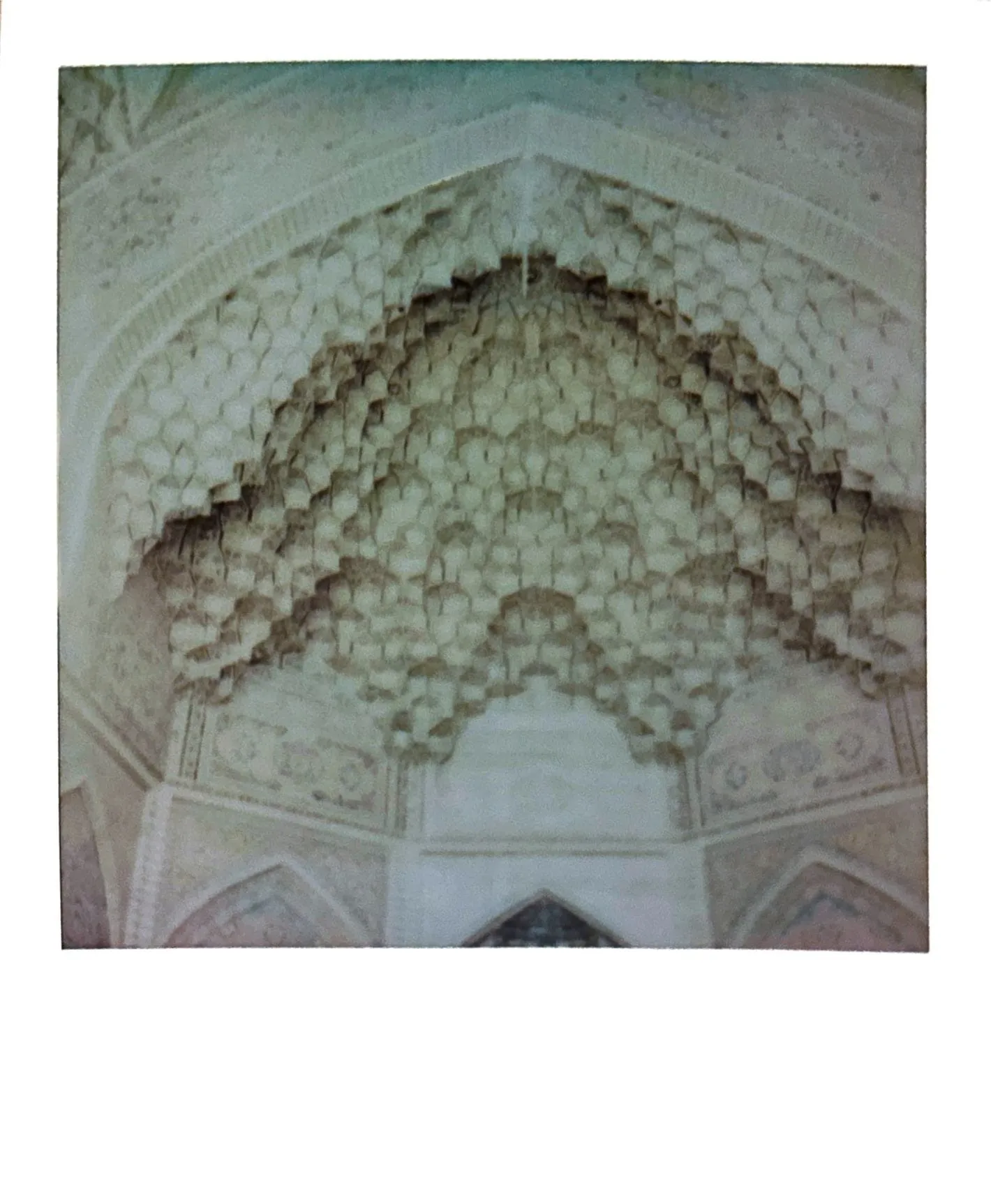
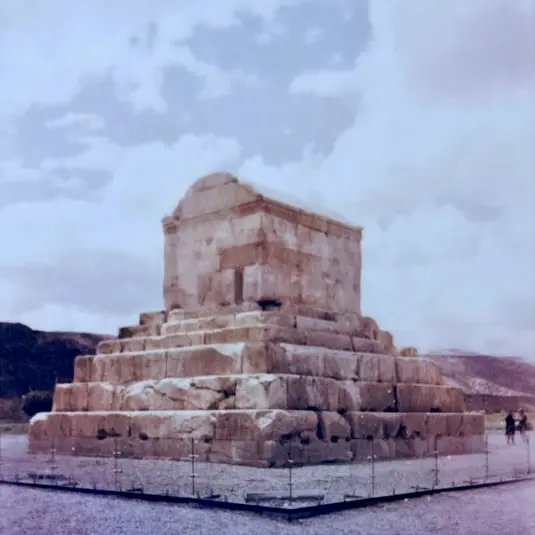
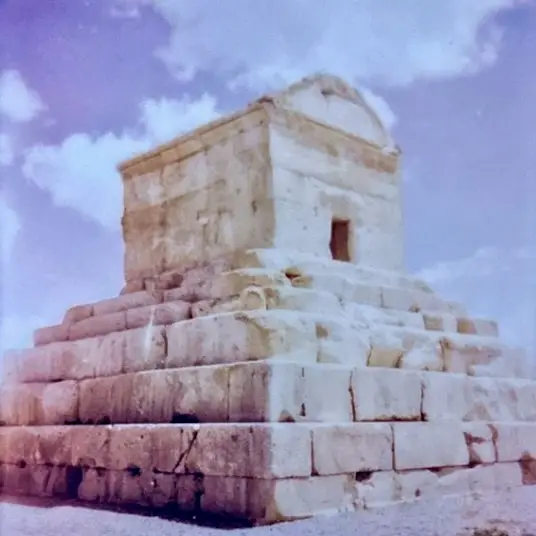
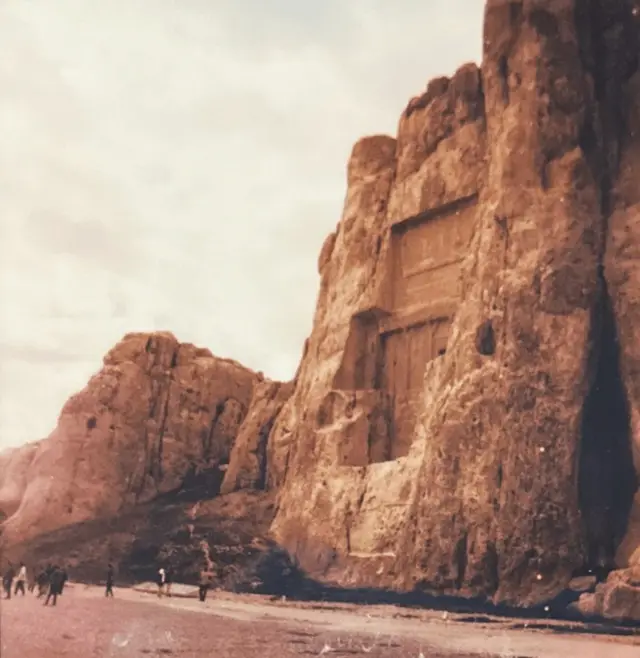
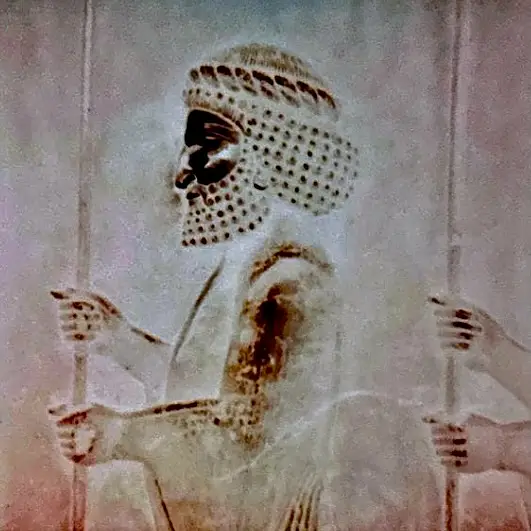
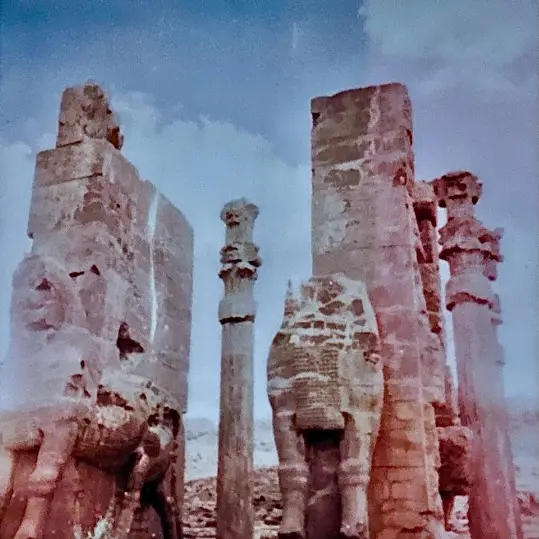
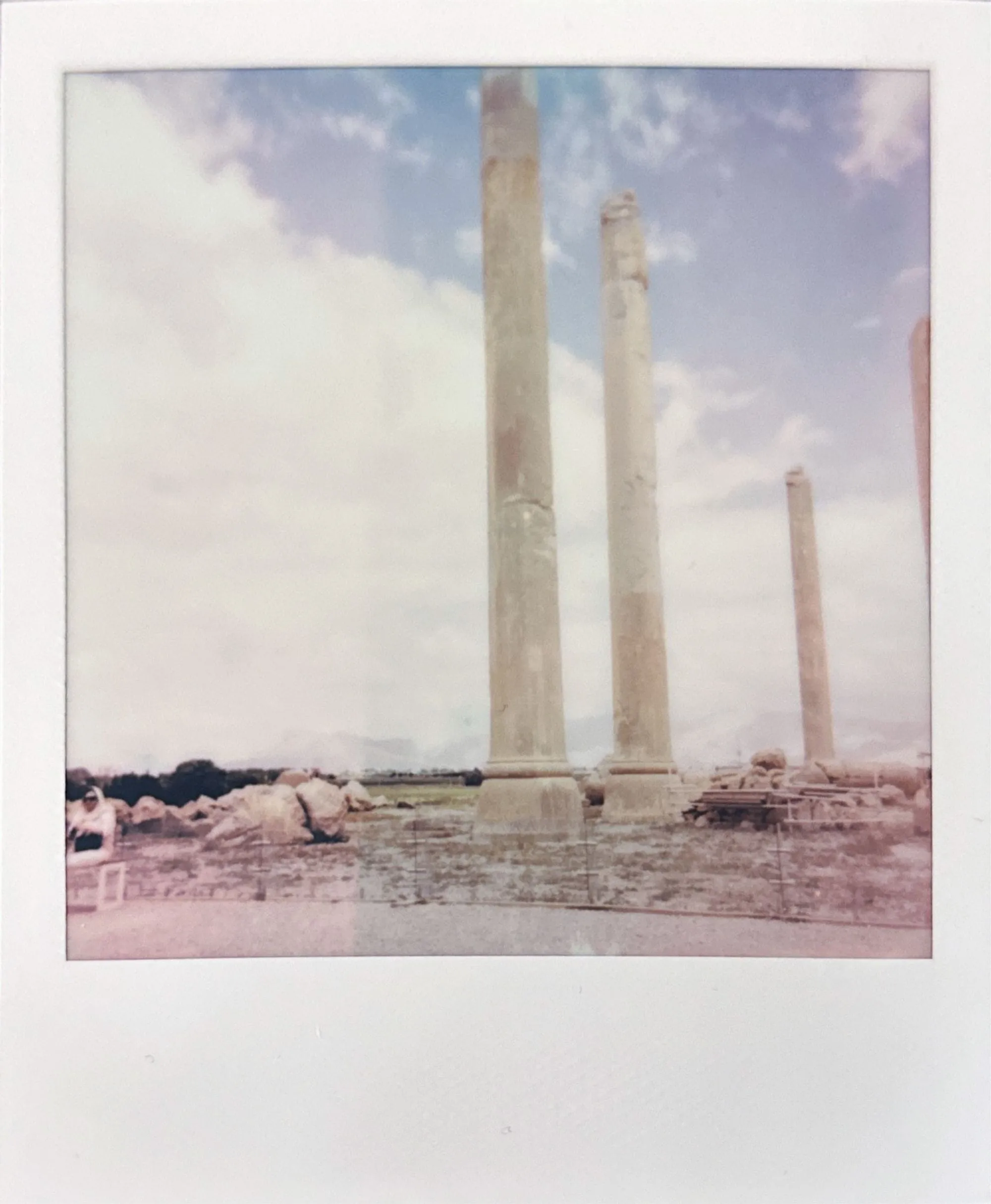
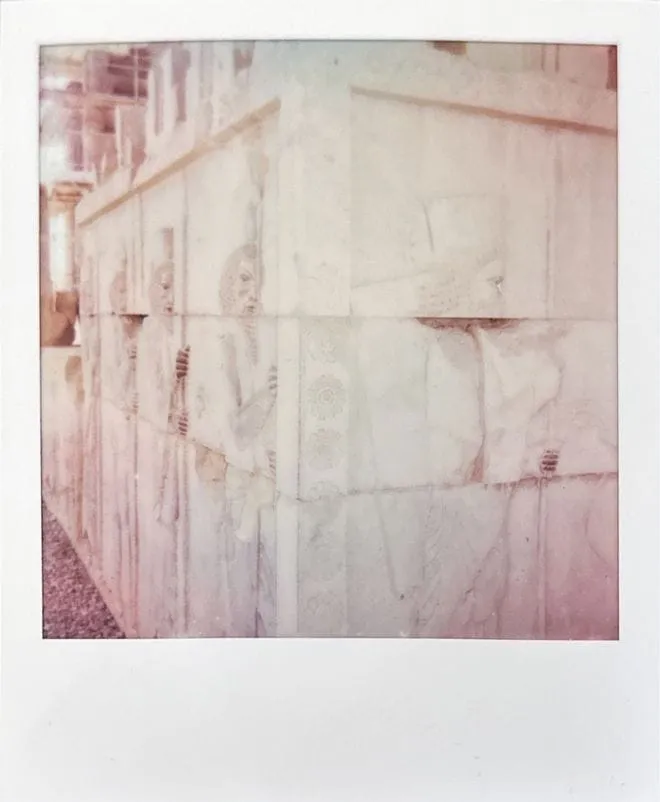
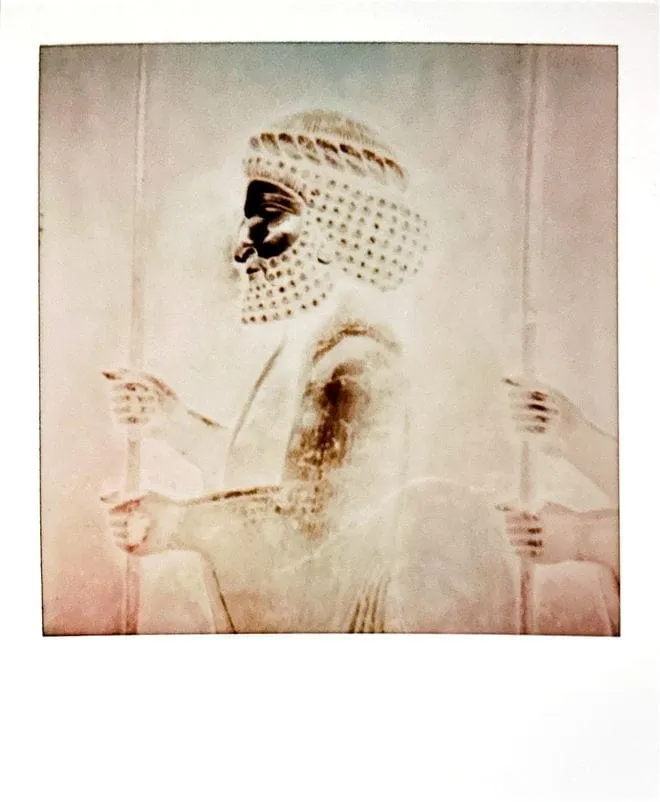
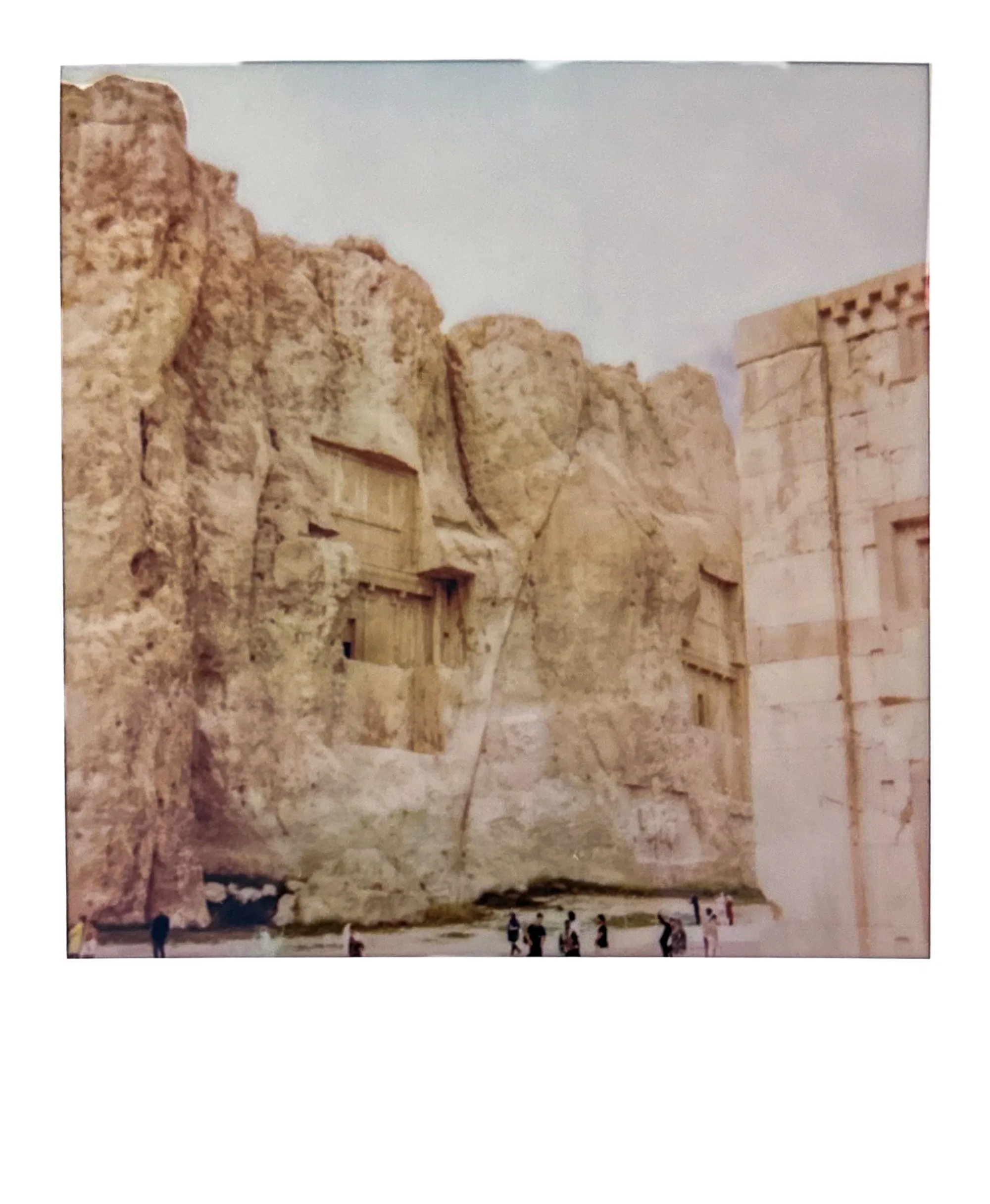
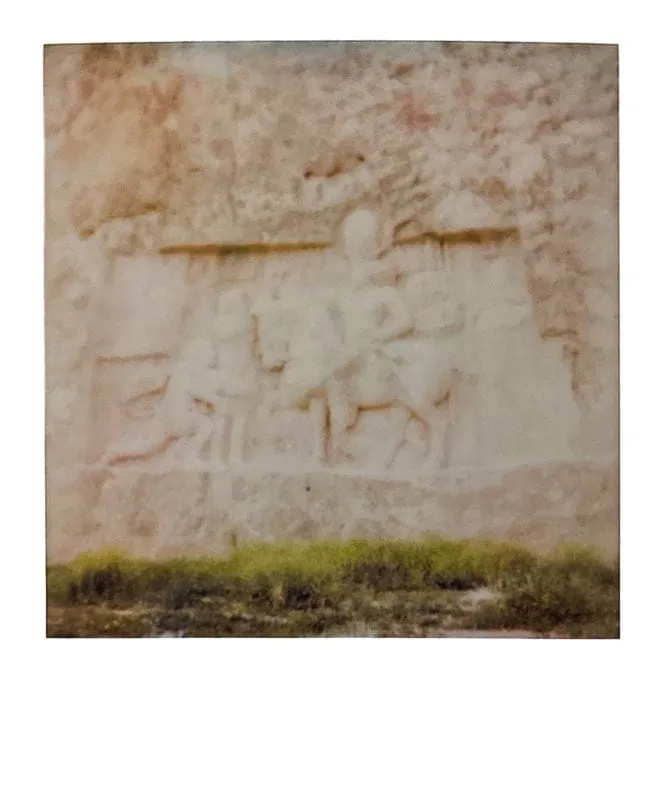
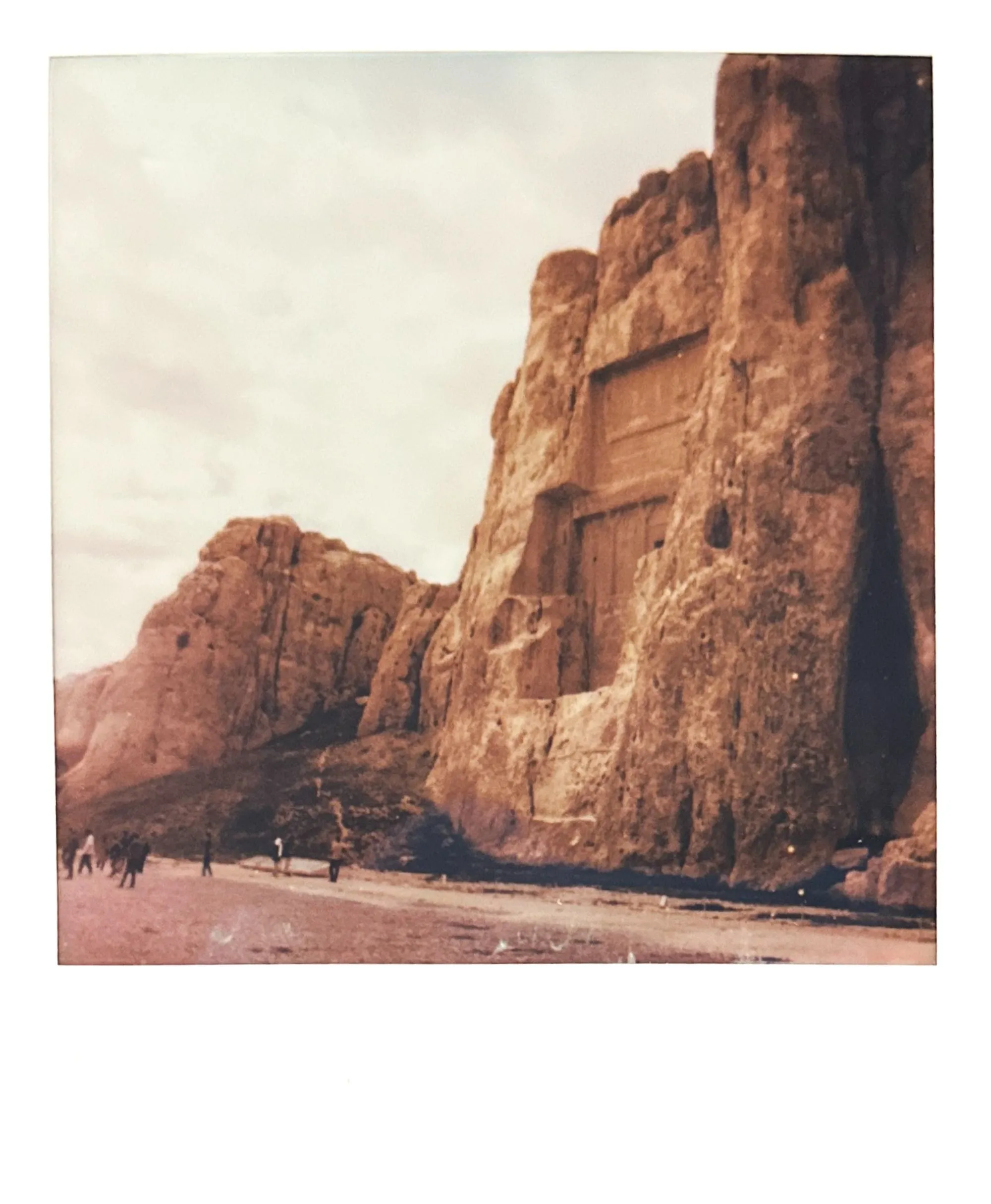
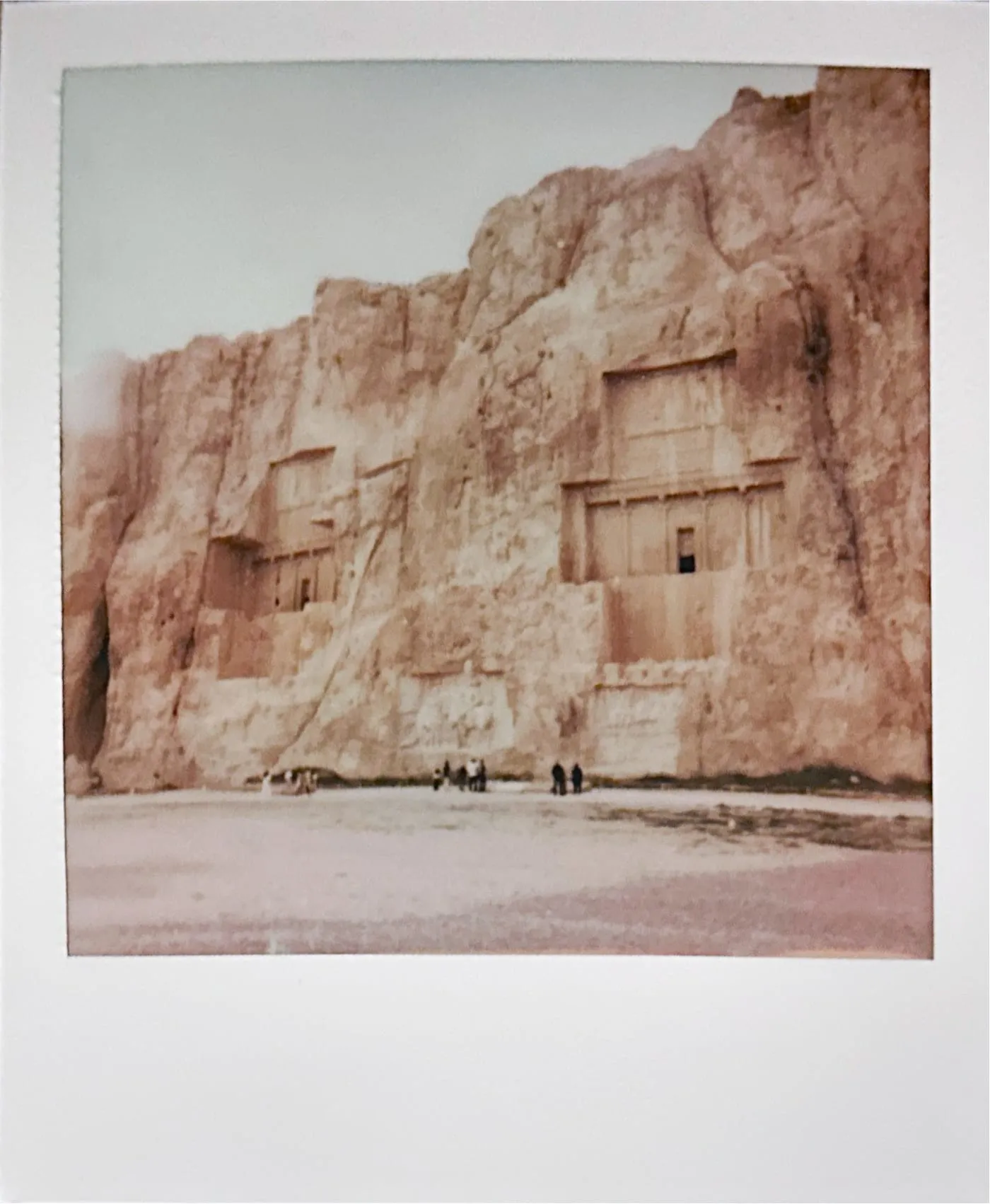
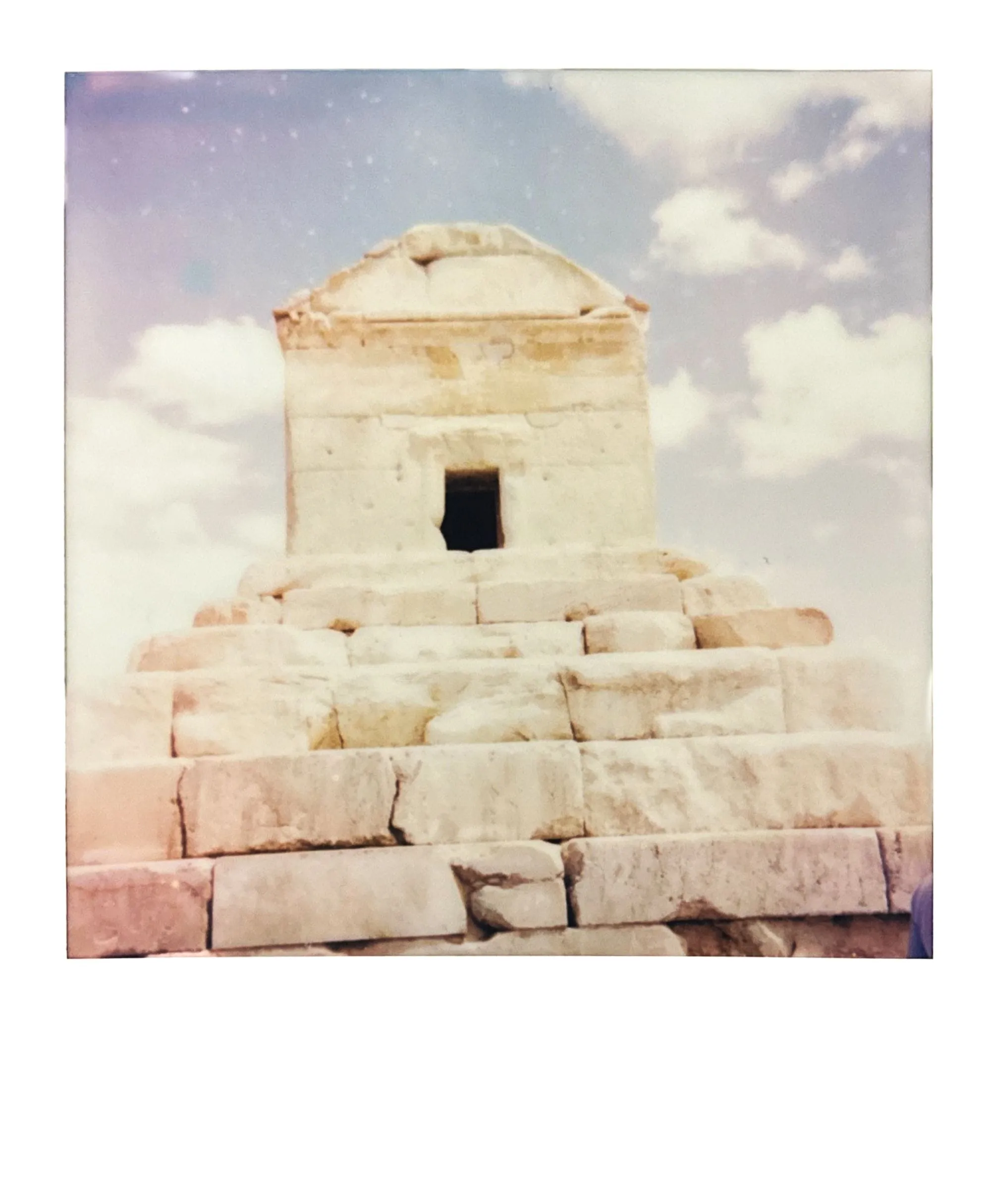
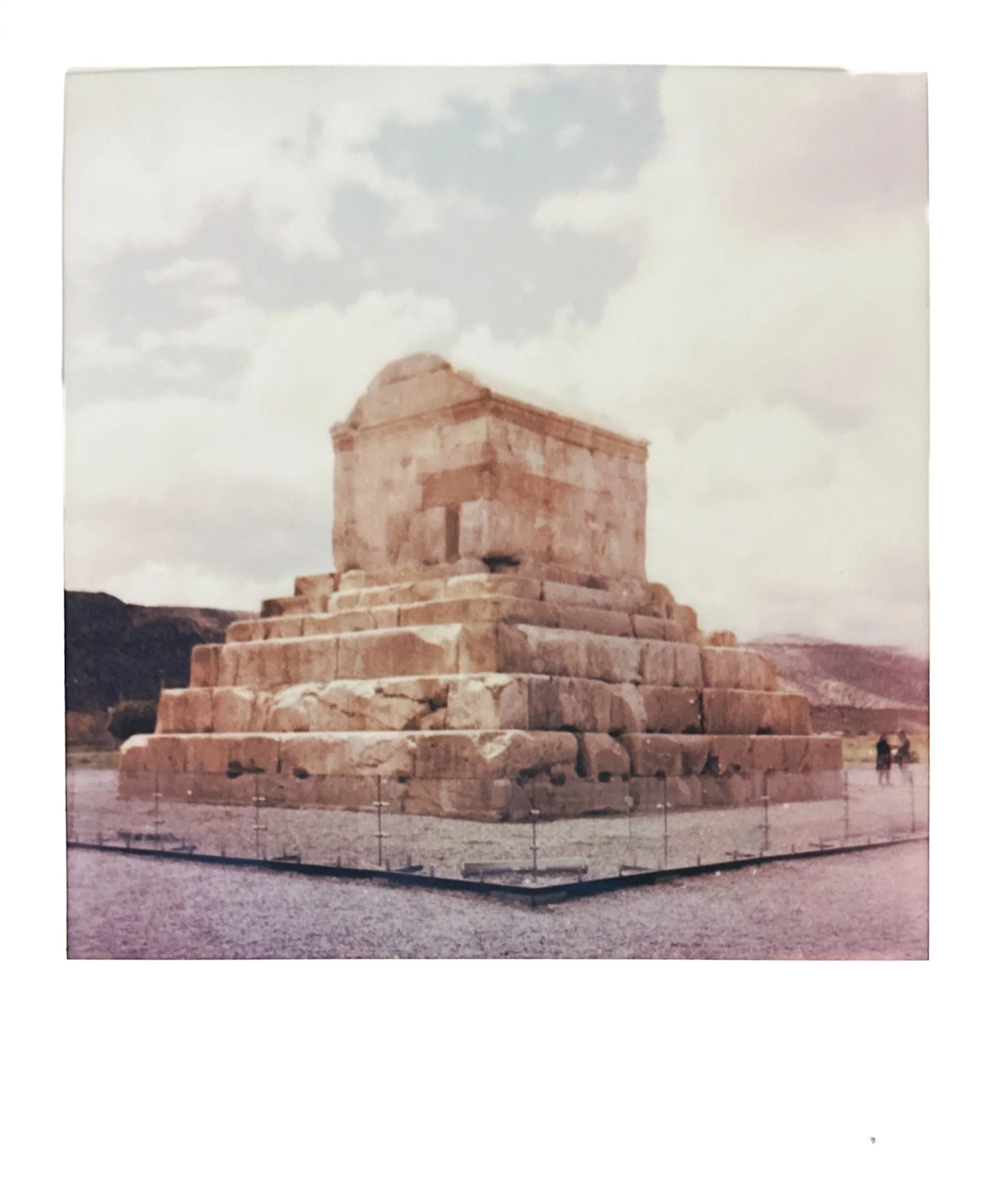
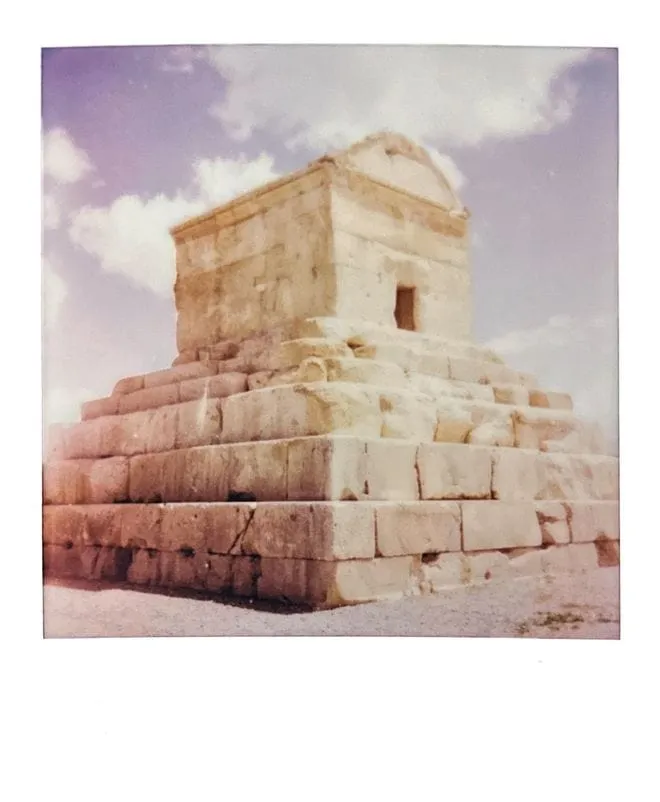
Together with Dmitry, the Russian guy from the group picture, I did a big tour of Persepolis, Necropolis and the tomb of Cyrus the great.
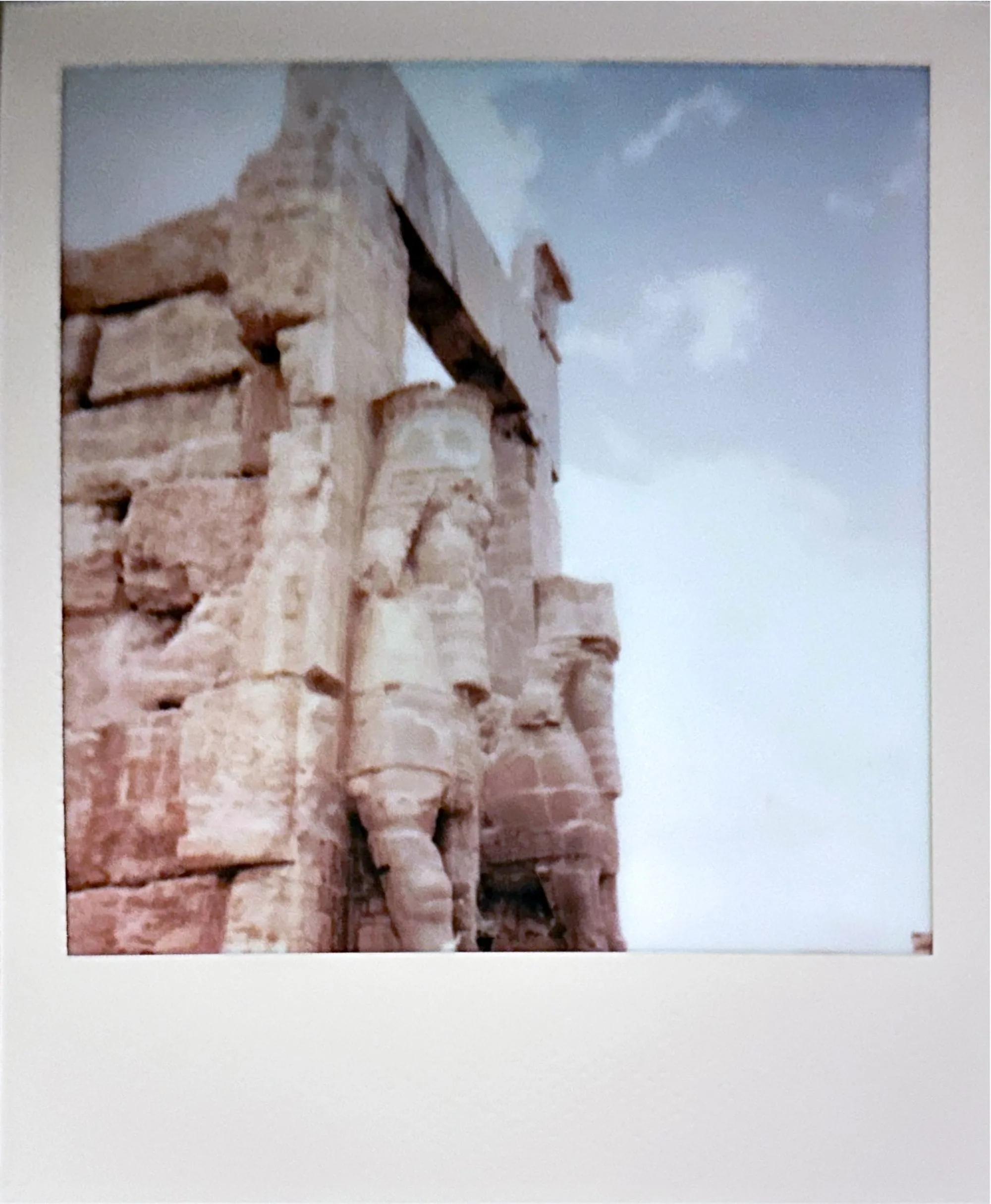
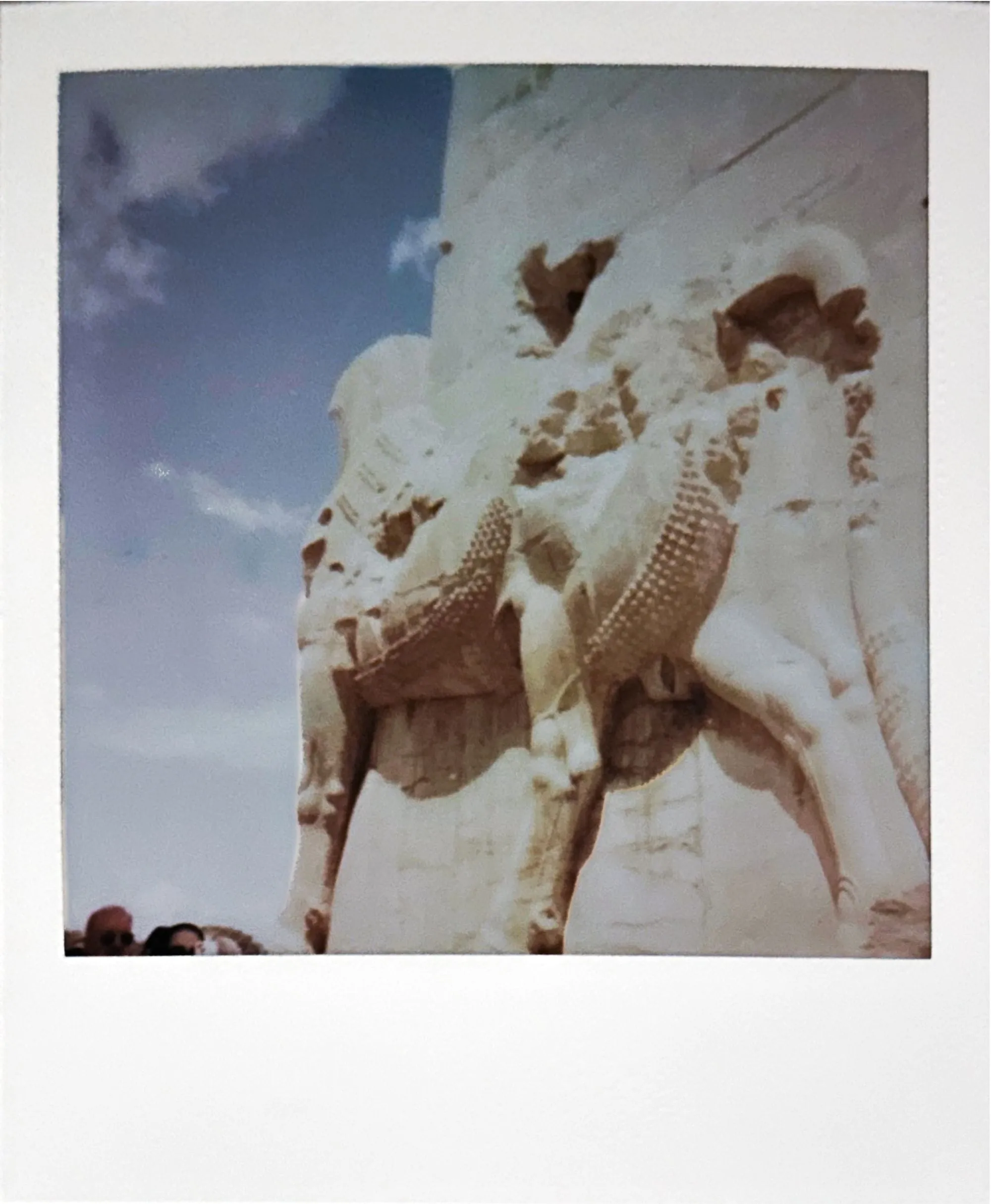
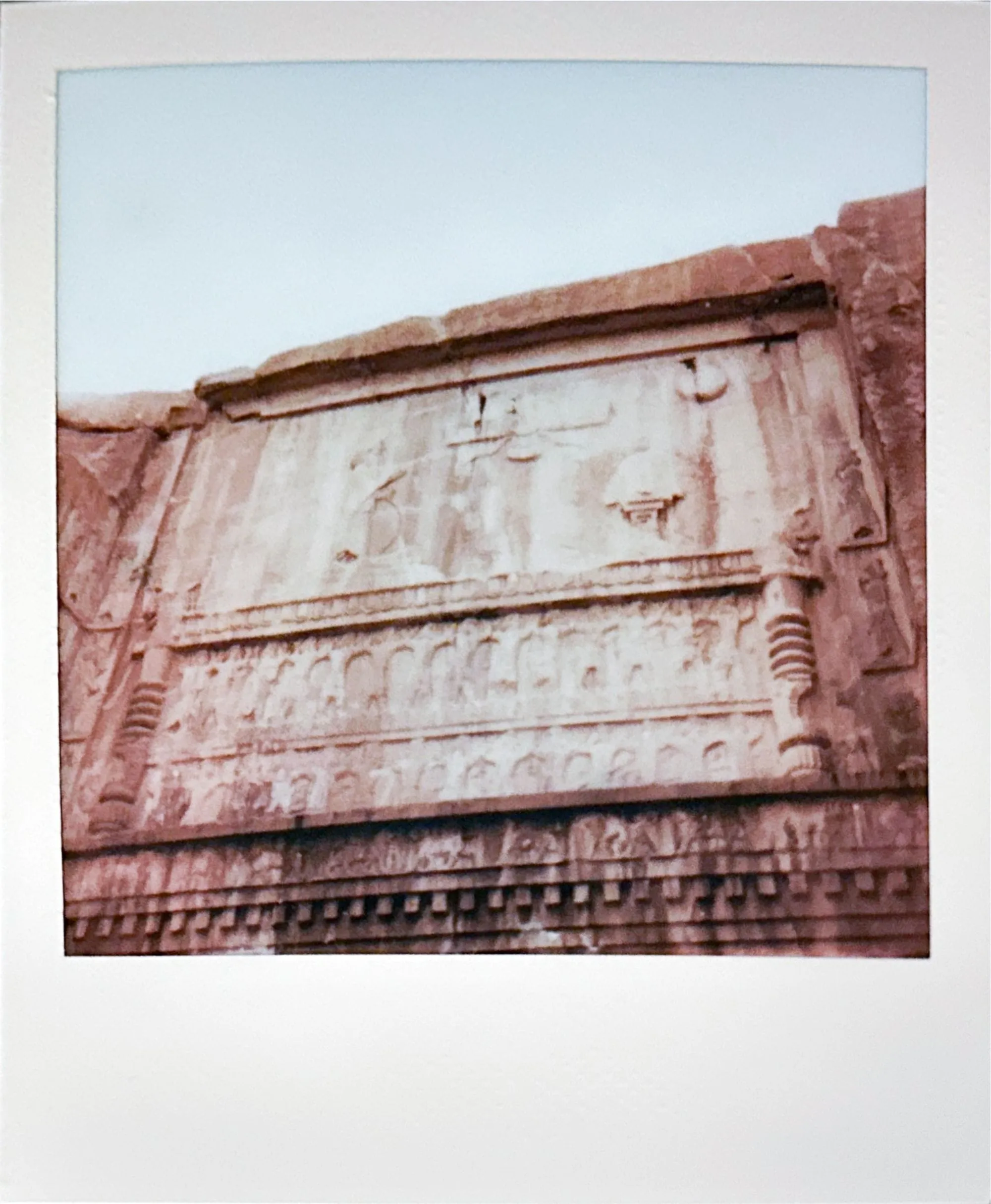
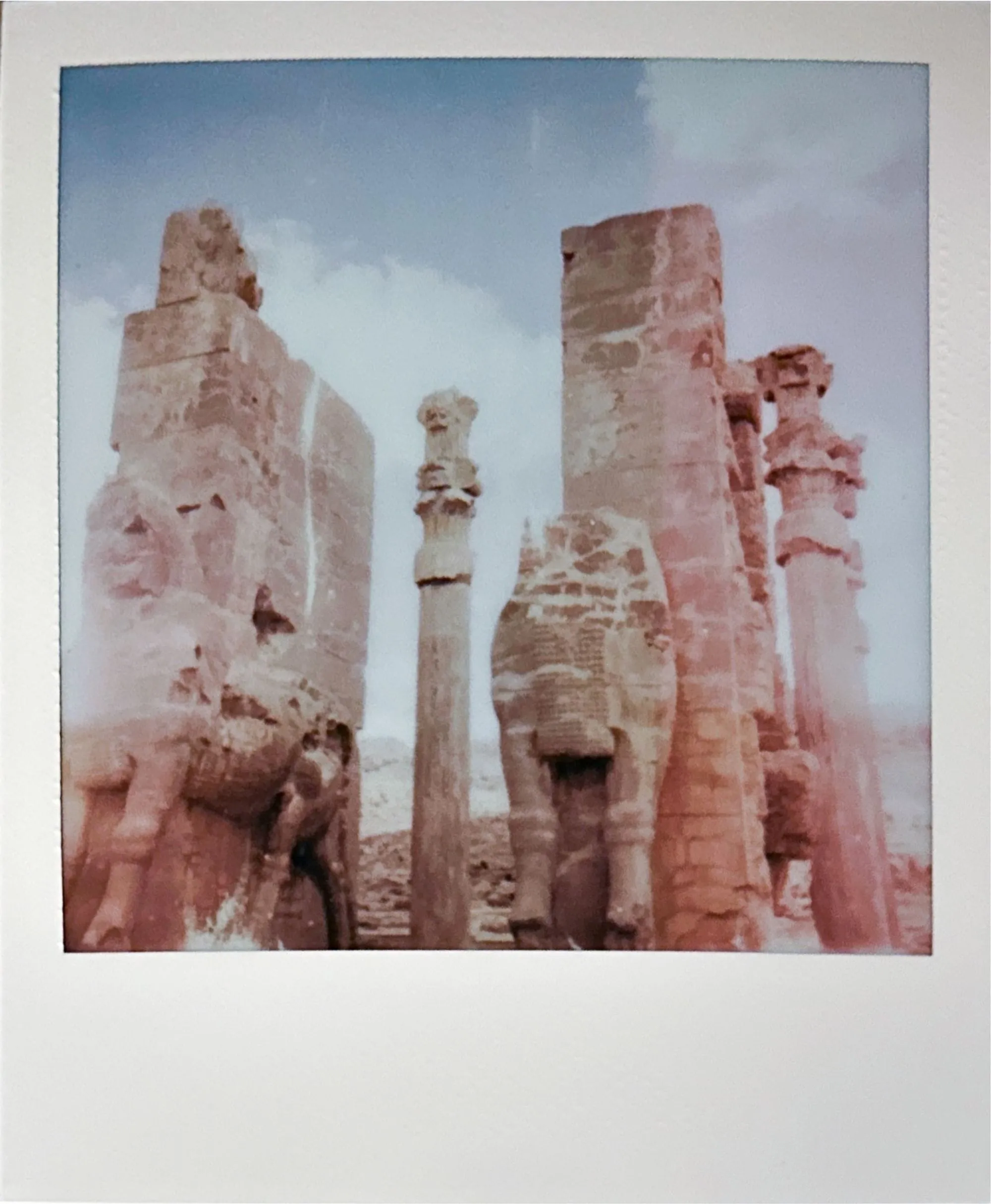
After six days it was time to leave Iran and go towards Iraq.
This is when I had one of the craziest days of my adventure.
I planned to cross the Iran - Iraq border somewhere near Talaieh (Iran) & Al Qurnah (Iraq). I read online that this border is really… let’s call it fickle and unreliable. Some days they let one car through, some days no cars at all, some days there’s no issues.
To prepare for this I drove to this border the day before I wanted to cross it, pitched my tent somewhere in the wild desert around three kilometers from the border, just so I could wake up really early and be there when the border opened at 7am.
This part of Iran is really hot, which meant I sweat all night, and barely slept. At night I heard all kinds of animals walk around my tent, and at one point I get woken up by something very sharp hitting me in the back, which I think was a little mouse or a rat biting me through my tent?
At 5:30 am I had enough of it, and as it was already light outside, I decided to get ready and go to the border. I packed all my gear, mounted my motorcycle, and drove off. But I didn’t move an inch forward. But I did drive a few inch down, right in the sand.
I took off all the gear, dug my motorcycle out of the sand, parked it 50 meters further on the road, and dragged all my gear over there and got ready again. Mind you, at this point it’s already 30 degrees Celsius.
I drove for 10 meters and I notice my wheel is wobbly. Oh no, flat tire.
It’s not my first flat, so no big deal. I get some soap and some water and get to finding the hole. But I just can’t find it. I take some more water and soap, but again, nothing to be found.
Luckily a guy on a scooter passes and stops to ask what’s wrong. I explain him, and he tells me to follow him, as he’s working at a building site and they have an air compressor. His colleagues were super friendly, offering me ice cold water which was welcome as I wasted all my water trying to find the hole in my tire.
We blow up the tire, trying to locate the hole, but we can’t. After five minutes my tire is flat again.
He tells me the only option is to go to the mechanic in the nearby village, 9 kilometers from there. I have no other option and he tells me to follow him to the mechanic. Again, the friendliness of Iranians to help people in need is unmatched in this world.
We get to the mechanic, and he manages to find the puncture and fixes it.
The guy who helped me and I get back to the place we first met, we say our goodbyes, and I’m finally ready to cross the border to Iraq. Mind you, at this point it’s still only 7:30 am.
I get to the border, some border agent takes my passport and documents and tells me to wait. After 45 minutes he returns and tells me I can’t cross the border today, as they only allow Iranian and Iraqi vehicles here, no international vehicles.
He suggests I go to the border near Basrah, 180 kilometers south of this border. I have no other option and leave to go that border.
The weather is excruciating at this point, I’m sweating like a pig. I’m driving on some desolate highway that was just 100 kilometers straight on without any gas station or shop. I was getting severely dehydrated. Really not my favorite part of the trip.
Around midday I get at the Basrah border, and I immediately buy some ice cold water.
Borders are always a scary place, because they’re very bureaucratic and most of the time border guards don’t care to explain you what you have to do.
Of all the borders I crossed, this one was the worst.
First I had to exit Iran, then I entered no man’s land (where’s I’m officially outside of Iran but still not inside Iraq) and then enter Iraq.
The customs agent who helped me clear my motorcycle told me I had to leave my motorcycle with him and I had to get my visa stamped to exit Iran. I explained to the guy at the booth that the customs agent told me to get my passport stamped here and return, but it wasn’t possible as I was officially outside of Iran. But my motorcycle was still inside Iran of course.
I don’t know if they never had that situation before or it was a collaborate prank on me, but it was such a weird experience. Nobody knew what to do.
In the end they sent three soldiers of the Iranian guard with me to go back to the customs office, get my motorcycle documents, and then they escorted me out of Iran to no man’s land zone.
Now I had to enter Iraq. It was a kafkaesque nightmare. They sent me from one office to the other. Then to another one, and another, and another and then back to the first one.
It was one big mess.
Finally after 4 hours of walking around the border zone, I got the right stamps and I was ready to go to my hotel in Basrah.
I mounted my motorcycle, and drove off. But no..
I drove for 10 meters and I notice my wheel is wobbly. Again. Oh no, flat tire. Again.
Luckily I have tubeless tires. I couldn’t find the puncture again, so instead of trying to fix it, I just inflated my tires, drove for a kilometer or two, stopped, inflated them some more. The whole 20 kilometers to Basrah I drove like that.
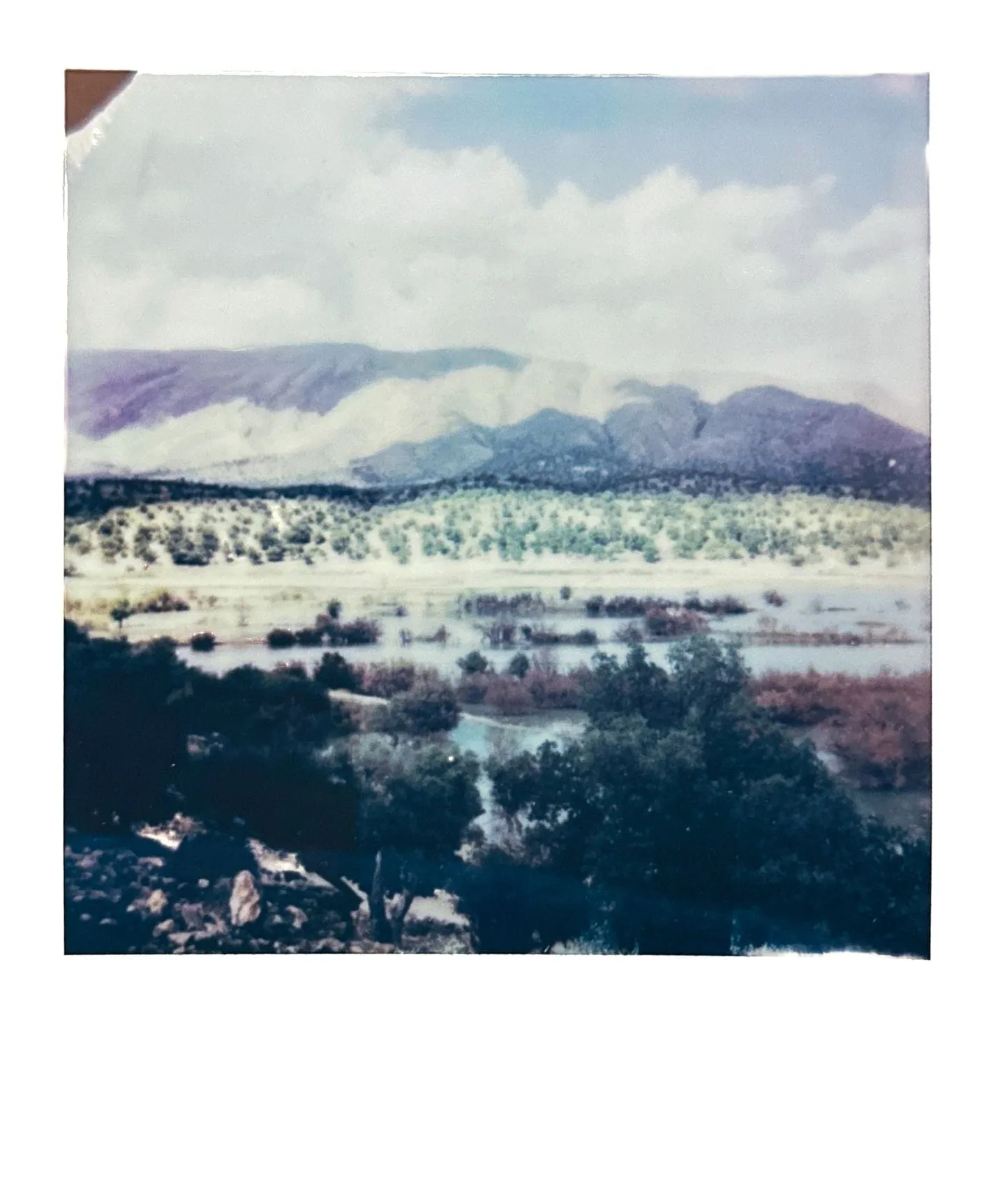
I was planning to stay in Basrah for one night only, but I got stuck in storm. Proper storms too with lightning and hail. I ended up staying in Basrah for three night instead, which meant unfortunately that I had to skip visiting the Iraqi marshes.
I drove from Basrah to Nasiriyah, to Najaf, Karbala, and Baghdad.
I was down to my last pack of polaroid film too. There were two Iraqi places I really wanted to have a memory of:
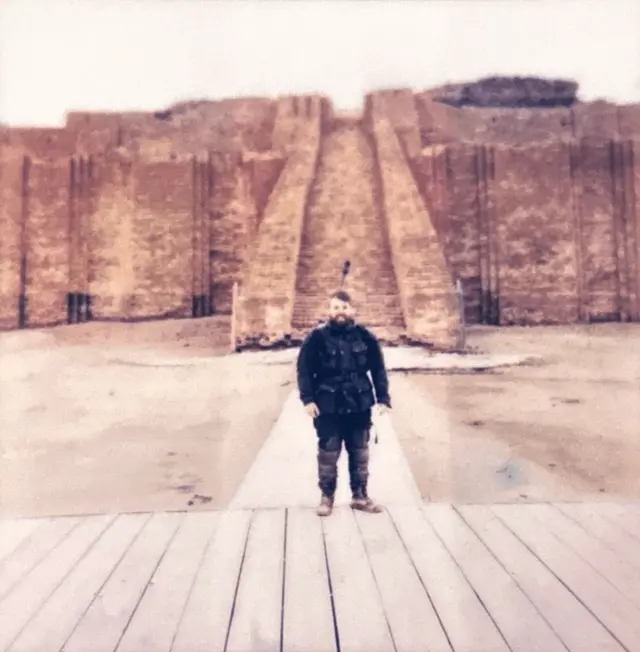
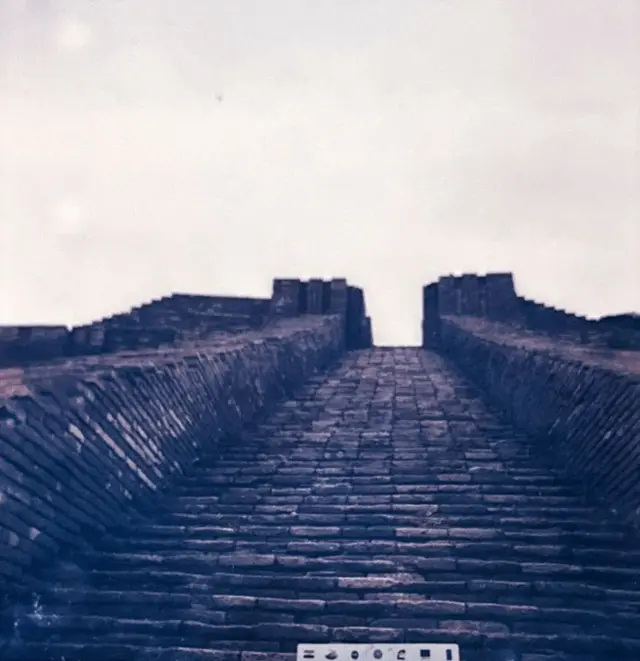
The ancient cities of Ur and Uruk.
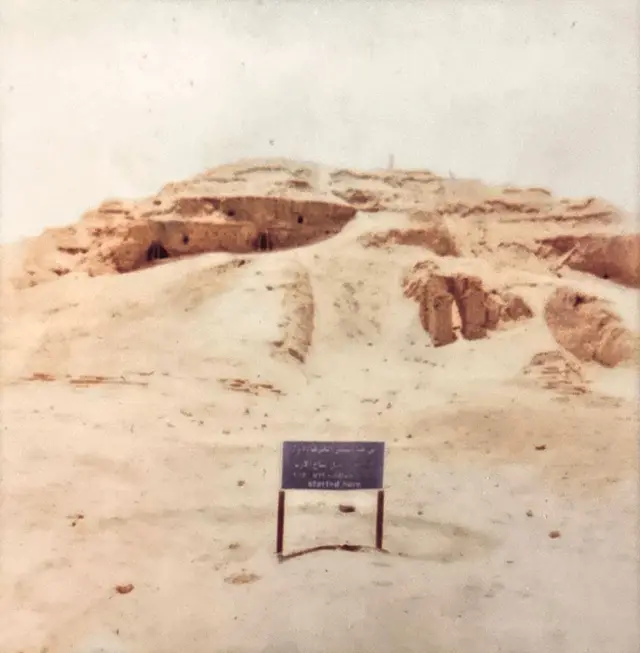
Ur is famous for its Ziggurat. I also took the time to add both of them to Google Street View. Most of Ur was closed off for the public, but Uruk was an amazing experience. It’s a desolate archeological site in the middle of the desert, that’s only been uncovered for 5%, because it’s so desolate and lack of funding, and of course the instability of the region.
When you arrive at Uruk you get appointed a military guide who shows you around and makes sure you don’t take any historical souvenirs with you. Because it’s all just laying around there. You see shards of pottery everywhere, broken off parts of Sumerian tablets just laying around you in the sand. It’s a really special experience.
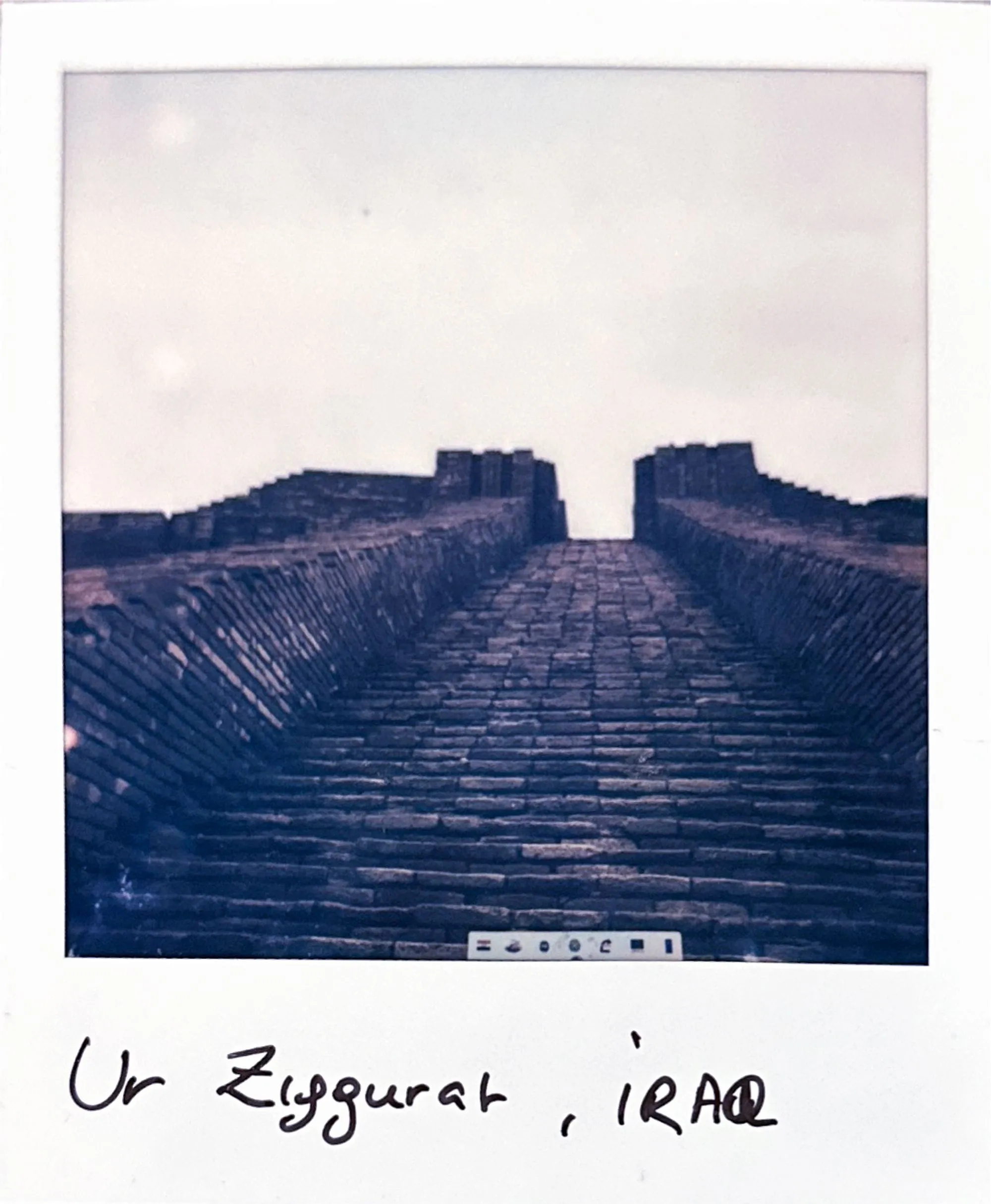
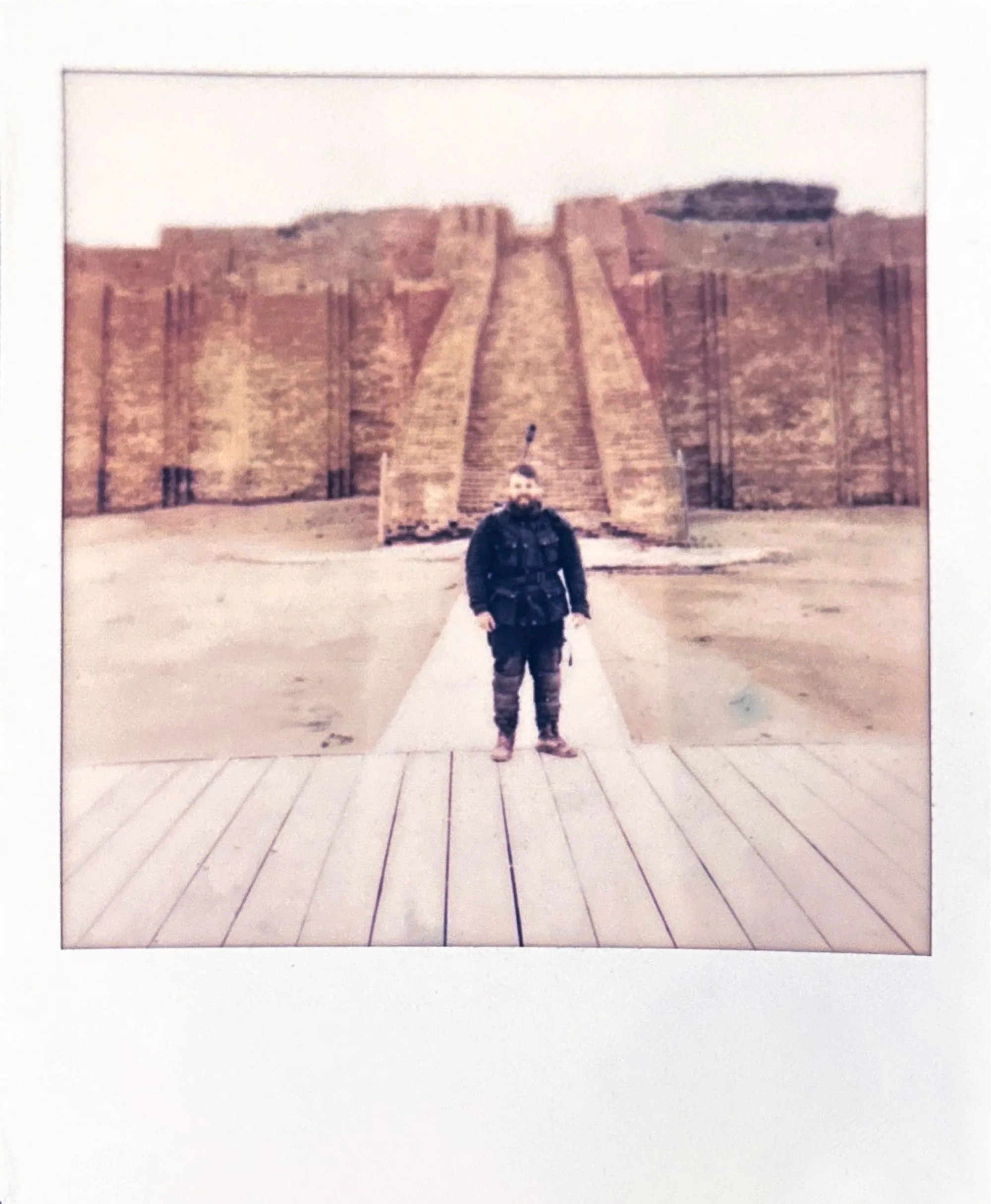
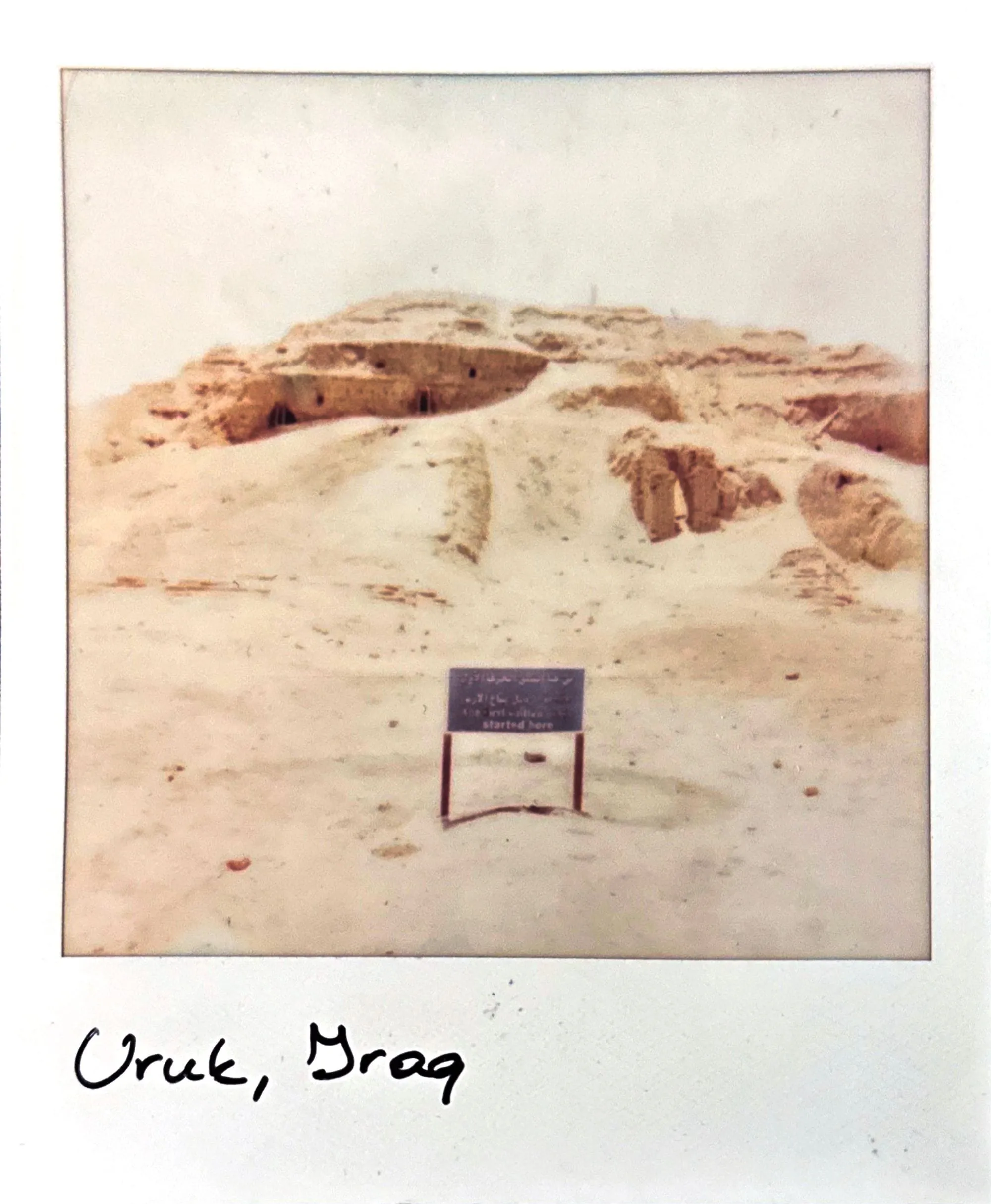
Also, can you guess who added these old civilisations to Google Street View?
Here is a reel of me streetviewing Ur and giving the guard of Ur a nice souvenir, and here’s a reel of me walking around Uruk.
Uruk is also the city of Gilgamesh, famous from the Epic of Gilgamesh, one of the oldest stories we have. There’s a great translation by Sophus Helle, which I took with me on my travels. The epic of Gilgamesh has really everything: love, hate, friendship, adventure, life lessons, and more. It’s at least six thousand years old and even mentions the ancient floods, which are the same as the floods of Noah in the bible. It felt really special to be there in Uruk, the city state Gilgamesh ruled.
Baghdad was such a nice experience too. It’s actually really modern, with great coffee bars and a lot of historical places. It’s not really walkable apart from some parts around the Tigris. The Green zone was really special to visit too, it’s where all the embassies and government buildings are. It has some amazing museums as well, and is more touristy than you’d expect.
From Baghdad I went to Erbil, then to Mosul and then back to Turkiye.
As soon as I got back to Turkiye I had a decision to make. I had to be home by a certain date, so I could either take my time in Turkiye, and from there speedrun my way back home. Or, I could speedrun Turkiye and go hunting for Soviet mosaics in Eastern Europe.
Easy choice if you ask me.
My last polaroid of part one of my trip is this one, taken while wild camping near the lake of Adana, Turkiye
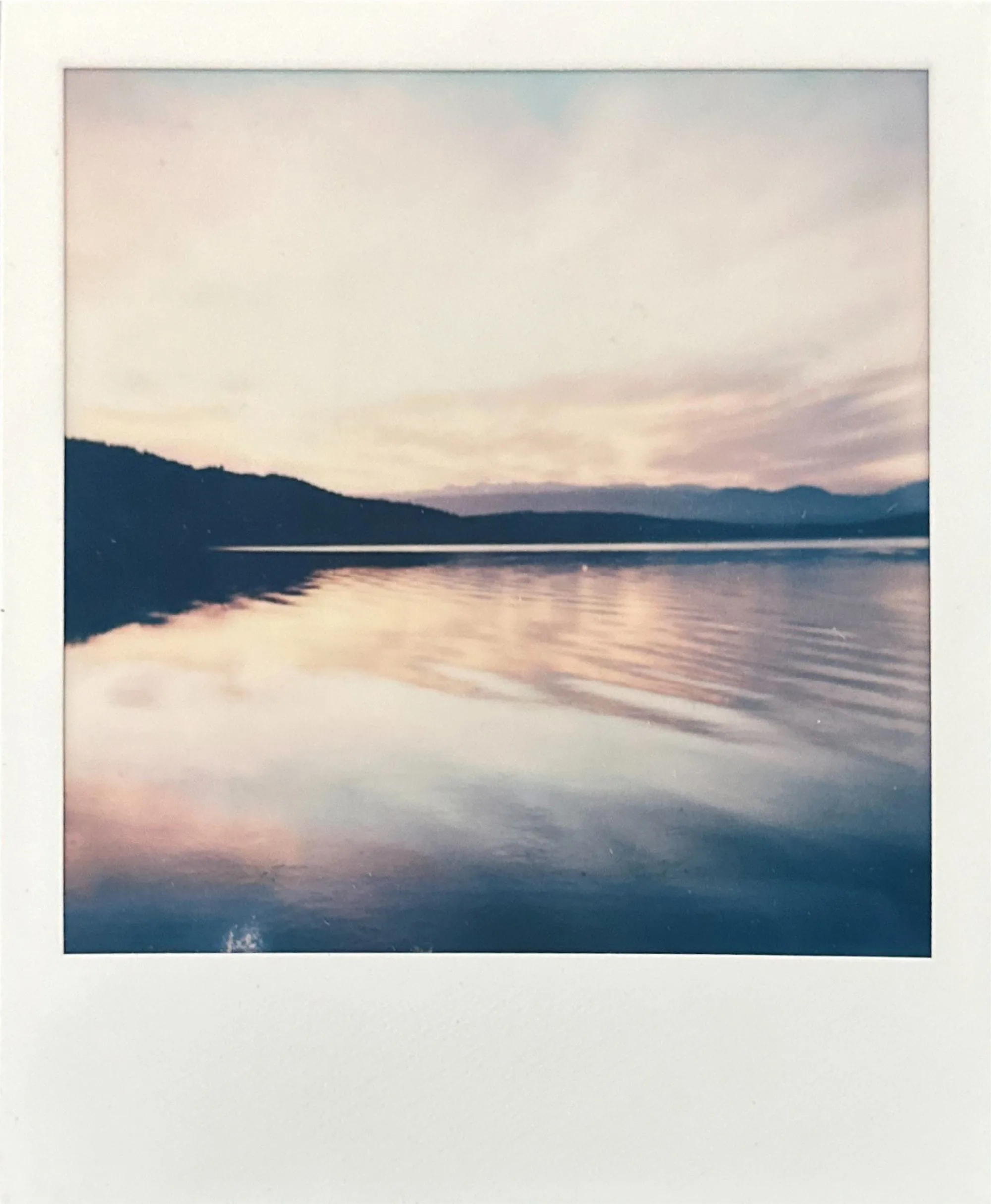
I speedran towards Istanbul, drove over the Bosphorus with Bonnie, which was a very special feeling.
I stayed in Istanbul for two night, and just took my laptop to a nice tea house and planned the next part of my trip. And lo and behold I even found some Polaroid film in Istanbul.
From Istanbul I drove towards the Black sea to Burgas and Varna in Bulgaria, and Constanta in Romania. I didn’t really visit anything here, but was just having so much fun again driving through these rural areas. From Romania I drove to Cahul, Moldavia.
Look at these beautiful mosaics!
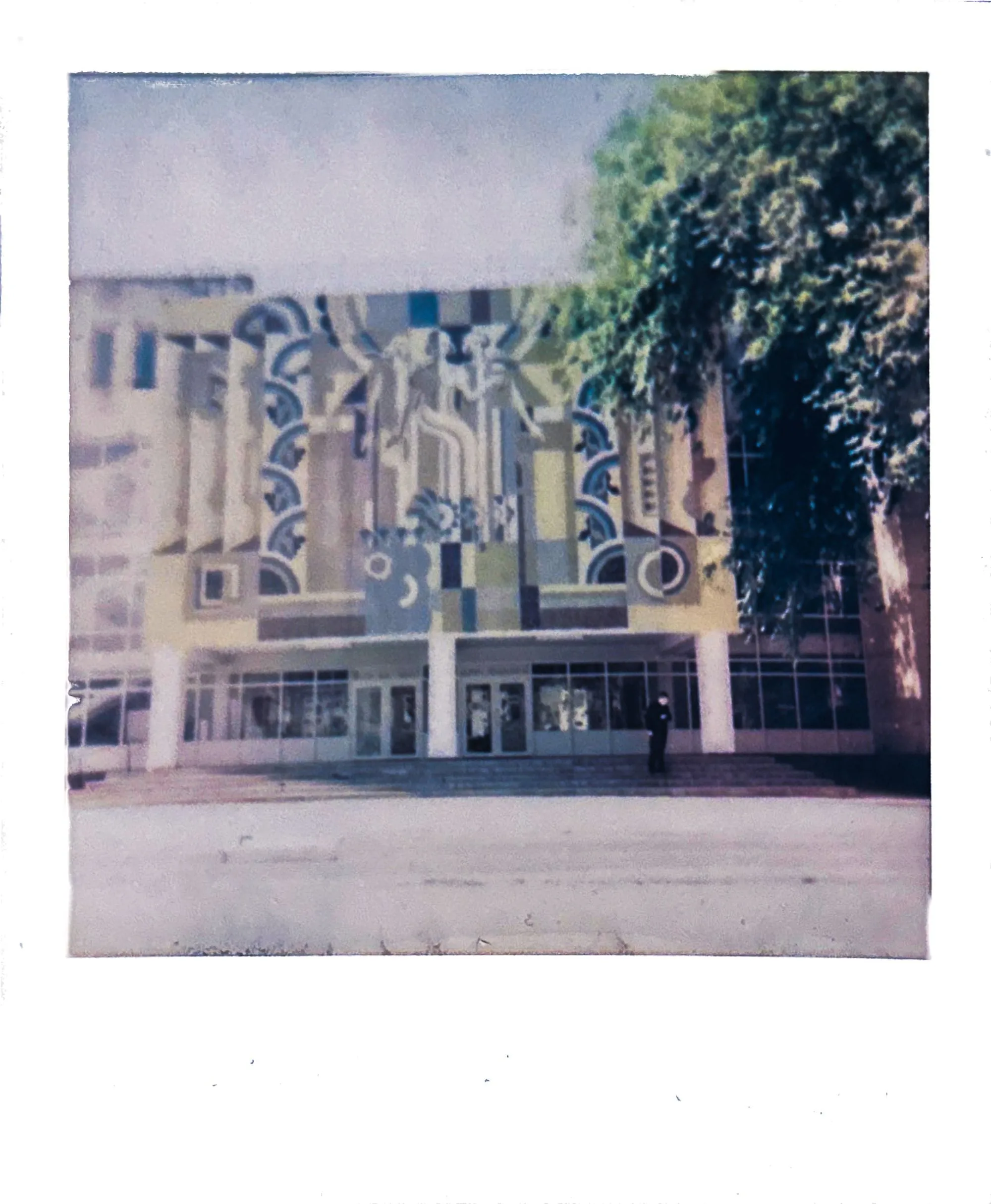
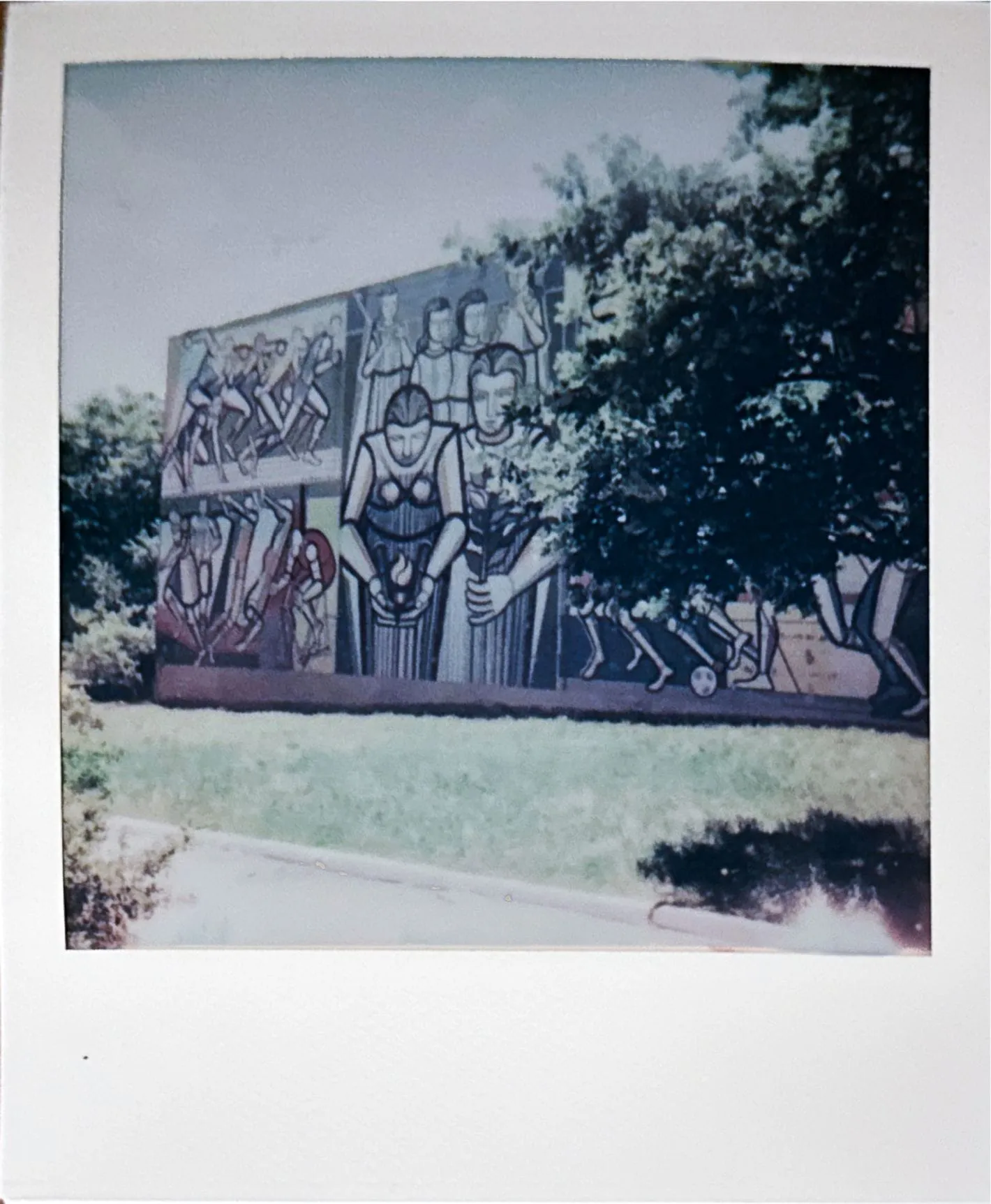
I also noticed that Cahul was not at all what I expected from a Moldovian city. It might be prejudice, but I expected Moldovian cities to be gray and boring, but Cahul seemd green, and lively and full of people, and walkable.
Maybe Cahul was the exception to the rule and Chisinau was going to be the gray, boring, Soviet brutalist city I expected?
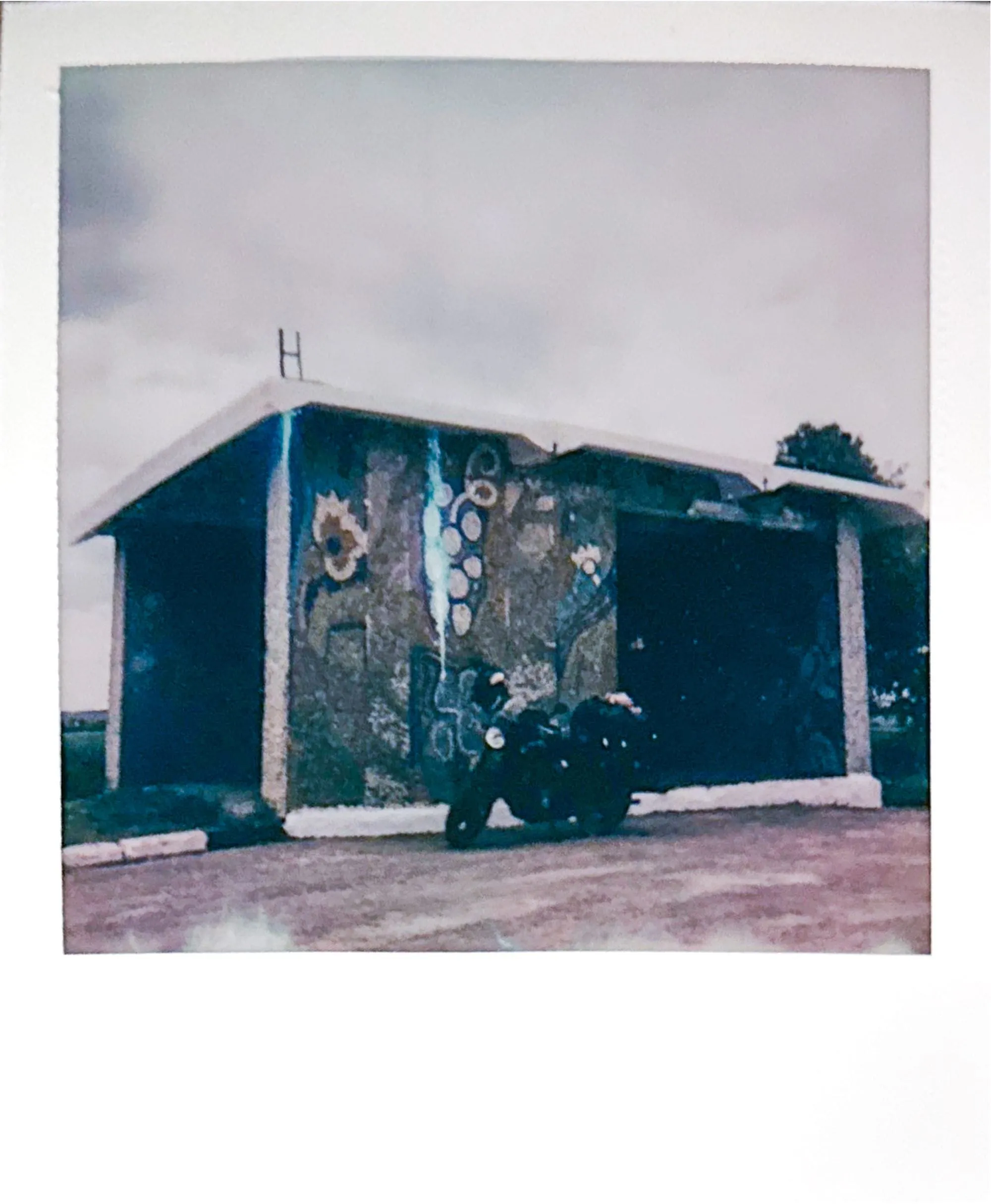
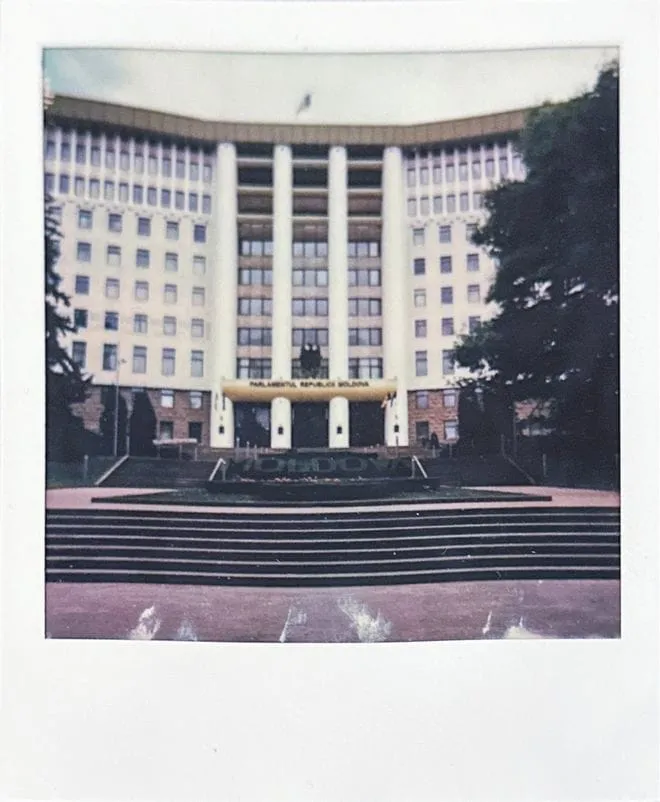
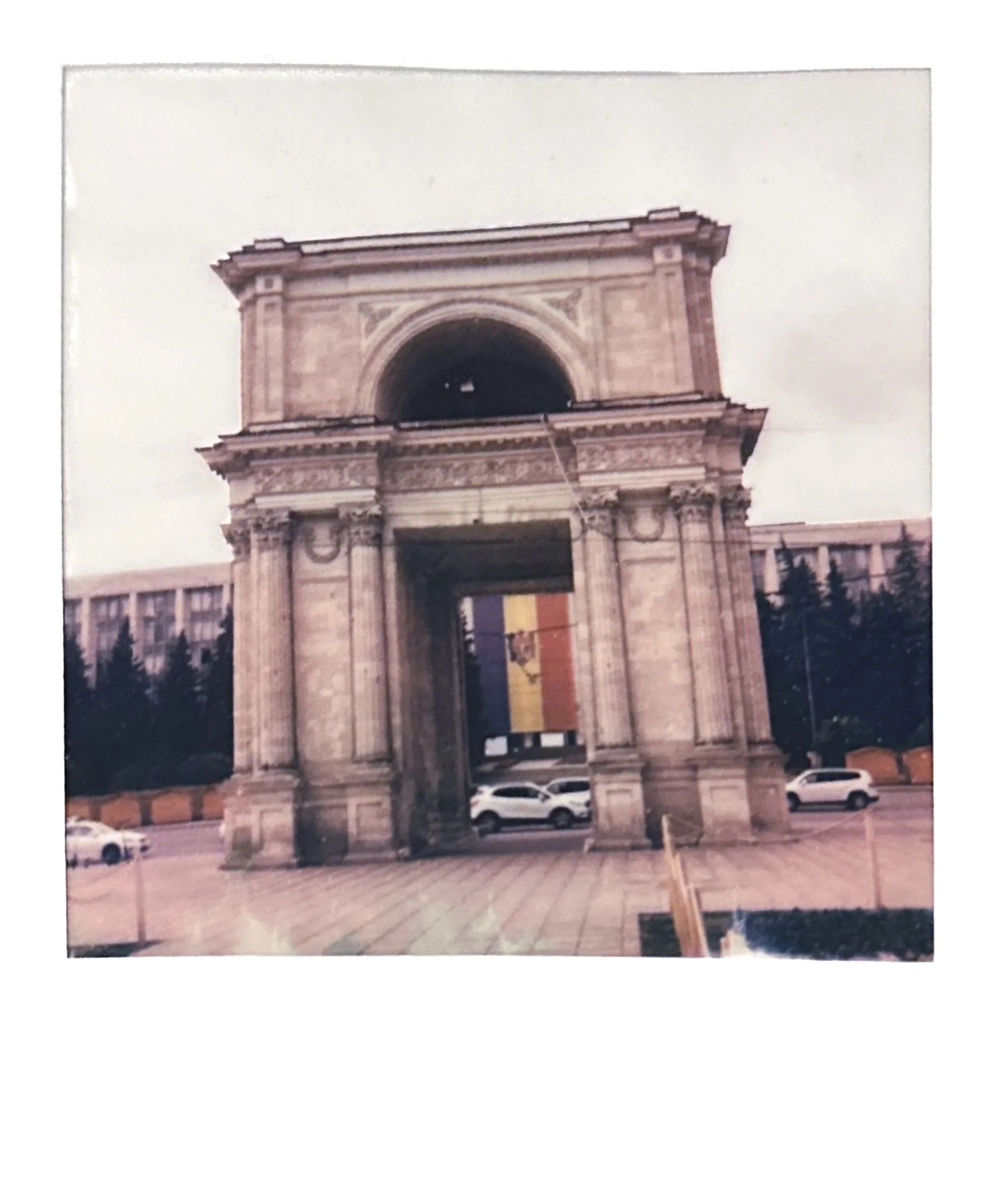
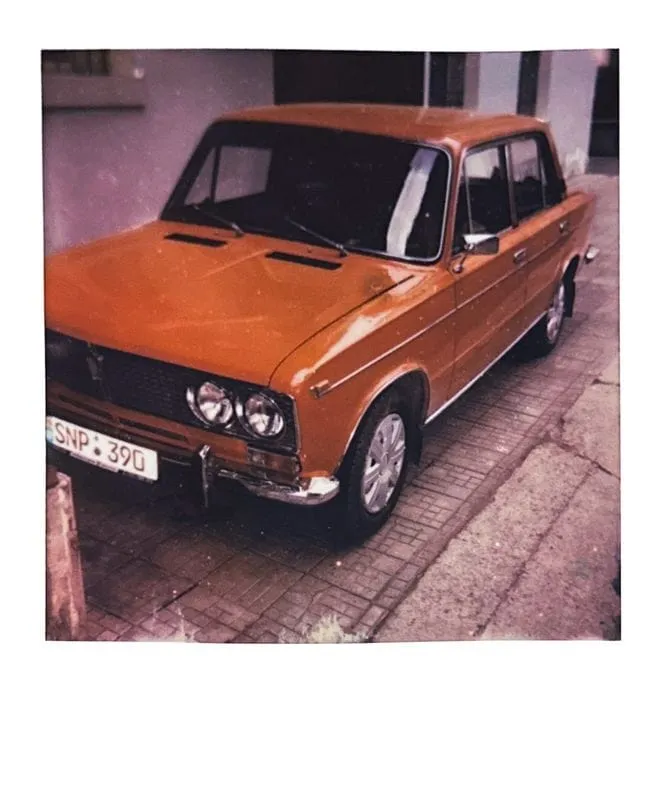
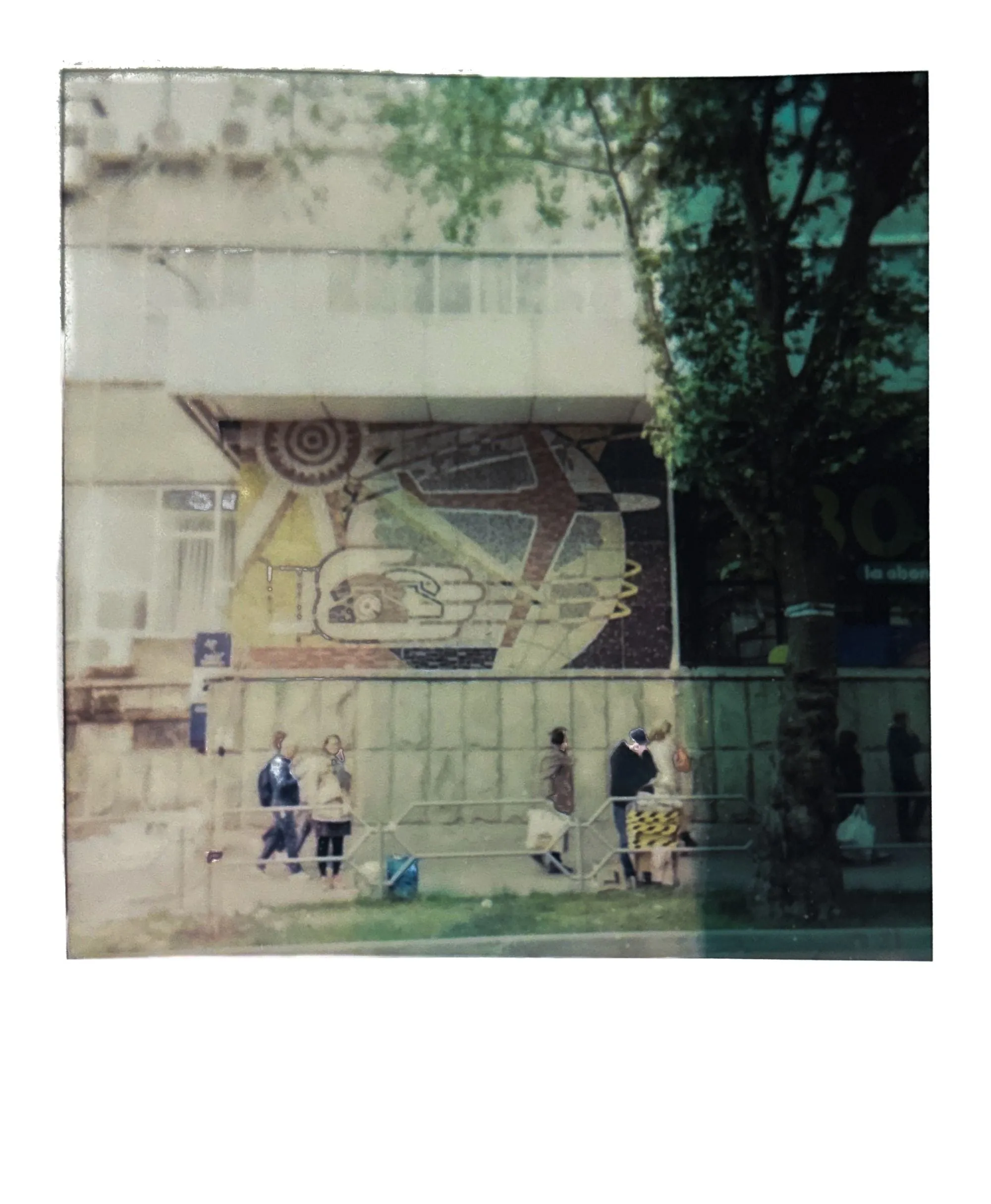
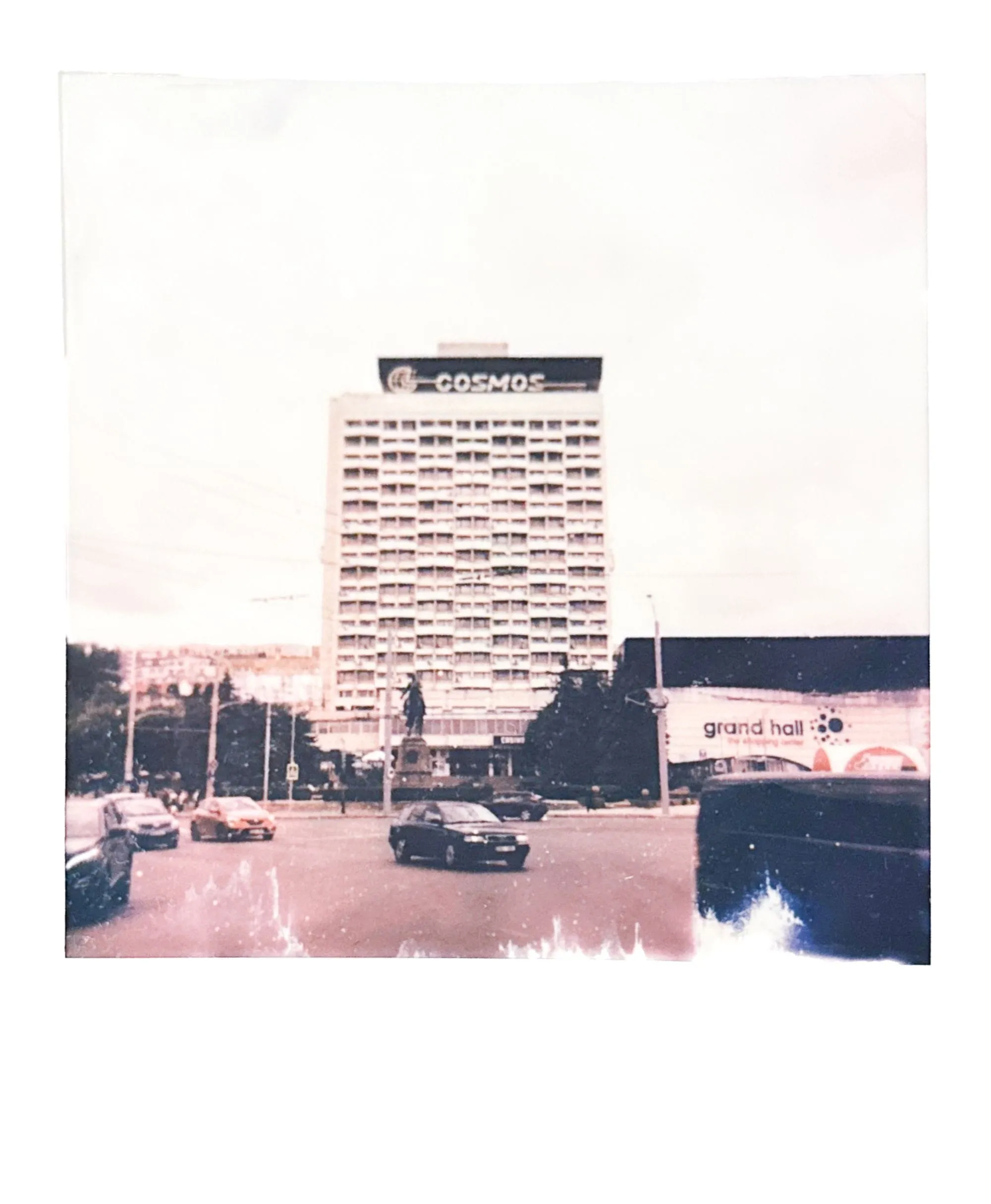
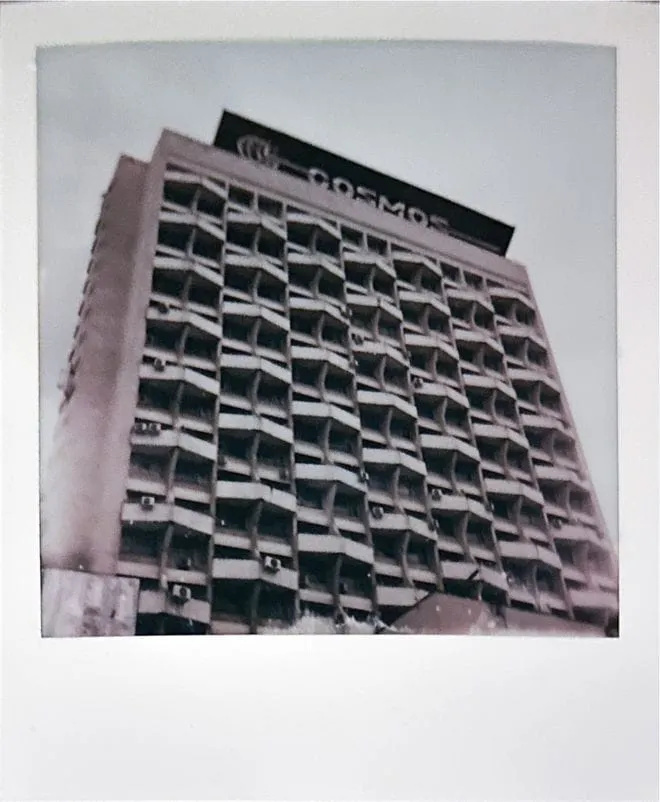
Honestly, the road from Cahul to Chisinau was not good. But being from Belgium, I feel I’m not supposed to complain about the road quality of another country.
Chisinau was nothing like I expected it to be. It’s so walkable and clean. The covered market near the bus station feels really old fashioned, but then two streets from that you have just your average modern shopping street. You have amazing buildings everywhere that look straight from the historical centers of Vienna or Paris.
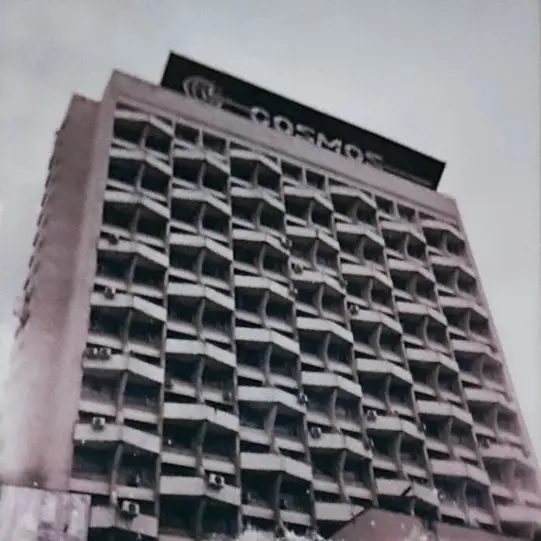
It’s a beautiful mix of old and new, beautiful brutalist buildings like the Cosmos hotels or your typical Soviet apartment building and then modern parks with modern buildings and nice Parisian style coffee bars.
I also noticed that Chisinau and Moldova in general felt really safe.
Because of the war in Ukraine, there are also a lot of Ukrainians in Moldova. I met some of them, and they told me that the east of Ukraine is actually very safe right now, and that the war mostly takes place in the eastern regions.
Combine that with finding a book about Soviet mosaics in Ukraine, I knew I was going to take another little detour.
After a four day stay in Chisinau I left for Ukraine.
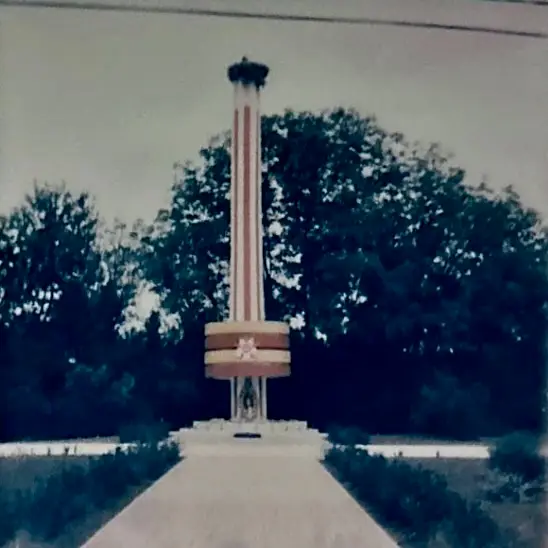
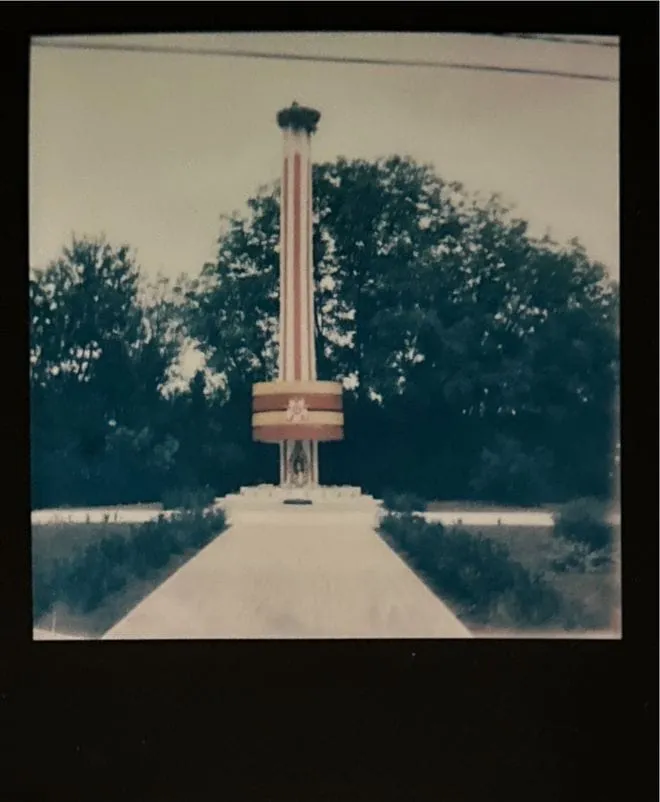
In the north of Moldova I came across this: an old Soviet monument for WW2 soldiers, and a stork’s nest on top of it. I don’t know if it’s symbolic or anything, but it was such a nice scene.
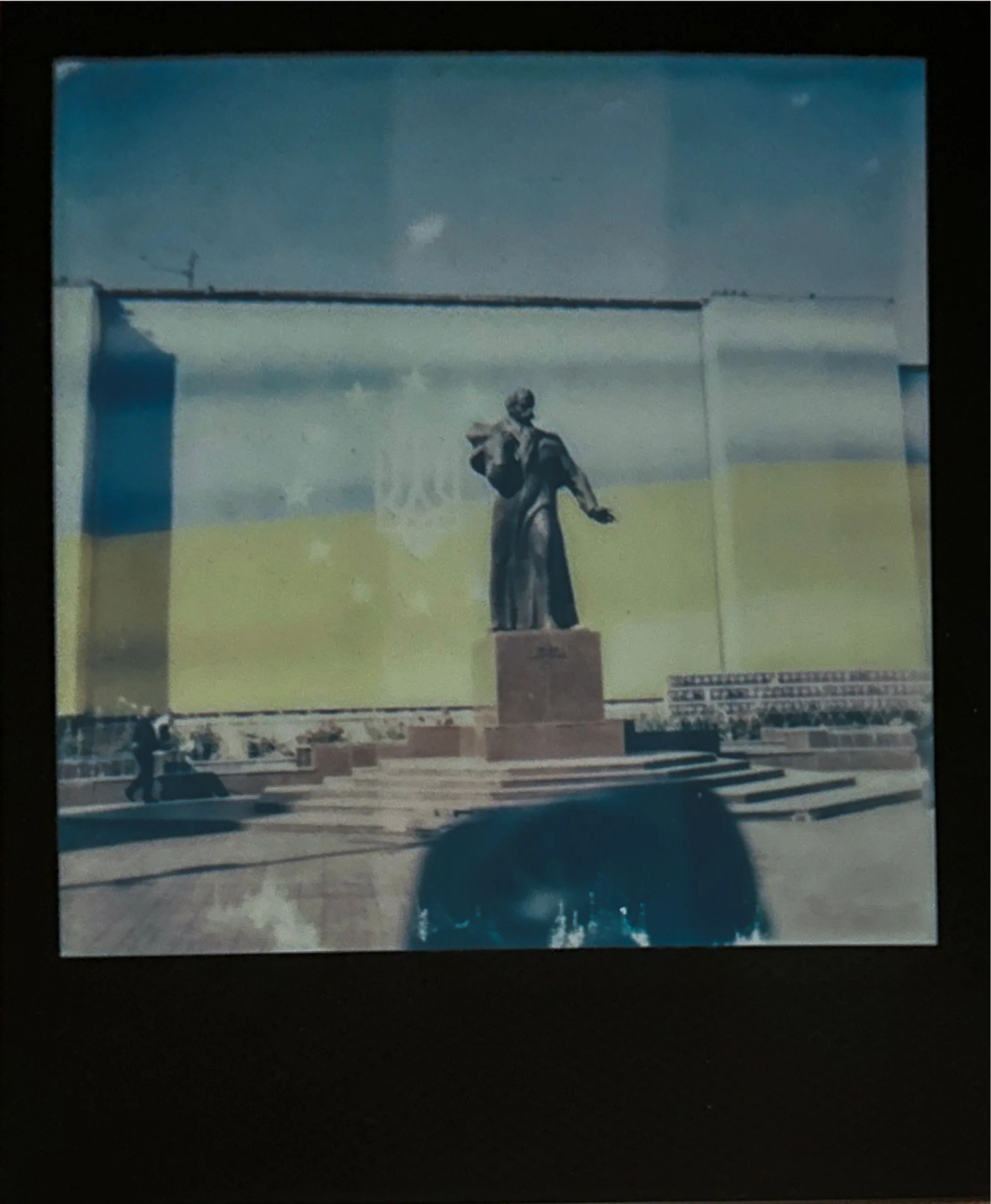
From Moldova I drove towards Chernivtsi, Ivano-Frankivsk towards Lviv.
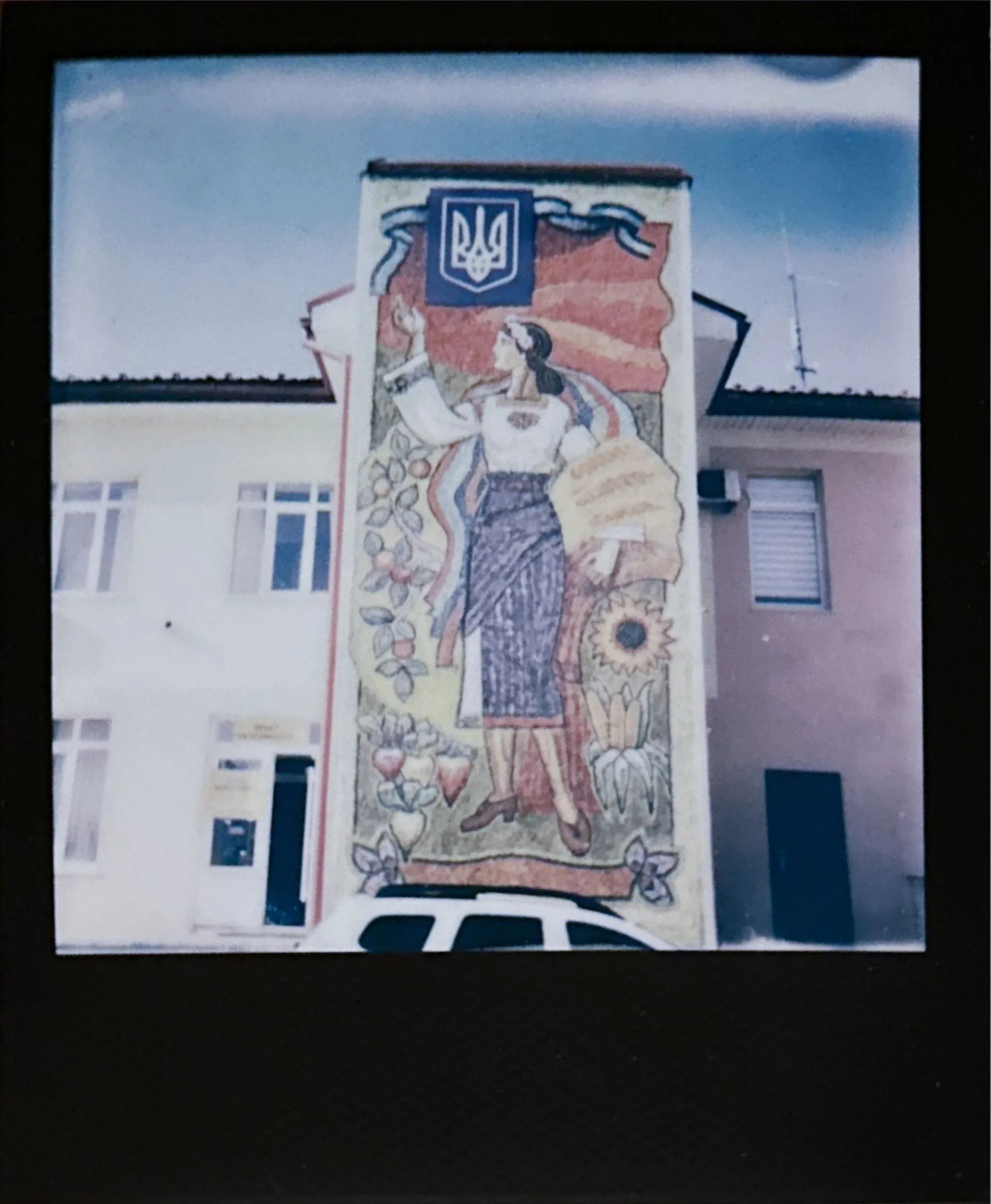
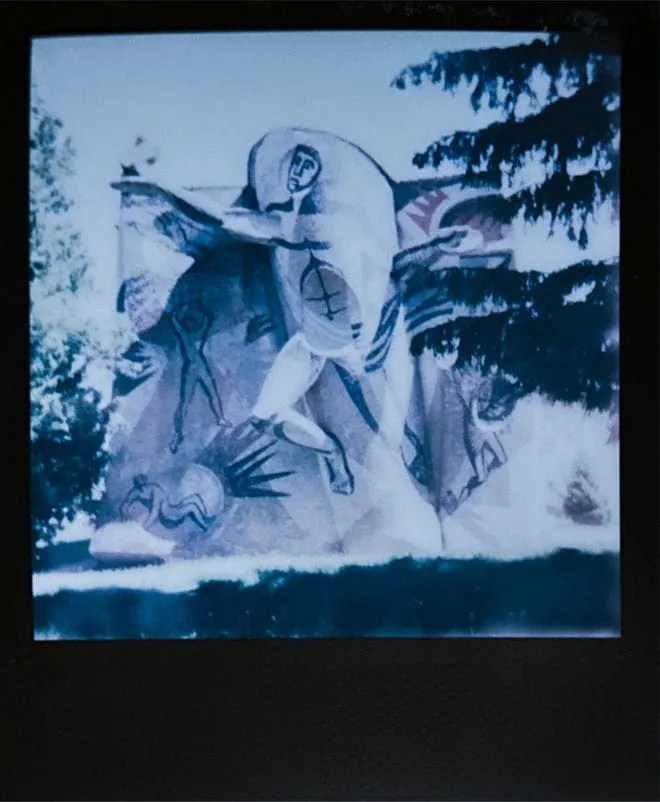
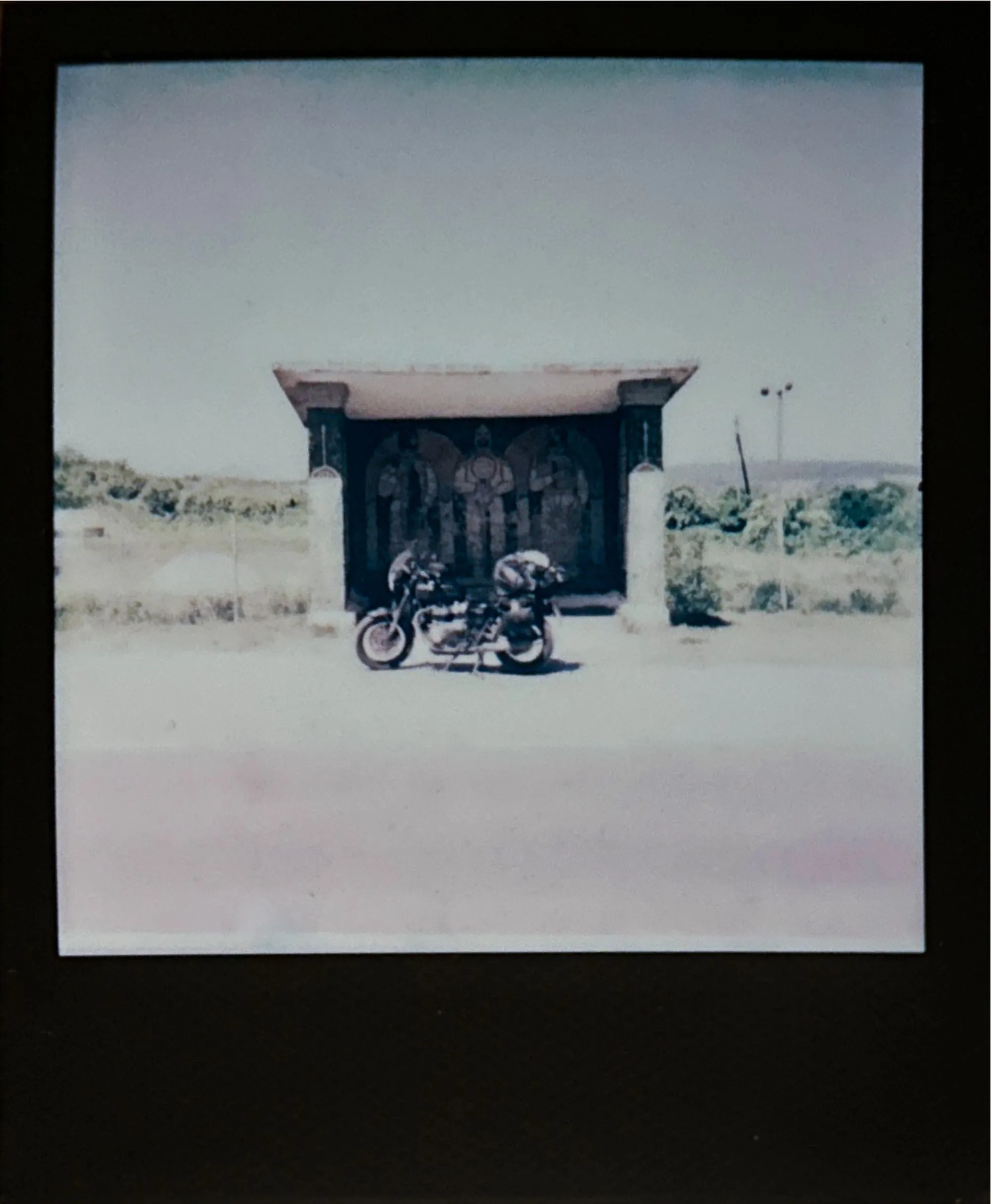
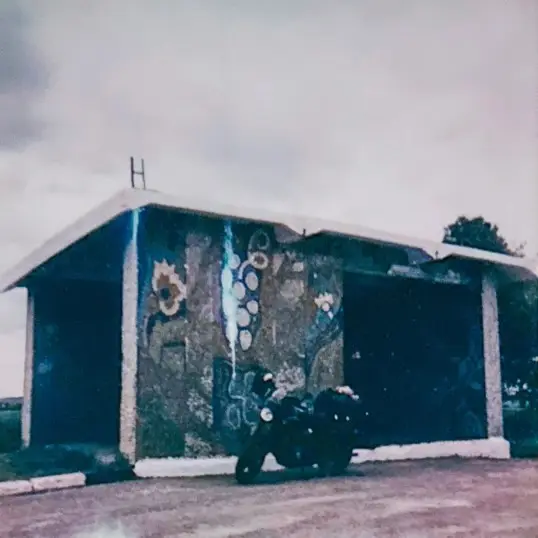
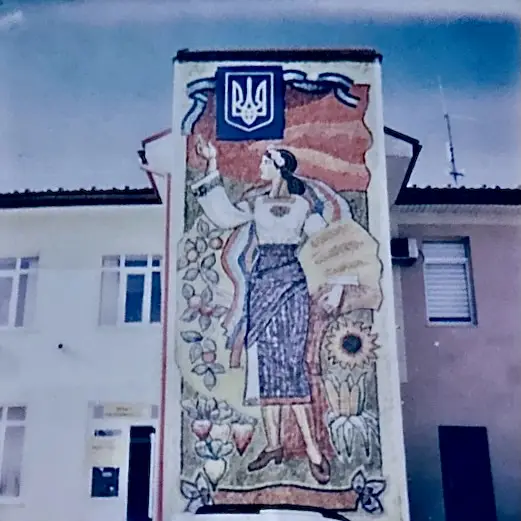
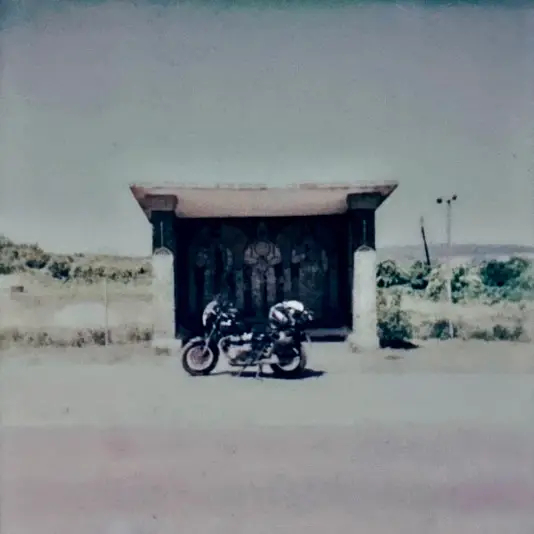
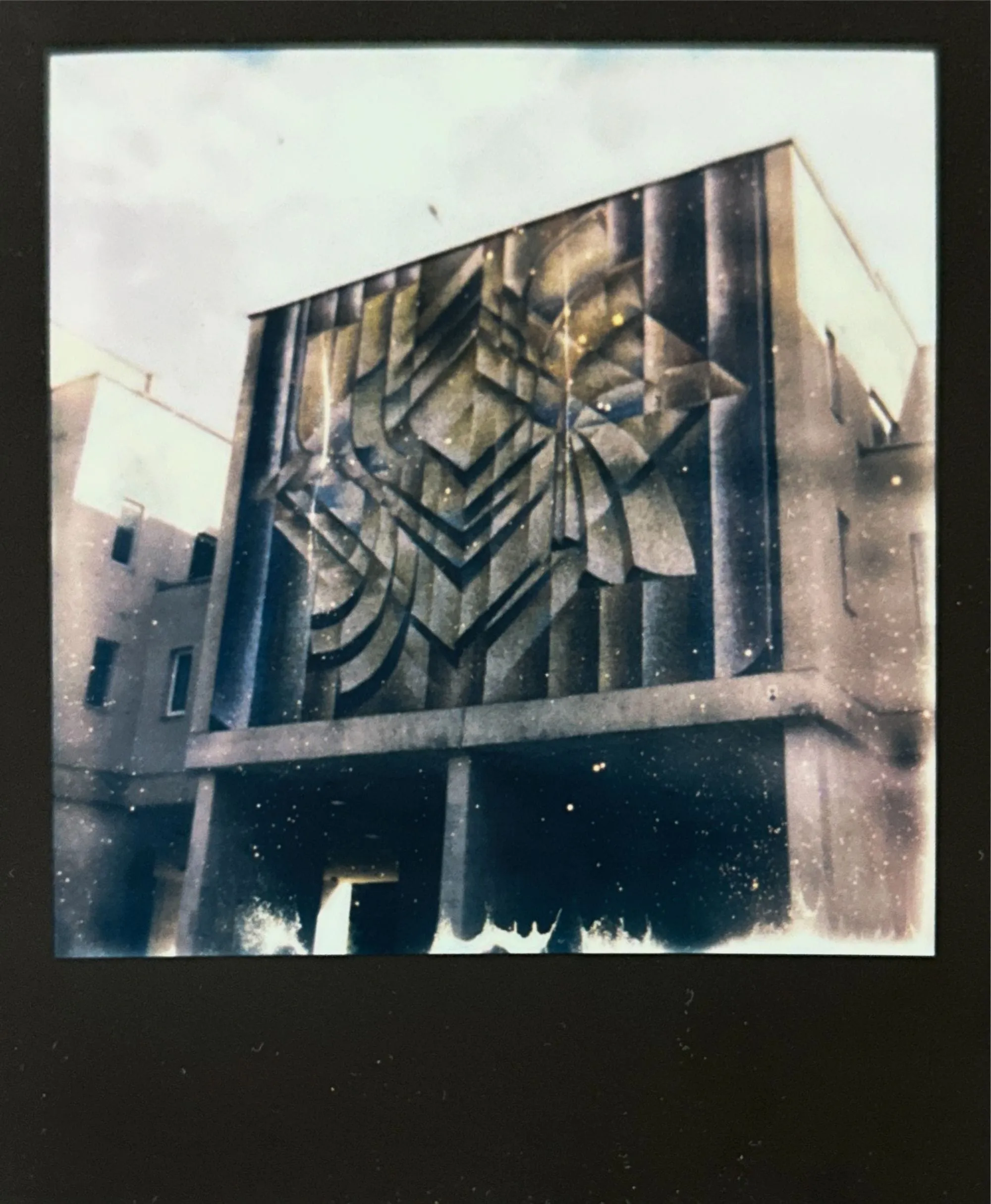
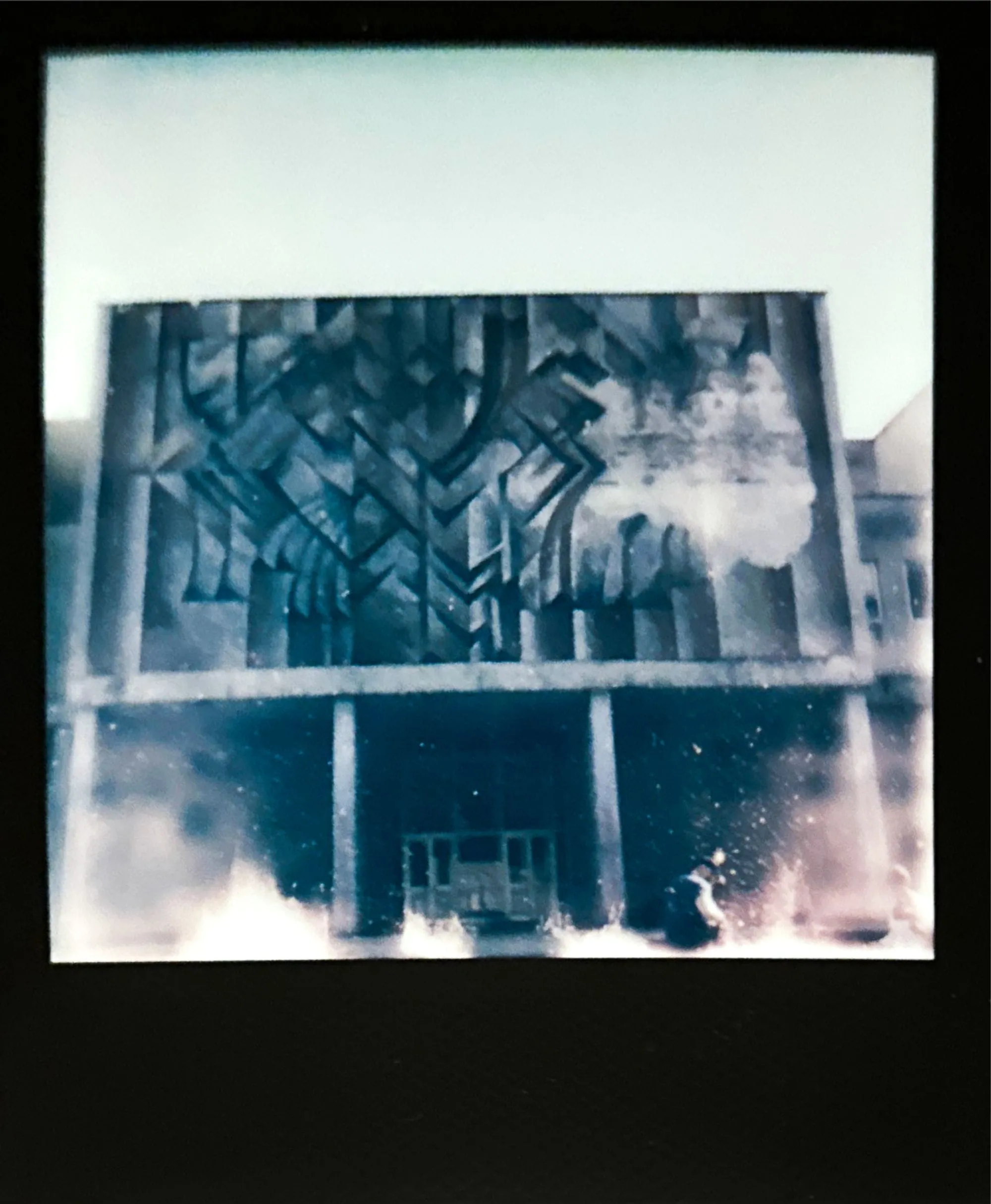
Left: a 3D Mosaic on the facade of a Ukrainian high school, right: a three knight mosaic bus stop
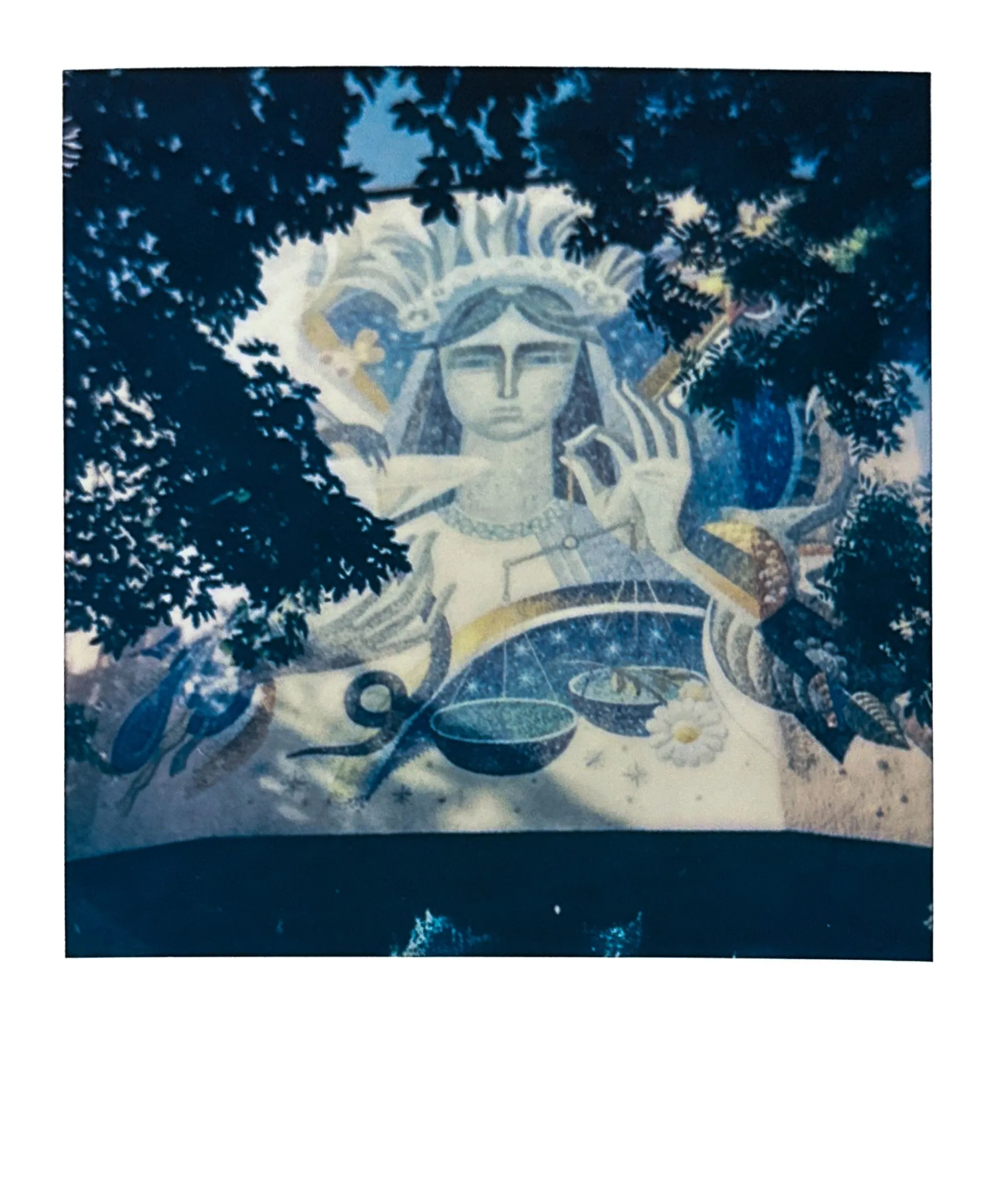
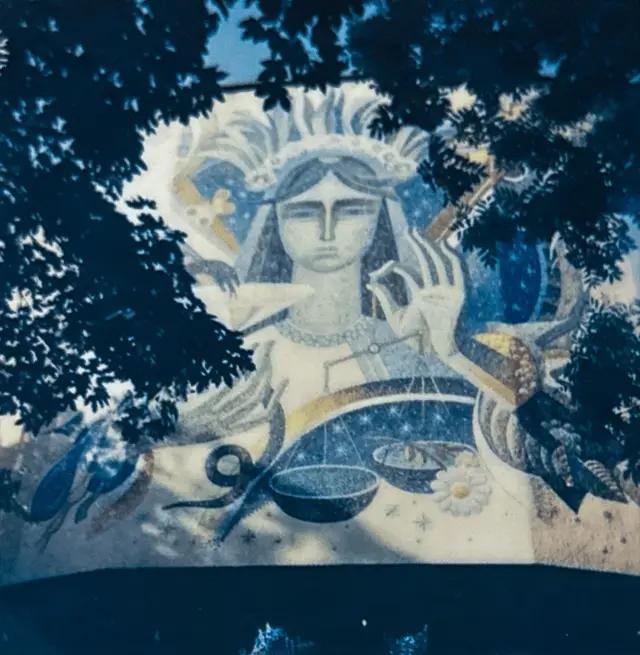
My favorite mosaic. I actually didn’t expect this one too. I was walking towards a restaurant where I was going to meet some volunteers, and at the corner of the street I saw this mosaic through some trees.
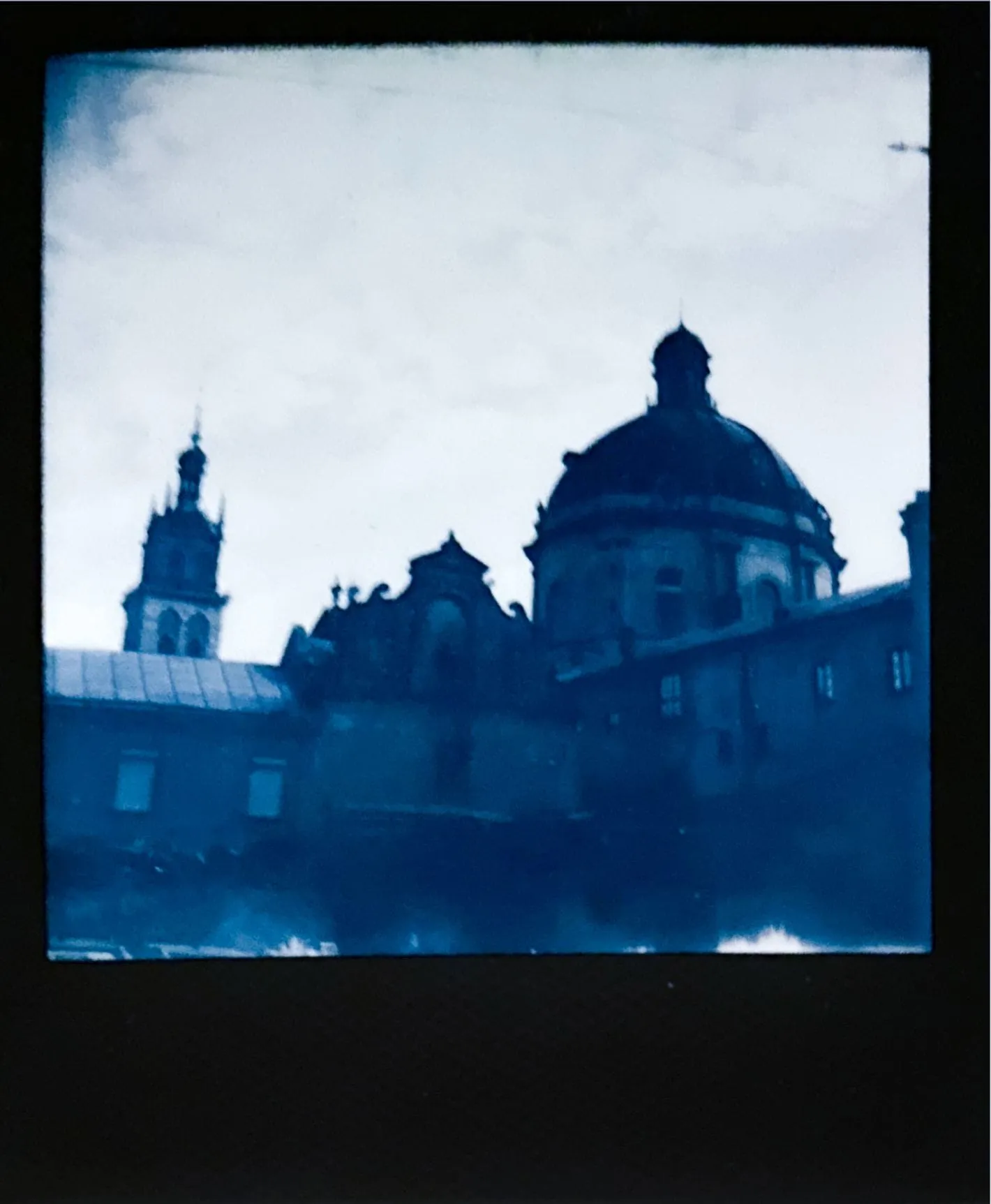
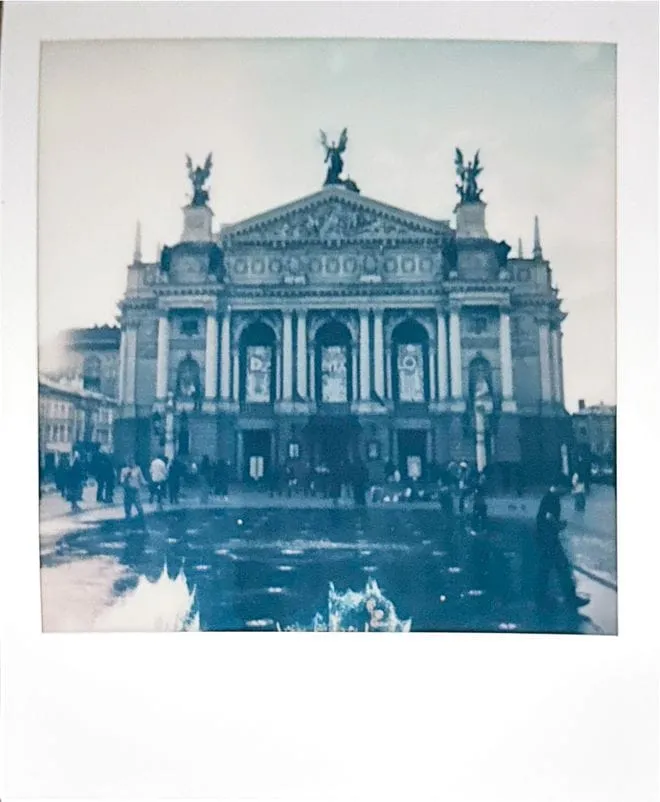
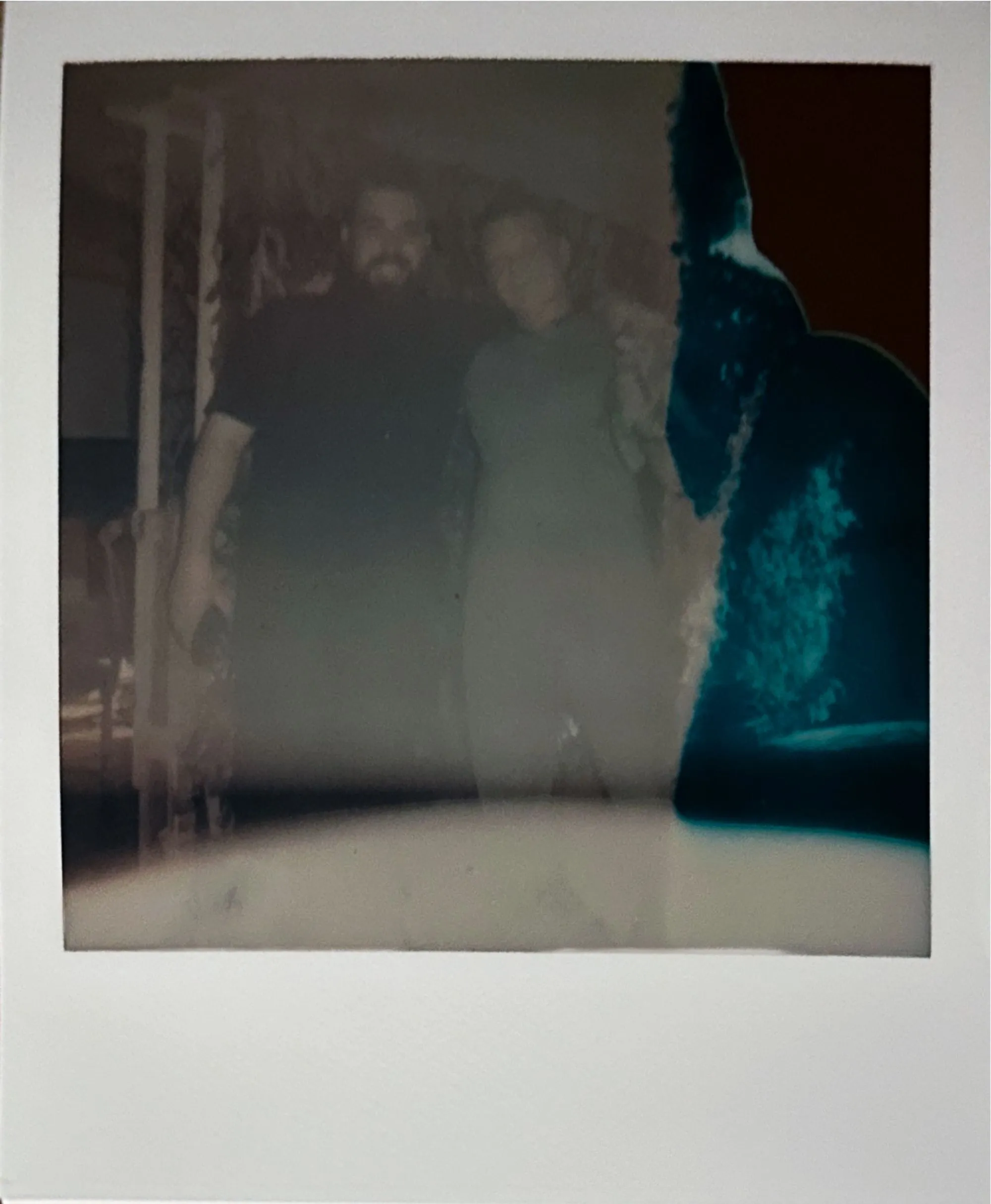
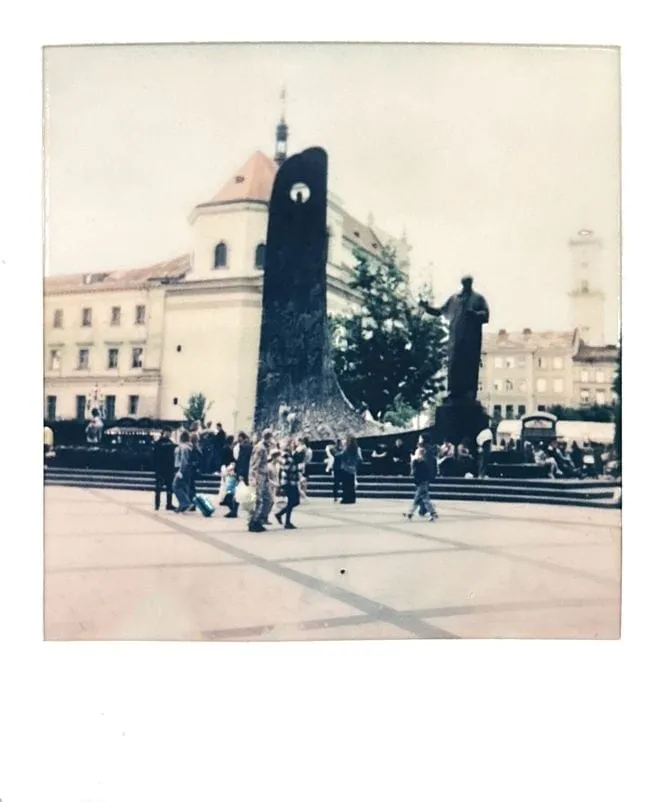
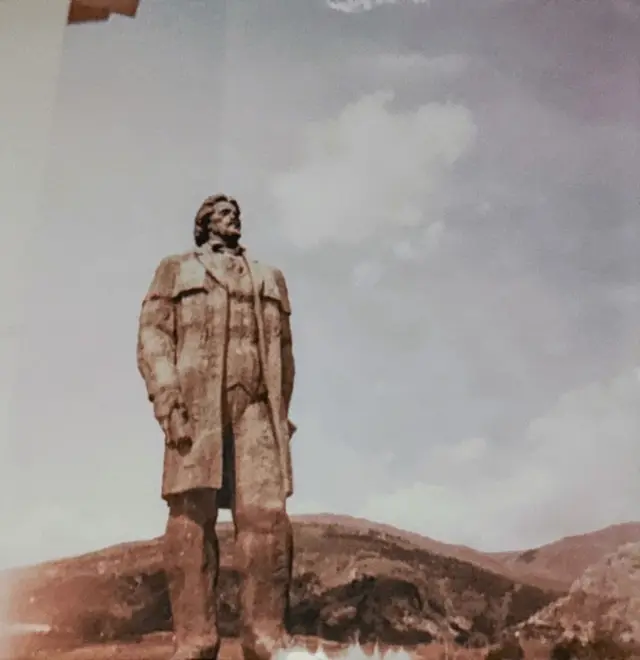
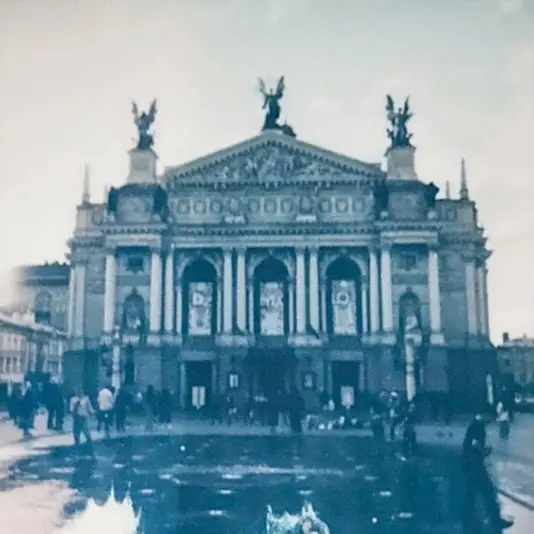
Left: Every night after work I went to the library to make some camo nets for the soldiers at the frontline. I met Ivan there. Unfortunately this polaroid broke, that’s why it’s in such bad state. Right: a monument in Lviv
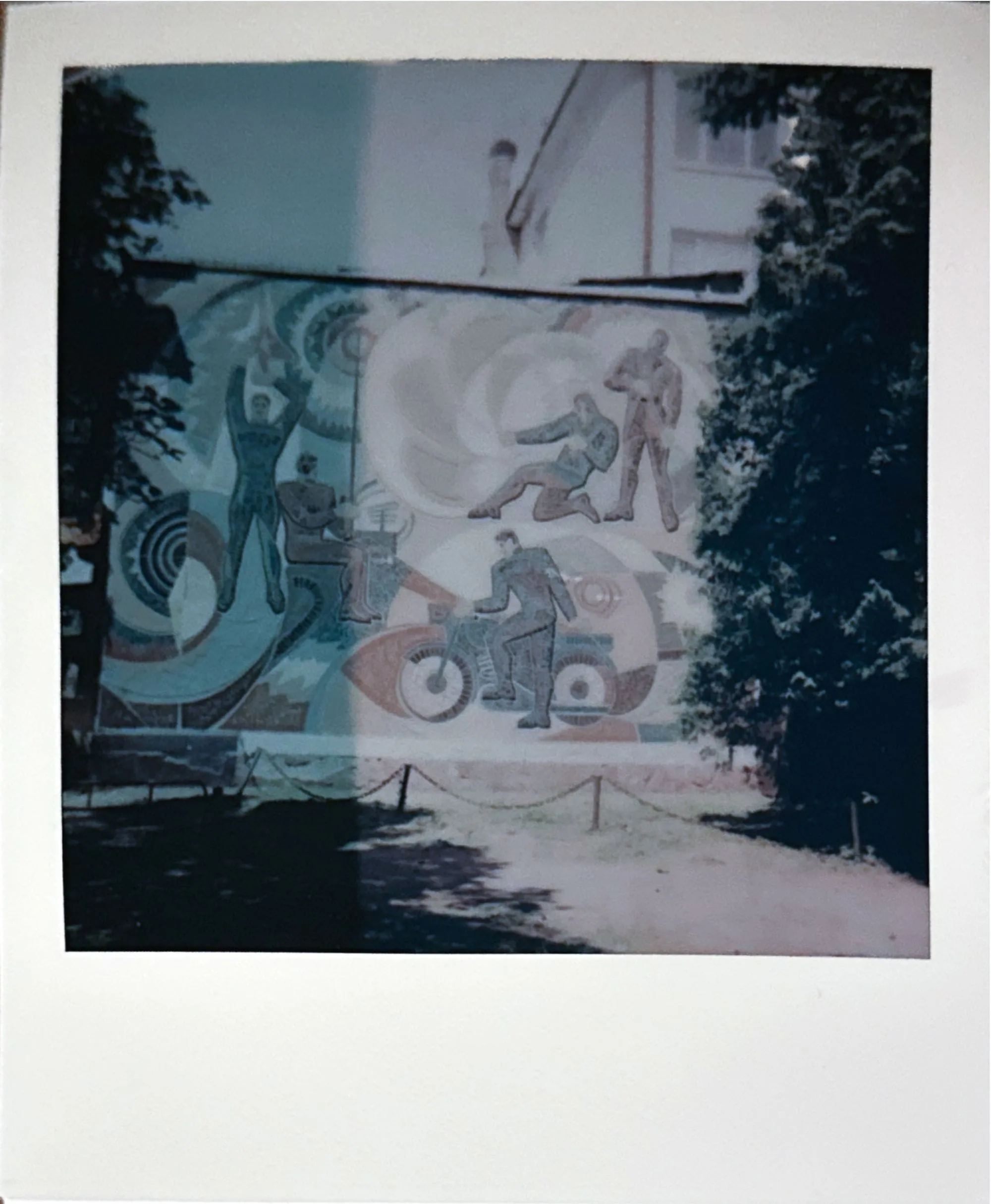
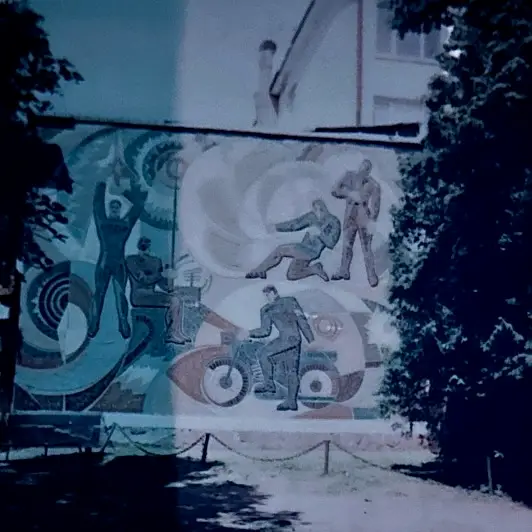
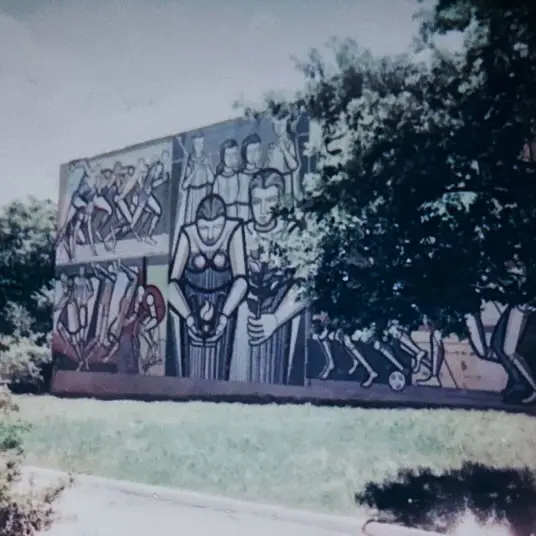
This was the last mosaic I saw in Ukraine, in the city of Lutsk. Funny that it shows a motorcycle!
After working a week remotely from Lviv it was time to drive towards Warsaw. In Warsaw I worked for another week remotely before making it back to Belgium.
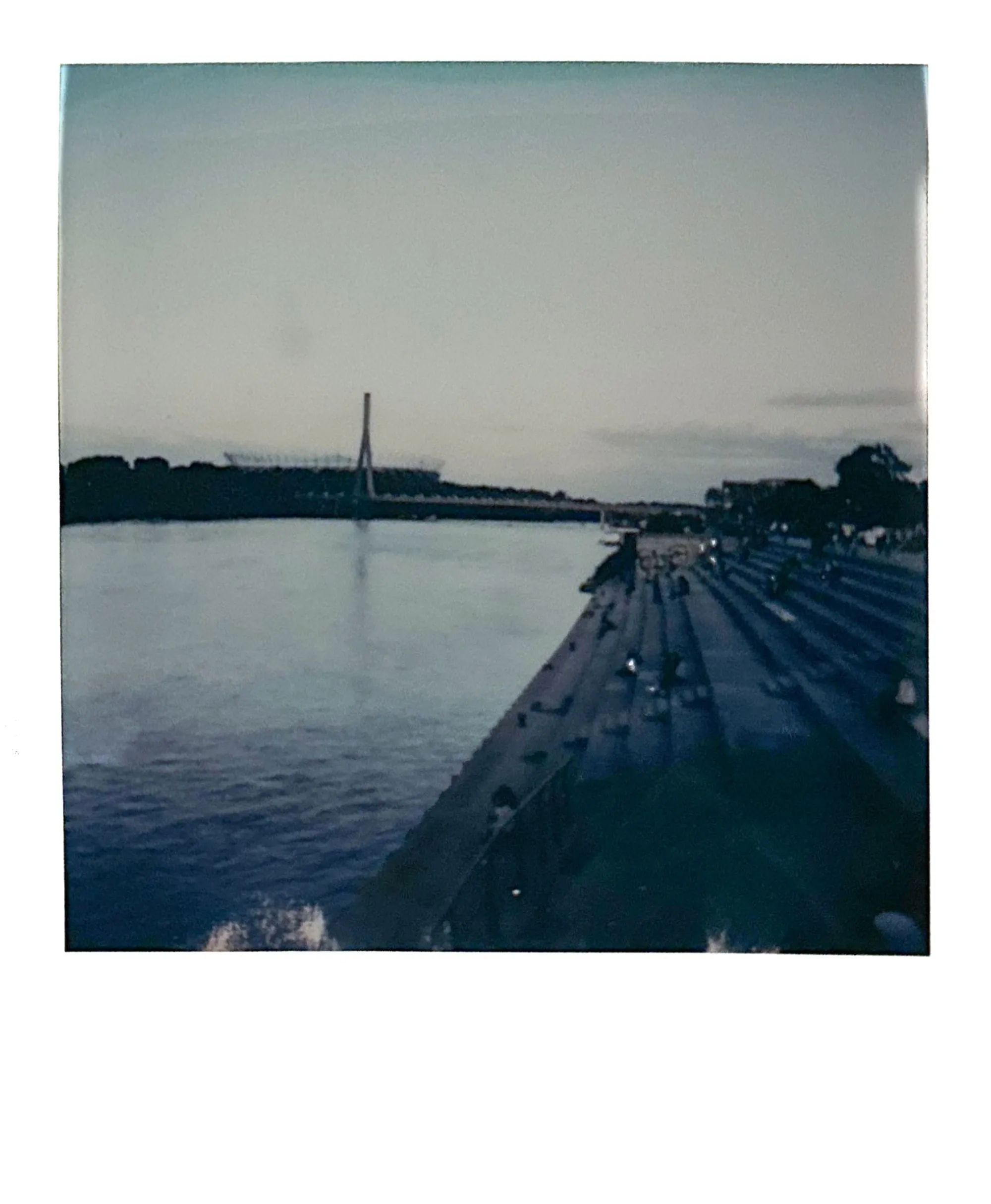
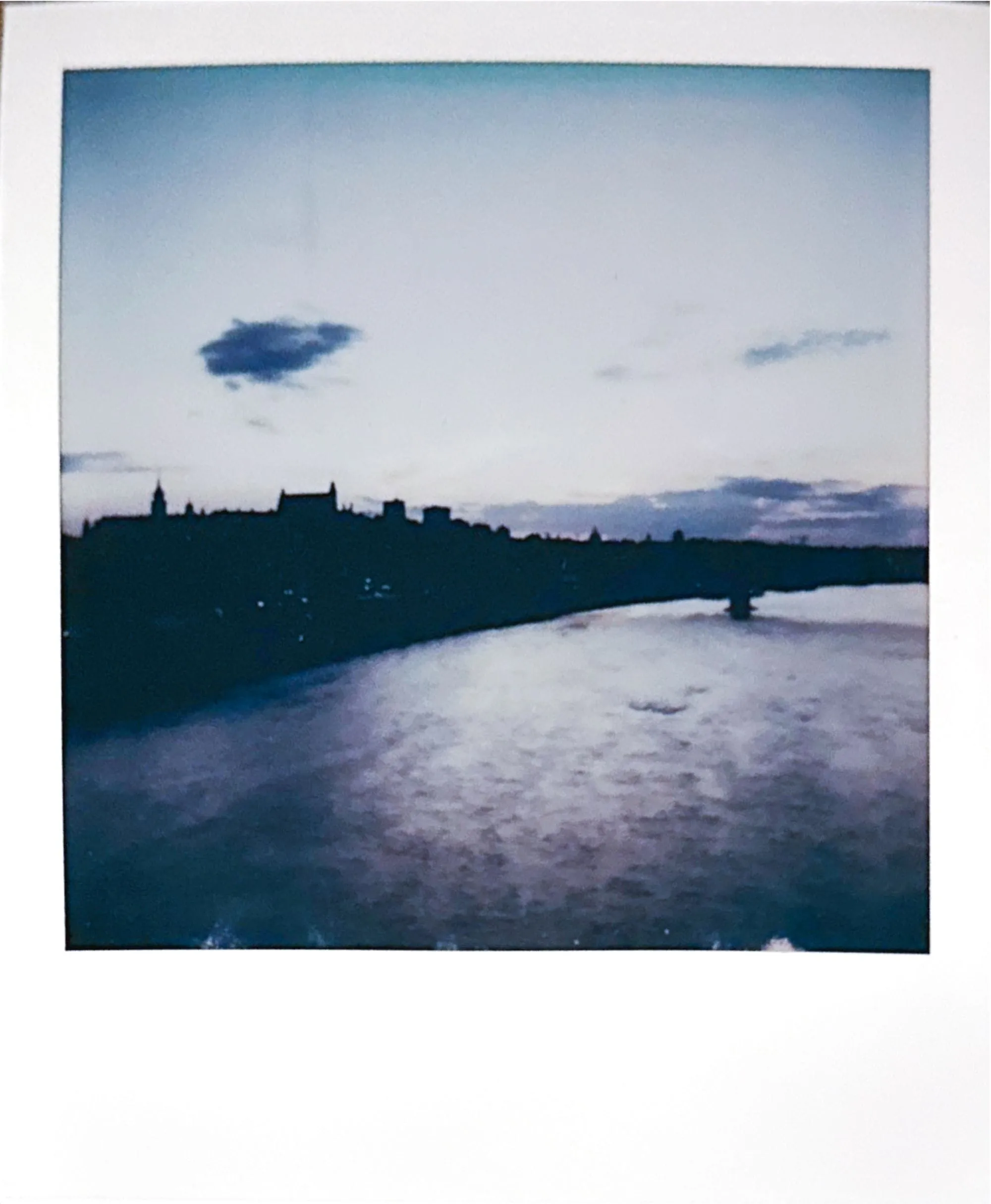
The Vistula river in Warsaw
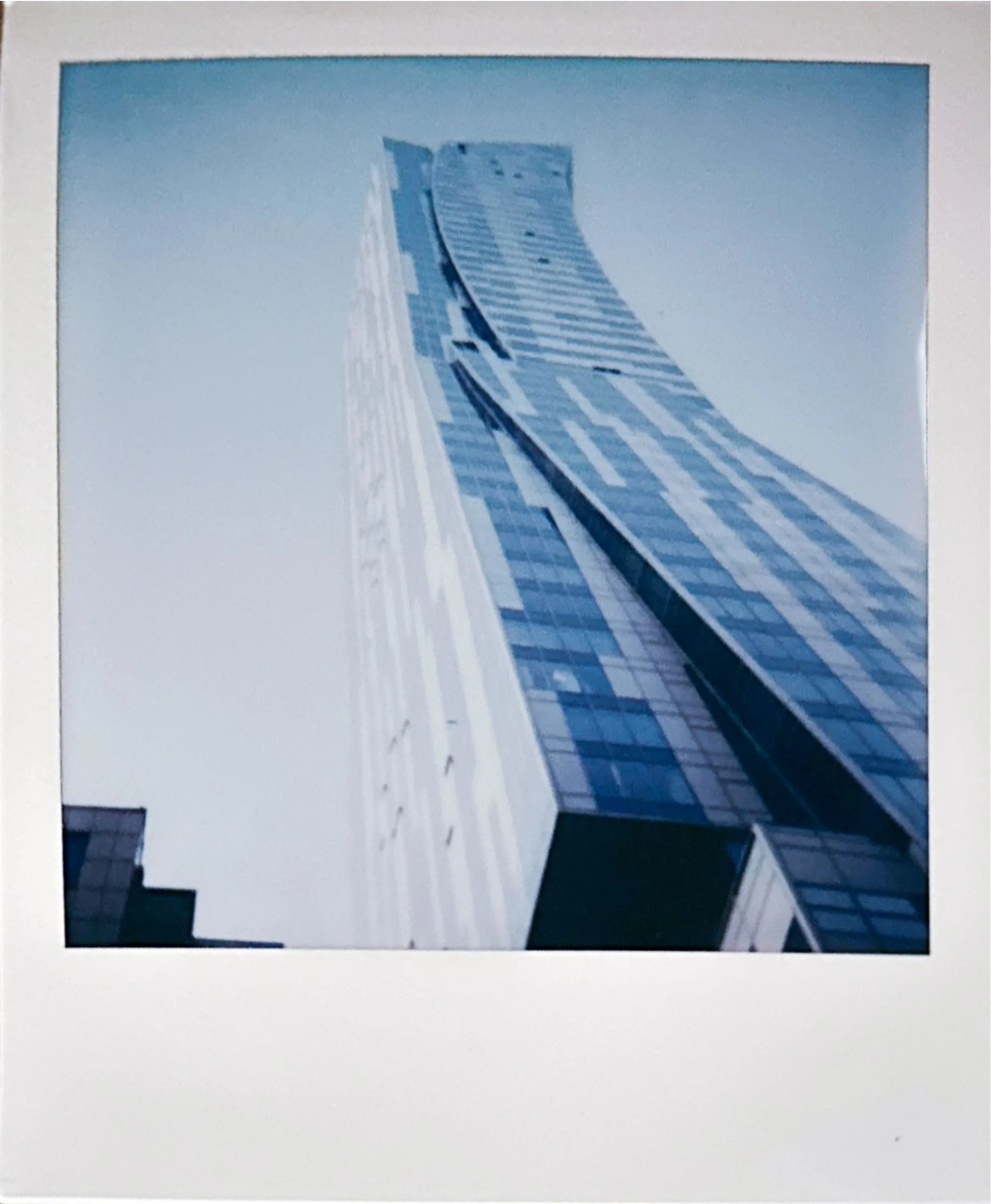
Zlota 44
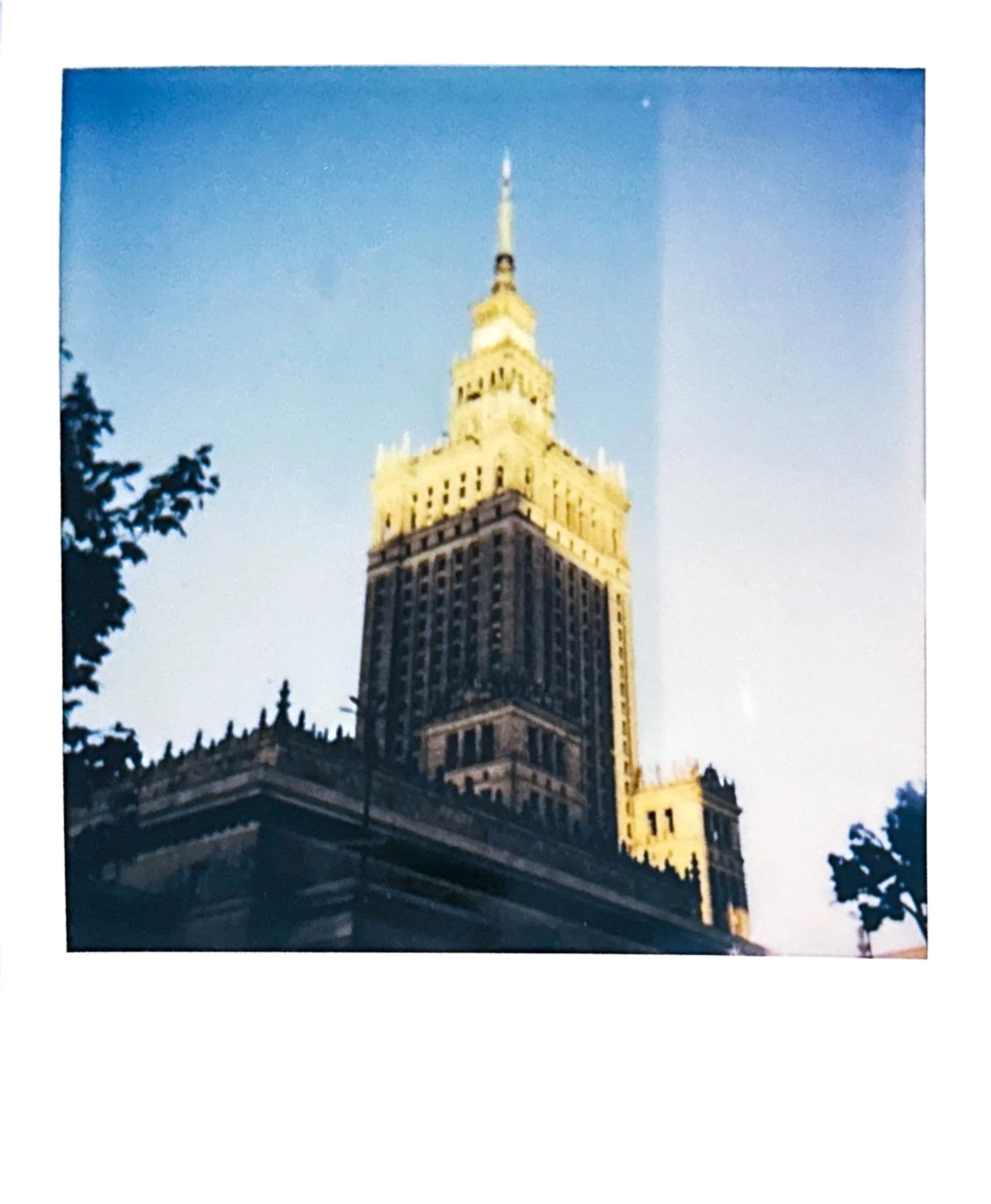
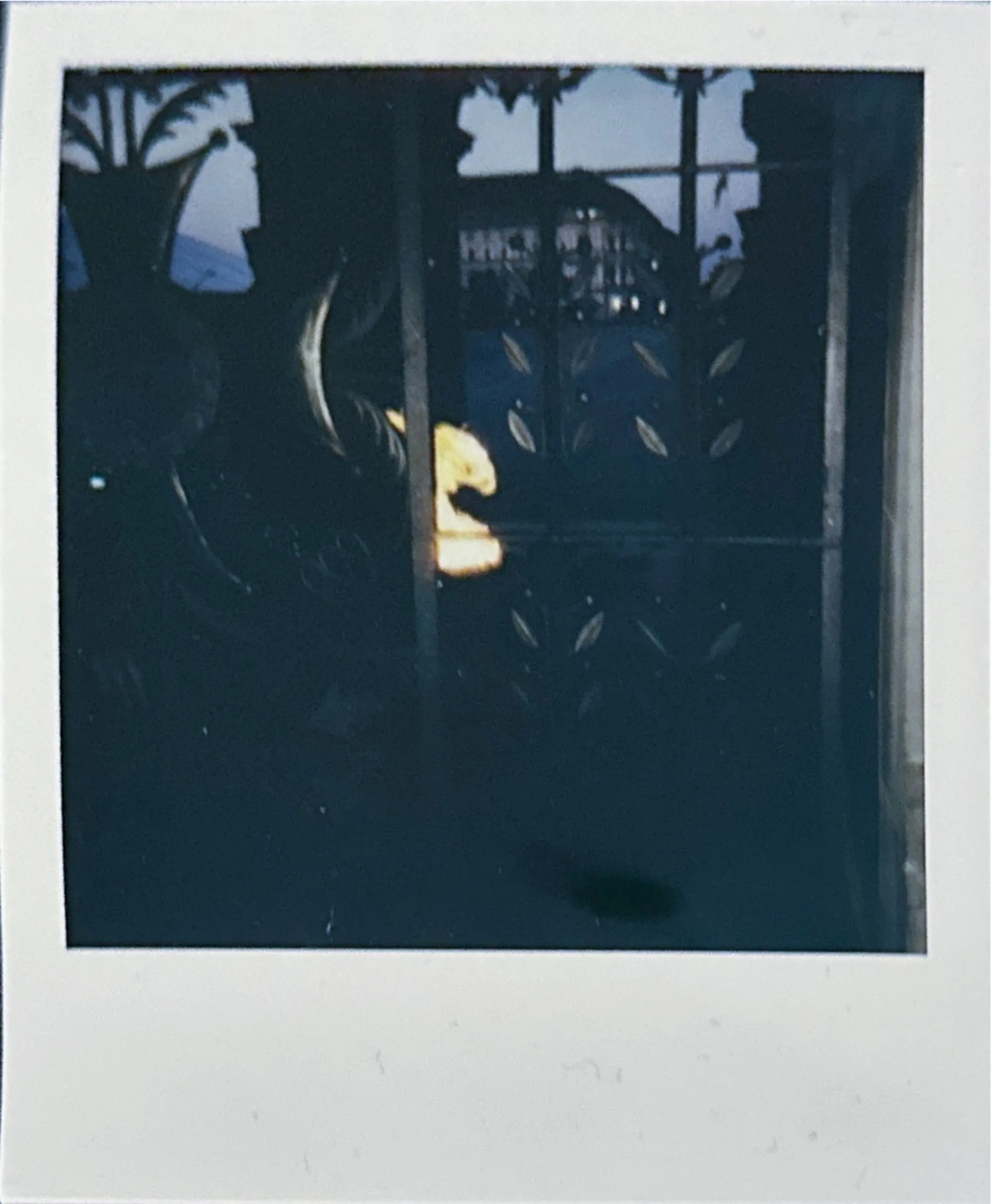
The tomb of the Unknown Soldier with the eternal flame. The last picture of my trip - for real this time!