●9 MIN READ
Voltorb Flip Solver: Fully Automatic, Just Upload a Photo
Stuck in Voltorb Flip? Upload a photo of the board, or type in the hints, and the solver shows which card to flip next, how likely each one is to be a Voltorb, and when to quit.
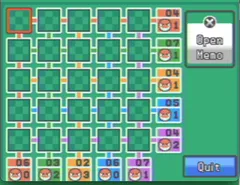
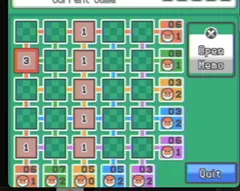
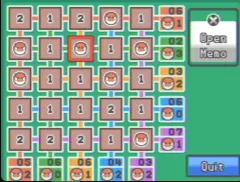
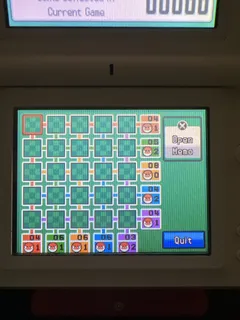
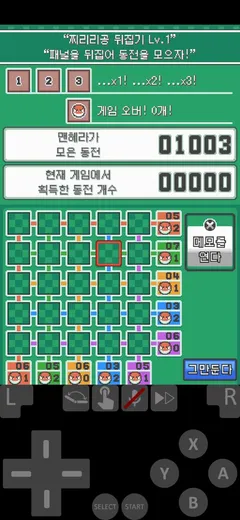
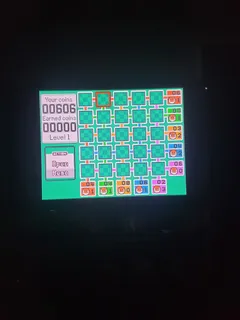
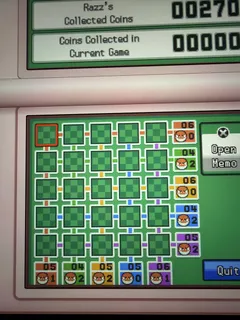
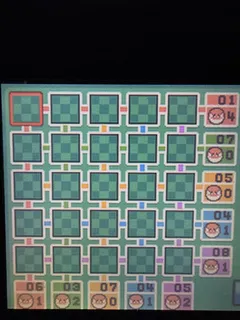
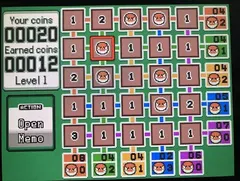
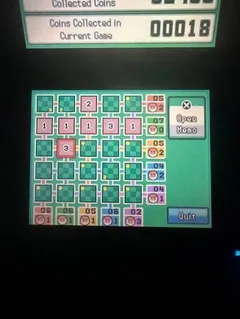
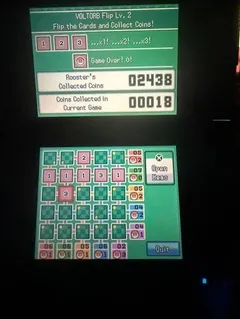
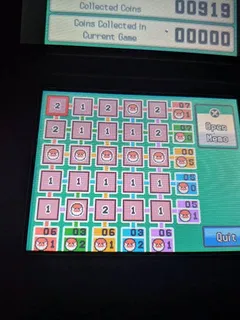
How it works
Voltorb Flip is the minigame from Pokémon HeartGold and SoulSilver: a 5×5 grid of face-down cards, each hiding a 1, 2, 3 or a Voltorb. The hints at the end of every row and column tell you the sum of the numbers and how many Voltorbs are hiding there. Flip every 2 and 3 and you clear the level and move up one. Flip a Voltorb and you lose the round’s coins. The part nobody tells you: if the round ends with fewer cards flipped than your level number, whether by Voltorb or by quitting, you drop to the level equal to the number of cards you flipped. Lose on your third card at level 7 and you are back at level 3. The tool knows this, so its advice weighs the level you would fall to.
Drop in a photo of the game and the hints fill themselves in (I keep the photos to check the reader against real captures; no OCR: the game uses one pixel font, so each digit is matched against a tiny template). Or type them (white is the sum, orange the Voltorb count). The solver then enumerates every board that fits. Each card shows how often it is a Voltorb. The highlighted card is the best flip. Click a card to record what it showed (each click cycles 1, 2, 3, Voltorb, blank), and it recomputes. When the odds turn against you, it will tell you to quit.
One thing to be clear about: this is a game of chance, and the tool does not change that. It tells you the odds exactly, and it tells you which bet is the best one, but a card with a 1% Voltorb chance still blows up one time in a hundred. “Play on” means the expected value favours it, not that it is safe. The only cards that are safe are the ones it marks silver or gold, or shows at 0%.
Why does it tell me to flip a card with a higher Voltorb chance?
Sometimes the highlighted card shows 26% while the card next to it shows 23%. That looks like a mistake. It isn’t: the tool doesn’t pick the safest card for this one flip, it picks the flip that gives you the best round.
Here is a real board where that happened, at level 7. One card was a Voltorb 23% of the time, and a 3 the rest of the time. The tool pointed at its neighbour, at 26%. I let the solver play every one of the 312 boards that fit the hints, once starting with each card:
| First flip | Level cleared | Hit a Voltorb |
|---|---|---|
| The 23% card | 23.3% | 76.7% |
| The 26% card | 29.4% | 70.6% |
Three points more risk on the first flip, six points more boards cleared. Two things explain it:
- You have to flip the 23% card anyway. It hides a 3 in most boards, and you can’t clear the level without it. Skipping it now doesn’t avoid the risk, it only moves it.
- The 26% card tells you more. It can show a 1, a 2 or a 3, and each answer changes the odds everywhere else. When it shows a 1, the 23% card drops to 8%. When it shows a 3, the next card is certainly safe. The 23% card can only show a 3, and after that the best card left is still at 24%.
So flipping the 26% card first often makes the 23% card safer by the time you get to it. The other way around, you learn almost nothing.
It can still go wrong. On that board I flipped the 26% card and it was a Voltorb, while the 23% card had a 3 under it. That is the 26% happening, not the advice being wrong.
What to upload
As long as the game is somewhere in your picture, the tool will find it: a screenshot from an emulator, a capture of the bottom screen, or a phone photo of a real DS. Photos are the hard case, so hold the phone as straight above the screen as you can and keep the whole board in view. When the reader isn’t sure about a number, it fills in its best guess and outlines it in orange, so you can check it against the board shown next to the upload.
From a screenshot, flipped cards are read too, so you can upload again mid-round instead of marking cards by hand. From a photo, only the hints are read; tap the cards you’ve flipped. If a picture doesn’t work, email it to hello@vandevliet.me and I’ll see what went wrong.
Counting the uploads…
What you can win
Coins aren’t the point; the prize counter next to each Game Corner is. These are the prices in HeartGold and SoulSilver (Serebii has the full list).
Goldenrod City (Johto)
| Prize | Coins |
|---|---|
| Abra (Lv. 20) | 200 |
| Ekans (HeartGold) or Sandshrew (SoulSilver), Lv. 15 | 700 |
| Dratini (Lv. 15) | 2,100 |
| Silk Scarf, Wide Lens, Zoom Lens or Metronome | 1,000 each |
| TM90 Substitute | 2,000 |
| TM75 Swords Dance | 4,000 |
| TM44 Rest | 6,000 |
| TM35 Flamethrower, TM13 Ice Beam, TM24 Thunderbolt | 10,000 each |
Celadon City (Kanto, open once you have beaten the Elite Four)
| Prize | Coins |
|---|---|
| Mr. Mime (Lv. 5) | 3,333 |
| Eevee (Lv. 15) | 6,666 |
| Porygon (Lv. 5) | 9,999 |
| Silk Scarf, Wide Lens, Zoom Lens or Metronome | 1,000 each |
| TM58 Endure | 2,000 |
| TM32 Double Team | 4,000 |
| TM10 Hidden Power | 5,000 |
| TM29 Psychic, TM74 Gyro Ball | 10,000 each |
| TM68 Giga Impact | 15,000 |
How many rounds that takes
A cleared board pays everything you flipped multiplied together, and higher levels hide more 2s and 3s. On average a cleared board is worth about 33 coins at level 1, 73 at level 2, 147 at level 3, 265 at level 4, 478 at level 5, 796 at level 6, 1,434 at level 7 and 2,691 at level 8.
That makes the level you play at matter far more than how long you play. Cleared boards needed, by level:
| Prize | Coins | Level 3 | Level 5 | Level 8 |
|---|---|---|---|---|
| Abra | 200 | 2 | 1 | 1 |
| Ekans or Sandshrew | 700 | 5 | 2 | 1 |
| A held item | 1,000 | 7 | 3 | 1 |
| Dratini | 2,100 | 15 | 5 | 1 |
| Mr. Mime | 3,333 | 23 | 7 | 2 |
| Eevee | 6,666 | 46 | 14 | 3 |
| Porygon | 9,999 | 69 | 21 | 4 |
| A 10,000-coin TM | 10,000 | 69 | 21 | 4 |
| Giga Impact | 15,000 | 103 | 32 | 6 |
Those are cleared boards, and you won’t clear every one: a Voltorb costs you the round’s coins and can drop you a few levels, and the climb back takes a few cheap rounds. So count on more games than the table says, especially early on. It’s also why the tool sometimes tells you to quit: keeping your level is worth more than gambling the coins on one more card.
So how many games is that really? I let the solver play 50,000 sessions from level 1, following its own advice on every card, with the boards the game deals at each level, and counted the games until each prize was paid for:
Games until you can afford it
From level 1, following the solver's advice. The dot is a typical player; the bar is where 8 in 10 players land.
- Abra200Abra · 200 coins
about 4 games, usually 3–6~4 - Ekans or Sandshrew700Ekans or Sandshrew · 700 coins
about 8 games, usually 6–13~8 - A held item1,000A held item · 1,000 coins
about 10 games, usually 6–16~10 - Dratini2,100Dratini · 2,100 coins
about 17 games, usually 10–25~17 - Mr. Mime3,333Mr. Mime · 3,333 coins
about 22 games, usually 12–35~22 - Eevee6,666Eevee · 6,666 coins
about 39 games, usually 19–58~39 - Porygon9,999Porygon · 9,999 coins
about 53 games, usually 29–79~53 - Giga Impact15,000Giga Impact · 15,000 coins
about 74 games, usually 45–110~74
Monte Carlo simulation: 3,000,000 games of Voltorb Flip across 50,000 sessions, every card picked by the solver, every Voltorb counted. Lost rounds count as games too.
Model updates
Two small networks do the reading: the board finder spots the board’s corners in a photo, and the digit reader reads each hint. They’re retrained on everyone’s uploads now and then, and a new version only goes live when it reads more boards exactly right than the one before. Each version is measured on the uploads there were at the time, oldest first.
Version 12 November 2026
The first two networks: the board finder, trained on boards that read warped into made-up photos, and the digit reader, trained on about 2,000 digits.
- Board found and read: 1,735 of 1,825 uploads (95.1%)
- Digits read right on the hardest photos: 92.5% (172 of 186, checked by hand)
Version 17 November 2026
The digit reader, retrained on everything uploaded so far: 23,825 digits, 5,000 from screenshots and 18,825 from phone photos.
- Board found and read: 1,745 of 1,825 uploads (95.6%), up from 1,735
- Digits read right on the hardest photos: 90.9% (169 of 186, checked by hand)
Version 19 November 2026
Both networks, retrained on everything uploaded so far. The board finder learned from every outlined board; the digit reader from 42,425 digits, 5,000 from screenshots and 37,425 from phone photos.
- Board corners within 6 screen pixels: 90.6% of held-out boards, up from 73.3%
- Read with totals that add up: 2,357 of 2,505 uploads (94.1%), up from 2,310
- Hand-labelled boards read exactly right: 112 of 209, up from 46; wrong 27, was 81
- Digits read right on the hardest photos: 98.2% (162 of 165, checked by hand)
Version 20 November 2026
No new networks this time: the odds themselves changed. Until now every board that fits the hints counted equally. The solver now follows the source code of HeartGold and SoulSilver, which deal a board from a fixed set of card mixes per level and redraw it when too many 2s and 3s sit in a row or column without Voltorbs. Boards the game would never deal are left out, and the rest are weighed by how likely the game is to deal them.
- Voltorb odds per card: 2.6 points different on average, over 1,898 uploaded boards
- Boards where some card moved by more than 10 points: 27%
- Boards where the first card to flip changed: 7%
This is tuned to the original game. Remakes that deal their boards differently get the original’s odds too, so there the numbers can be off.
Pokémon, Voltorb and Voltorb Flip are trademarks of Nintendo, Creatures Inc. and GAME FREAK inc., © The Pokémon Company. A small fan project: no affiliation, endorsement or sponsorship, and it earns nothing. Cover and Voltorb mark used for identification only; the icon comes from TheArtificial’s pokemon-icons.